Neewer Professional Microphone Pop Filter Shield Dual Layered with Gooseneck Review (2026)
Updated September 14, 2026 · Research-based review
Our verdict
Neewer's dual-layered pop filter is a long-selling budget accessory that clamps onto a mic stand or boom arm and cuts plosives with a two-screen design and a sturdy gooseneck. It fits nearly any podcasting mic setup, though the gooseneck can droop over time and the clamp may need padding to protect a finished boom arm.
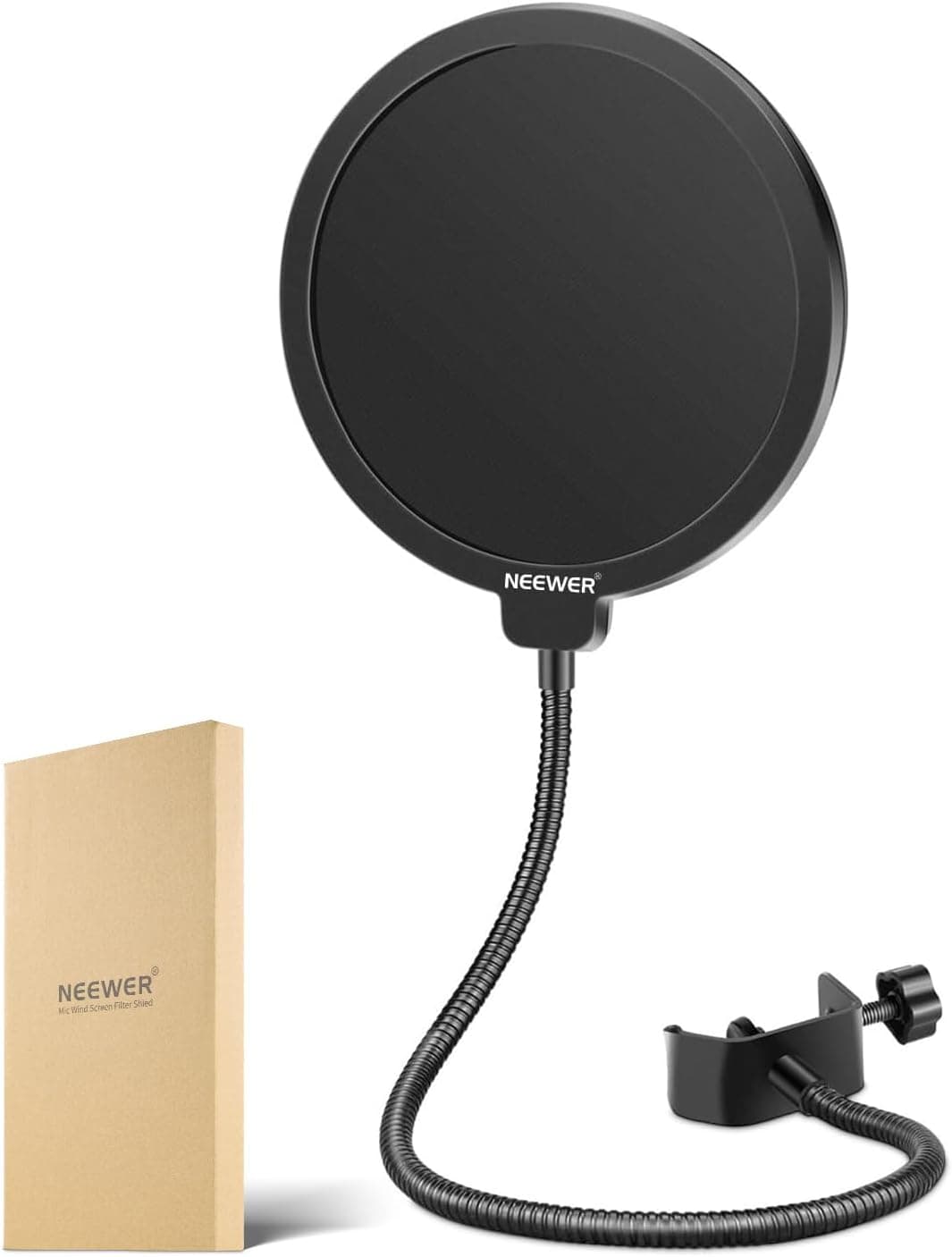
Neewer's professional dual layered pop filter shield with gooseneck is a long-selling budget pick for home studios.
Price range: $ (Budget)
What we liked
- + Dual layered shield reduces plosives from even forceful speakers
- + Gooseneck arm lets you set the ideal distance from the capsule
- + Established Neewer accessory that fits most stands and arms
Trade-offs
- - Gooseneck can slowly droop with heavy use over time
- - Clamp may scratch finished boom arms without some padding
Who this pop filter fits
This pop filter suits any podcaster whose microphone struggles with harsh plosives on words starting with hard consonants like p and b, a common problem for close-mic recording whether the mic is a USB condenser like a Blue Yeti or an XLR broadcast mic. Because it mounts on its own gooseneck and clamp rather than attaching directly to the microphone, it works across a wide range of mic bodies and stand setups, making it a flexible budget accessory for a first home studio. It particularly fits podcasters who record on a tight budget and want a noticeable improvement in vocal clarity without buying a mic with a built-in pop filter. It is less necessary for hosts using a dynamic mic with a built-in spherical grille, such as a Shure SM7B or SM58, since those mics already include meaningful plosive protection.
Specs and design in plain English
The filter uses a dual-layered screen design: the first layer blocks the initial burst of air from a plosive, and a gap between the two screens lets any remaining air pressure disperse before it reaches the second, finer layer, which is what produces a cleaner recorded take. It attaches to a stand or boom arm using an adjustable screw rotating clamp fitted with a scratch-proof gripper, designed to grip a variety of tubular microphone stands and arms without slipping. A steel metal gooseneck connects the clamp to the filter head and is built to fully support the filter's weight on its own, with 360 degree flexibility so you can angle the screen precisely between your mouth and the microphone capsule for consistent plosive protection.
Living with this pop filter
Setup takes only a minute: clamp the base onto your mic stand or boom arm near the microphone, then bend the gooseneck so the filter sits a few inches in front of the capsule, angled slightly off-axis from the mic for the best plosive protection. Because the gooseneck holds its position under the filter's own weight, day-to-day use just means occasionally readjusting the angle if it shifts during a session. Care involves wiping the mesh screens clean of dust or moisture buildup from breath over time, which keeps the filter performing consistently. Owners of gooseneck pop filters commonly mention that the arm can start to droop and lose its set angle after extended heavy use, so periodically re-tightening or repositioning the gooseneck helps maintain a stable angle in front of the mic.
Trade-offs against rival pop filters
Against the closely scored Aokeo pop filter, which uses a nearly identical dual-layer and gooseneck design in the same guide, this Neewer model is essentially tied on features and value, making the choice between them mostly about brand preference and stock availability. Compared to metal mesh pop filters ranked lower in the same guide, this dual nylon-layer design generally handles plosives more thoroughly, since metal mesh alone offers less air dispersion than a two-screen setup. Its main real-world downside next to pricier options is the plain metal clamp, which some owners note can scratch a finished wood or painted boom arm without a bit of padding or careful tightening, a small trade-off for its low price.
Verdict and who should pick something else
This pop filter earns our score of 8.1 out of 10, topping the pop filters guide largely on value and how well its dual-layer design suits nearly any home podcasting setup. It is the right pick for anyone assembling a first budget studio who wants a clear, noticeable reduction in plosives on a USB or XLR microphone that lacks its own pop protection. Podcasters using a dynamic mic with a built-in spherical grille that already blocks plosives, or anyone who wants a filter that never needs re-angling, should consider skipping a gooseneck design in favor of a mic with integrated pop protection instead, since the added filter becomes less necessary in that case.
Frequently asked questions
Does this pop filter fit any microphone?
It clamps onto a separate mic stand or boom arm rather than the microphone itself, so it works with most stand-mounted USB or XLR mics regardless of body shape.
How do I reduce plosives without a pop filter?
Positioning the mic slightly off to the side of your mouth helps, but a dual-layer pop filter like this one gives more consistent protection than repositioning alone.
Will the gooseneck droop over time?
With extended heavy use, gooseneck arms on pop filters like this can gradually lose some rigidity, so periodically re-tightening or repositioning it helps keep the angle stable.
Can the clamp damage my boom arm?
The metal clamp can scratch a finished boom arm if tightened directly against it, so adding a bit of padding or cloth between the clamp and the arm helps prevent marks.
Prices change often, so check the current price and availability on Amazon.
Check price on AmazonPodcast Gear Hub may earn a commission from the link above.