Acoustic Foam XL Bass Trap Studio Soundproofing Corner Wall 12" x 12" x 12" (4 Pack), Charcoal Review (2026)
Updated September 14, 2026 · Research-based review
Our verdict
Best for a home podcast corner that still booms on low end after basic panels go up. Four 12 inch cube blocks tackle bass buildup that thin foam cannot touch, but they eat visible wall space and will not fill a whole room on their own.
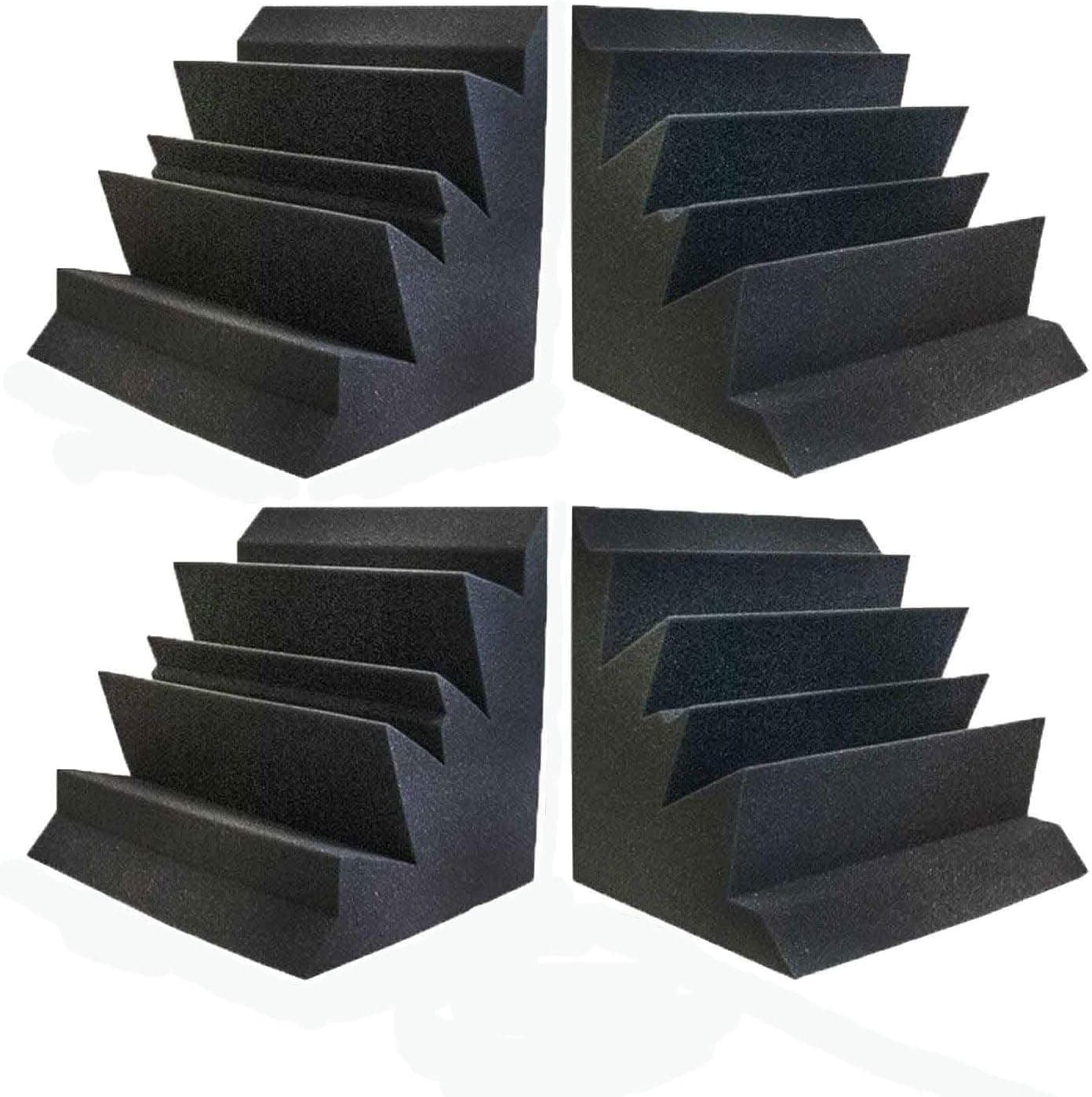
A 4 pack of XL charcoal 12" x 12" x 12" acoustic foam bass traps, large corner blocks for serious low-end control.
Price range: $ (Budget)
What we liked
- + XL 12" x 12" x 12" blocks absorb far more bass than slim strips
- + 4 Pack covers the key vertical corners of a small recording room
- + Charcoal color is less stark than black on video backgrounds
Trade-offs
- - Large foam blocks dominate small rooms and show clearly on camera
- - Only four pieces, so floor-to-ceiling coverage needs several packs
Who this bass trap pack is really for
This is a set of four charcoal acoustic foam blocks, each a full 12 inch by 12 inch by 12 inch cube, meant to sit in the corners of a small recording room or vocal booth. Corners are where low frequency energy piles up and where thin, flat foam panels do the least good, so a dedicated bass trap earns its keep for anyone who has already added some wall foam and still hears a boomy, muddy room tone on playback. It suits a spare bedroom studio, a closet booth, or a small podcast corner more than a large open room, since four blocks only cover a handful of key spots rather than an entire space. Podcasters who record two or three hosts around a small table, with hard walls and a low ceiling, are the clearest match, because that combination tends to build up the low-mid rumble these cube traps are shaped to absorb.
Why the size and shape matter
The XL 12 inch cube shape is the important spec here, not just the charcoal color. Bass energy has long wavelengths, so foam needs real depth and mass to catch it, and a 12 inch cube gives far more surface and volume than the slim 1 or 2 inch panels sold for general echo control. Placed diagonally across a corner, from floor to partway up the wall, or stacked in the upper corners behind a mic position, each block interrupts the pressure buildup that makes small rooms sound hollow or boxy on a recorded voice. Charcoal is a practical color choice for a home studio, since it reads as neutral gray rather than stark black on webcam or video podcast backdrops, and it hides dust better than a lighter shade over time. The pack ships as four separate pieces, so placement is flexible across two, three, or four corners depending on the room.
Fitting it into a real recording setup
Mounting is the same as most open-cell studio foam: spray adhesive, foam-safe mounting tabs, or a light construction adhesive designed not to eat through the foam, since foam this dense is heavy enough that flimsy double-sided tape alone tends to sag over months. Because each block is a full cubic foot, expect the four pieces to visibly change the character of a small room, both acoustically and on camera, which some buyers will want and others will find bulky for a tidy desk setup. Foam like this only deals with echo and reflections inside the room. It does not block sound from entering or leaving, so a noisy street or a shared wall still needs separate soundproofing measures such as mass-loaded barriers, door seals, or simply choosing a quieter room to begin with.
Trade-offs against other bass trap options
Against a set like the 12 inch by 12 inch by 24 inch 8 Corner Bass Trap kit, this charcoal 4 pack covers fewer total corners since each piece is a cube rather than a tall column, so a buyer chasing floor-to-ceiling bass control in a taller room may need to add a second pack or step up to taller pieces. Compared with an 8 pack of smaller 8 inch by 8 inch by 12 inch corner wedges, this set puts more foam mass into each of four spots rather than spreading lighter coverage across eight, which tends to suit rooms where only a couple of corners are the real problem area. Buyers who already tried thin flat panels and were disappointed by how little difference they heard on low end are the ones most likely to notice the improvement this shape brings.
Verdict and who should look elsewhere
For a small podcast or voice-over corner where the low end sounds boomy after basic wall foam, this charcoal 4 pack is a sensible next step and our score of 8.4 out of 10 reflects that it does one job, corner bass control, well for the size of room it targets. Buyers with a larger open studio, or anyone who needs a complete floor-to-ceiling treatment plan rather than a handful of corner accents, should plan on combining this with flat absorption panels and likely a second bass trap pack. Anyone who wants a nearly invisible setup for video calls may also prefer slimmer foam, since these blocks are noticeably present on camera.
Frequently asked questions
Do these bass traps stop sound from leaving the room?
No. Foam like this absorbs reflections inside the room to reduce echo and boominess, but it does not add mass or seal gaps, so it will not meaningfully block sound from passing through walls, doors, or windows.
How many packs are needed for a full small room?
One 4 pack covers the main corners of a small booth or recording nook. A larger room, or a taller ceiling, generally needs a second pack or a mix of corner and wall panels to treat both bass buildup and general echo.
What is the best way to mount the foam blocks?
Manufacturers of this type of open-cell foam typically recommend spray adhesive or foam-safe mounting tabs rather than standard tape, since a 12 inch cube has enough weight that lightweight adhesive tends to sag over time.
Prices change often, so check the current price and availability on Amazon.
Check price on AmazonPodcast Gear Hub may earn a commission from the link above.