Microphone Shock Mount with Pop Filter Anti-Vibration Holder for 46mm-51mm Mic Review (2026)
Updated September 21, 2026 · Research-based review
Our verdict
This shock mount combines a spider-style vibration isolator with a built-in pop filter sized for 46mm to 51mm condenser microphones. It is a practical, budget-friendly way to add both features at once for a common mic size, but it will not fit larger or smaller microphone bodies and the attached filter adds bulk on camera.
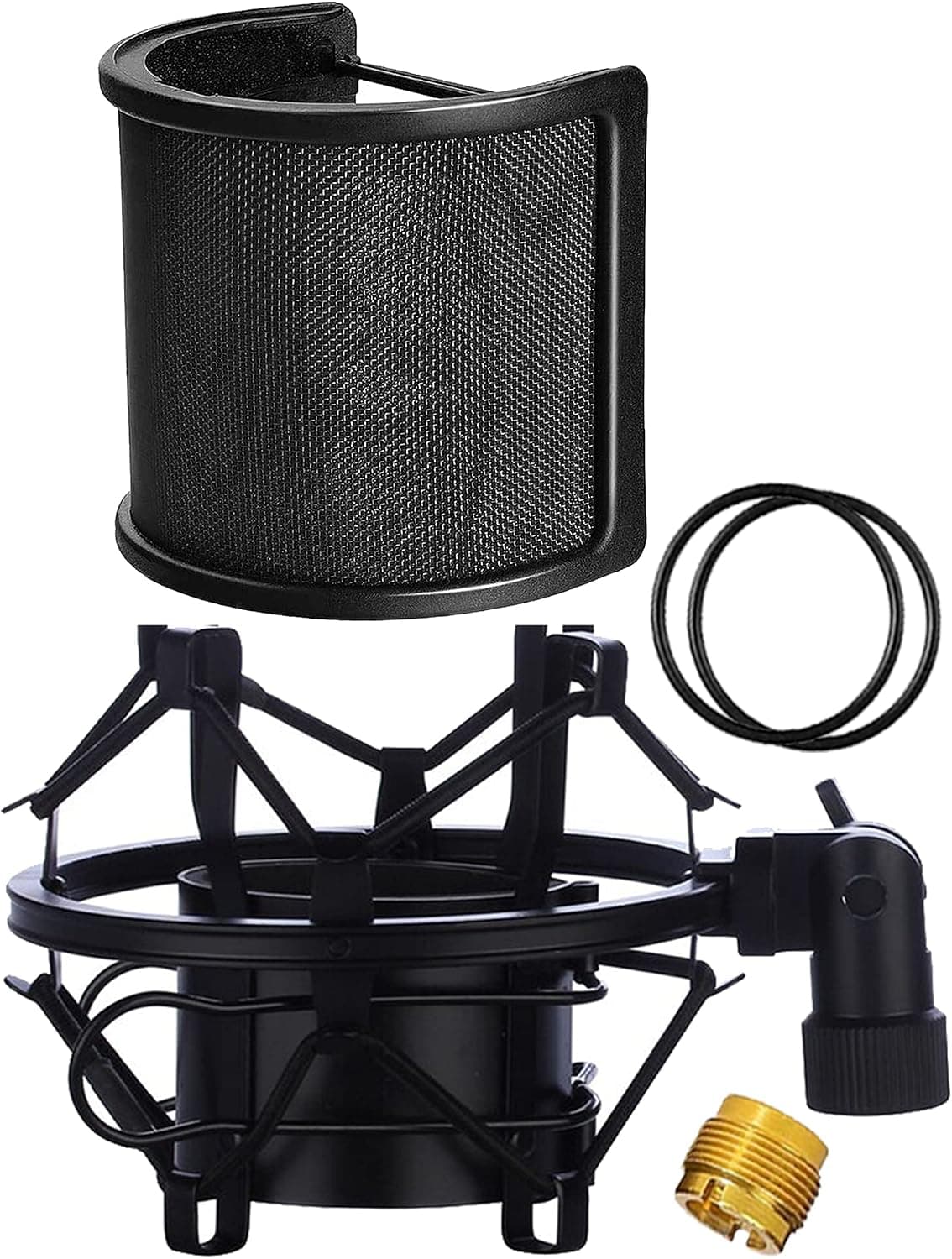
This shock mount with pop filter fits 46mm-51mm mics, combining vibration isolation and plosive control in one holder.
Price range: See on Amazon
What we liked
- + Built-in pop filter saves buying and mounting a separate screen
- + 46mm-51mm range covers many popular studio condensers
- + Anti-vibration holder cuts down on desk and stand noise
Trade-offs
- - Mics outside the 46mm-51mm range will not seat securely
- - Attached filter adds bulk that can crowd the frame on video
Two accessories combined into one mount
This shock mount pairs a metal spider-style suspension holder with a permanently attached pop filter, so a single purchase covers two accessories a home studio typically needs separately, according to the product listing. The spider design uses elastic cords stretched across a metal frame to cradle the microphone, isolating it from vibrations traveling up through a desk or mic stand, such as footsteps, a bumped table, or keyboard typing nearby. Bundling a pop filter onto that same mount saves buying and positioning a second stand-mounted filter, which is convenient for anyone setting up a first home recording space and trying to keep the number of separate pieces of gear to a minimum.
Sizing: 46mm to 51mm microphones
The mount is built to hold microphones with a body diameter between 46mm and 51mm, which covers a number of popular studio condenser microphones on the market, based on the listing's stated compatibility. Before buying, it is worth measuring the actual diameter of the microphone body it will hold, since a mic outside that range either will not seat securely in the spider frame or will not fit into the holder at all. The listing also includes a screw adapter that steps between 3/8 inch and 5/8 inch threads, which lets the mount attach to most standard microphone stands and boom arms regardless of which thread size they use.
The pop filter's double-layer design
The attached pop filter uses a two-layer structure combining a foam layer with a metal mesh layer, according to the listing, aimed at reducing plosive sounds from hard consonants like P and B as well as general wind and breath noise reaching the microphone capsule. A metal mesh layer tends to hold up better over time than a purely fabric or foam screen, since it does not sag or need replacing as often. Because the filter is fixed to the shock mount rather than on its own separate gooseneck arm, its position relative to the microphone stays consistent once set, which removes one variable to fuss with compared to a pop filter that needs repositioning every session.
The trade-off of an attached filter
Having the pop filter built into the shock mount is convenient, but it also means the filter cannot be removed or repositioned independently of the microphone the way a separate gooseneck-mounted filter can. For anyone recording video alongside audio, that attached filter sits directly in front of the microphone and can visibly crowd the frame in a way a standalone filter on its own arm might avoid by being angled out of camera view. Podcasters recording audio only will not notice this trade-off at all, but anyone livestreaming or filming video content alongside their audio should weigh whether a separate pop filter and shock mount, positioned independently, might suit their visual setup better.
Who should buy this mount
This is a good option for anyone setting up a budget home studio around a microphone that falls in the 46mm to 51mm range, who wants vibration isolation and pop protection in a single purchase rather than shopping for two separate accessories. It is not the right choice for microphones outside that size range, and it is a weaker fit for anyone recording video who wants the pop filter positioned out of frame independently of the mount. For a straightforward audio-only podcast or voiceover setup on a budget, though, it covers both jobs at once.
Frequently asked questions
What size microphones fit this shock mount?
It is built for microphones with a body diameter between 46mm and 51mm; measuring your microphone before buying is worth doing to confirm a secure fit.
Can the pop filter be removed from the shock mount?
The listing describes it as an attached, built-in pop filter rather than a separate accessory, so it is not designed to be removed and repositioned independently.
What thread sizes does the mount work with?
It includes an adapter that steps between 3/8 inch and 5/8 inch threads, covering most standard microphone stands and boom arms.
Is this a good choice for video recording?
It works fine for audio-only use, but because the pop filter is fixed in front of the mic, video creators may prefer a separate pop filter that can be angled out of frame.
Prices change often, so check the current price and availability on Amazon.
Check price on AmazonPodcast Gear Hub may earn a commission from the link above.