Aokeo Professional Microphone Pop Filter Mask Shield Dual Layered with Gooseneck Review (2026)
Updated September 14, 2026 · Research-based review
Our verdict
A dependable, low-cost way to tame plosives on any XLR or USB condenser mic. The dual layer nylon screen and steel gooseneck handle everyday podcast use well, though buyers with a large boom arm should double check the gooseneck reaches their mic position.
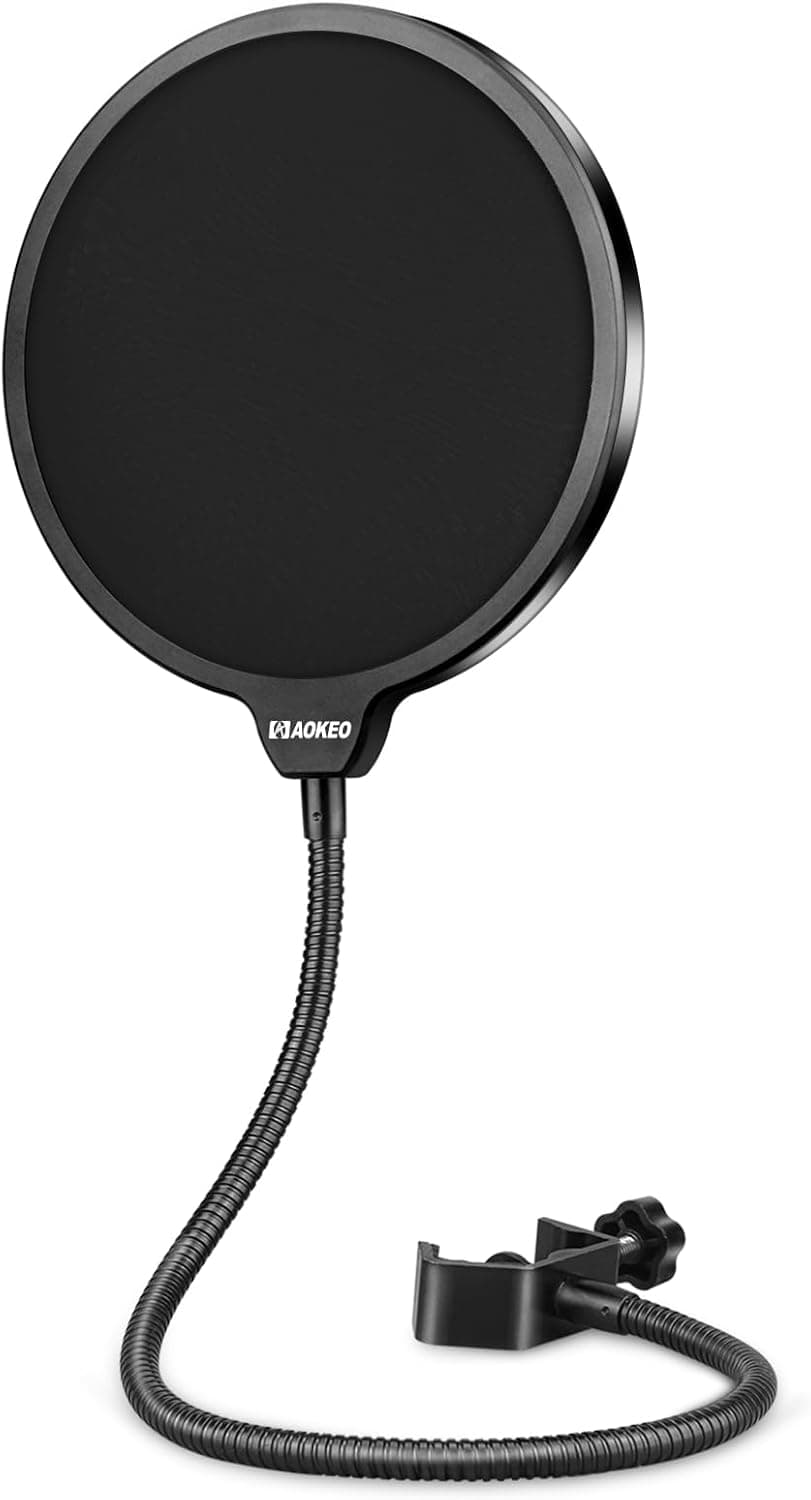
Aokeo's professional dual layered microphone pop filter mask with gooseneck is a popular affordable screen for voice work.
Price range: $ (Budget)
What we liked
- + Dual layered mask handles plosives without extra foam covers
- + Gooseneck and clamp mount onto common mic stands and arms
- + Affordable choice that holds up to regular podcast sessions
Trade-offs
- - Gooseneck length may be short for some large boom arm setups
- - Fabric layers collect dust and need occasional gentle cleaning
Who this pop filter is for
This is a dual layered pop filter with a flexible steel gooseneck and clamp, designed to sit between a host's mouth and a condenser microphone to catch the hard bursts of air from letters like P and B before they hit the capsule and cause a thumping pop on the recording. It suits any podcaster, streamer, or voice-over creator using a side-address condenser mic such as a Blue Yeti or a typical XLR studio mic, since that style of microphone is especially prone to plosive pops when someone talks or sings close to it. Because it clamps onto a stand or arm rather than mounting to the mic itself, it works across a wide range of mic brands and stand types rather than being locked to one system. Anyone using a dynamic mic held or mounted very close to the mouth, which is naturally more pop-resistant, will get less benefit from an add-on filter like this.
How the dual layer screen and gooseneck work
The filter uses two layers of nylon mesh mounted with a small air gap between them, a common and effective pop filter design where the first screen breaks up the initial blast of air from a plosive, and the gap lets the remaining pressure disperse before it reaches the second layer and then the microphone. That two-stage approach reduces popping and lisping sounds without noticeably dulling the clarity of normal speech, which is the main trade-off a pop filter has to manage. The steel gooseneck arm holds its shape once bent, letting a host position the screen a couple of inches in front of the mic and adjust the angle as needed, while an adjustable screw-clamp with a scratch-proof gripper attaches to standard tubular mic stands or boom arm sections.
Setting it up on a real desk
Installation is simple: clamp the mount onto a mic stand or the section of a boom arm nearest the microphone, bend the gooseneck so the mesh screen sits a few inches from the mic's front, and leave it in place, since it rarely needs readjusting once positioned correctly. Because the gooseneck is a fixed length rather than telescoping, buyers with an unusually large or oddly shaped boom arm should check that the reach is enough to bridge from the clamp point to a comfortable position in front of the mic. Like any fabric-based pop filter, the mesh layers will collect dust and skin oils over time with regular use, so an occasional gentle wipe or wash keeps the screen performing as intended rather than gradually staining.
How it compares with other pop filters
Against a metal mesh pop filter, this dual layer nylon design tends to be gentler on very sharp sibilant sounds while still handling plosives well, and nylon mesh filters are generally easier to keep clean than fine metal mesh, which can be fussier to wash without damaging the screen. Compared with a round shape wind mask style filter, the dual layer flat screen here offers a similar level of plosive protection at a comparable price point, so the decision between them often comes down to the shape a buyer prefers on camera and how it fits their existing stand or boom arm. A sponge layered filter with a shorter gooseneck may suit a tighter desk setup better, while this longer steel gooseneck gives more flexibility to route around a monitor arm or light.
Verdict and who might want something else
For a podcaster or streamer using a condenser microphone who wants a reliable, affordable way to cut down on plosive pops, this dual layer filter earns our score of 8.1 out of 10 for doing its one job well at a low price. Buyers with an especially large or unusually shaped boom arm should measure the reach they need before ordering, since the gooseneck length is fixed rather than adjustable in overall size. Anyone using a dynamic mic that is already fairly pop-resistant, or anyone who prefers a filter built into a mic's own windscreen, has less need to add a separate clamp-on filter like this one.
Frequently asked questions
Does this pop filter fit any microphone stand?
It uses an adjustable screw clamp designed for standard tubular mic stands and boom arm sections, so it fits most common setups, though it is worth checking the clamp diameter against an unusually thick or thin stand.
Will a pop filter reduce sound quality?
A well-designed dual layer filter like this one is built to cut plosive bursts of air without noticeably dulling normal speech clarity, since the mesh layers are thin and open enough to let regular sound pass through freely.
How often does the mesh need cleaning?
Fabric pop filters gradually collect dust and skin oils with regular use, so an occasional gentle wipe or hand wash helps keep the screen performing consistently rather than staining or clogging over time.
Prices change often, so check the current price and availability on Amazon.
Check price on AmazonPodcast Gear Hub may earn a commission from the link above.