FIFINE K669B USB Condenser Recording Microphone Metal Cardioid Laptop Mic Review (2026)
Updated September 14, 2026 · Research-based review
Our verdict
FIFINE's K669B is a metal-bodied USB condenser mic for a laptop or PC, an affordable way to sound clearer than a built-in webcam mic on calls or a first solo podcast. Plug-and-play setup and an on-mic gain knob make it easy to start, but the fixed cable and missing headphone jack limit it for serious use.
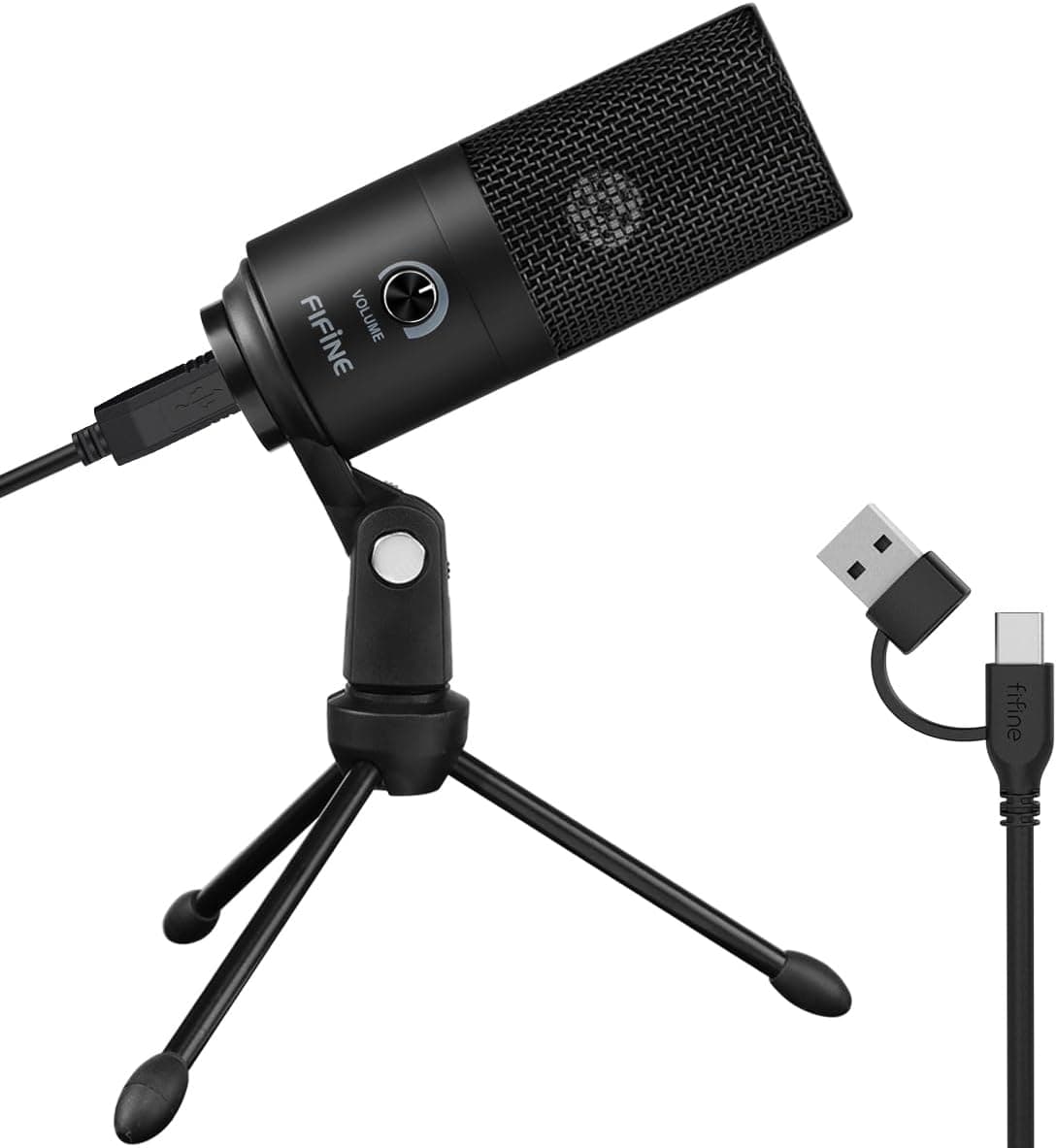
FIFINE's K669B is a metal-bodied cardioid USB condenser for laptops, a very affordable first mic for voice calls and simple podcasts.
Price range: See on Amazon
What we liked
- + Metal body feels sturdier than most plastic mics in this low price bracket
- + Plug-and-play USB setup gets beginners recording in a couple of minutes
- + Volume knob on the mic makes quick level changes easy during recording
Trade-offs
- - No headphone jack, so you cannot monitor your voice directly from the mic
- - Fixed cable and basic tripod limit placement options without extra gear
Who the K669B fits
This mic is aimed at someone taking their first step up from a laptop's built-in microphone, whether for video calls, casual streaming or a first attempt at a podcast, rather than someone already comparing broadcast-grade gear. Its cardioid condenser capsule captures a wider, more sensitive range than a dynamic mic, which suits a quiet home office but will also pick up more background noise in a noisy room than a dynamic capsule would. Because it connects over plain USB rather than XLR, it needs no mixer, interface or phantom power, making it a genuinely simple first purchase for someone who has never recorded audio before. It is less suited to a shared or noisy space, or to a host who already owns an interface and would rather add an XLR mic instead.
What the specs mean in practice
The capsule covers a 20Hz to 20,000Hz frequency response, the full range of human hearing, typical for a condenser mic and wider than most dynamic mics in this price range. Sensitivity is rated around negative 34dB, on the more sensitive side, which explains why it picks up more room tone and background sound than a dynamic capsule would in the same space. An analog volume knob built into the mic body lets a user adjust input gain directly without opening any software, a convenience feature not every budget USB mic includes. The all-metal housing gives it more heft and a sturdier feel than the mostly plastic bodies common at this price point, though metal alone does not change the capsule's actual recording quality.
Setup and daily use
Setup is genuinely plug-and-play: connect the attached USB cable to a computer and most systems recognize the mic immediately without needing separate driver software. The mic ships with a small desktop tripod and a fixed, permanently attached USB cable rather than a detachable one, so a damaged cable means replacing the whole mic rather than swapping a cord. There is no headphone jack on the mic itself, so a user cannot monitor their own voice directly from the mic and instead needs to rely on their computer's playback or a separate USB audio device for real-time monitoring. Keep the mic away from direct desk vibration, since the basic tripod does not isolate handling noise the way a shock mount would.
Trade-offs against other budget mics
In the site's budget microphone guide the K669B ranks first, just ahead of the MAONO AU-903, which adds a mute button and a headphone jack for direct monitoring that the K669B lacks. The Behringer XM8500, a dynamic mic rather than a condenser, sits close behind and would suit a noisier recording space better since dynamic capsules reject more ambient sound. FIFINE's own K668 sits lower in the same guide, essentially a simpler sibling to the K669B with fewer refinements. The K669B's main edge over its closest rivals is the metal body and on-mic gain knob, while its main gap is the missing headphone output that the MAONO AU-903 includes at a similar price.
Verdict and who should look elsewhere
Choose the K669B if you want the simplest possible upgrade from a built-in laptop mic, in a sturdier metal body, and you do not need to monitor your voice directly through the mic while recording. It earns the site's score of 8.0 out of 10, with a perfect value mark reflecting how little it costs relative to what it offers a first-time buyer. Anyone who wants to hear themselves live while recording should look at the MAONO AU-903 instead for its headphone jack and mute button, and a host recording in a noisy shared space would likely get cleaner results from a dynamic mic like the Behringer XM8500, which rejects more room noise than a sensitive condenser capsule.
Frequently asked questions
Does the K669B need a mixer or interface?
No, it connects over standard USB and works as a plug-and-play device with a laptop or PC, without needing a mixer, interface or phantom power.
Can I monitor my voice while recording?
No, the mic has no built-in headphone jack, so direct real-time monitoring from the mic itself is not possible.
Is the USB cable detachable?
No, the cable is fixed to the base of the mic, so a damaged cable would mean replacing the mic rather than swapping a cord.
What is the mic body made of?
The K669B uses an all-metal housing, giving it a sturdier feel than the mostly plastic bodies common on mics at a similar price.
Prices change often, so check the current price and availability on Amazon.
Check price on AmazonPodcast Gear Hub may earn a commission from the link above.