Sennheiser MKE600 Shotgun Microphone, Wired, for Video Cameras, Low Cut Filter Review (2026)
Updated September 14, 2026 · Research-based review
Our verdict
The Sennheiser MKE600 is a wired shotgun mic with a switchable low cut filter for isolating dialogue on a boom pole or camera. Its tight pattern and build quality are excellent, but the XLR connection means most consumer cameras need an adapter or recorder, and its size suits larger rigs better than small ones.
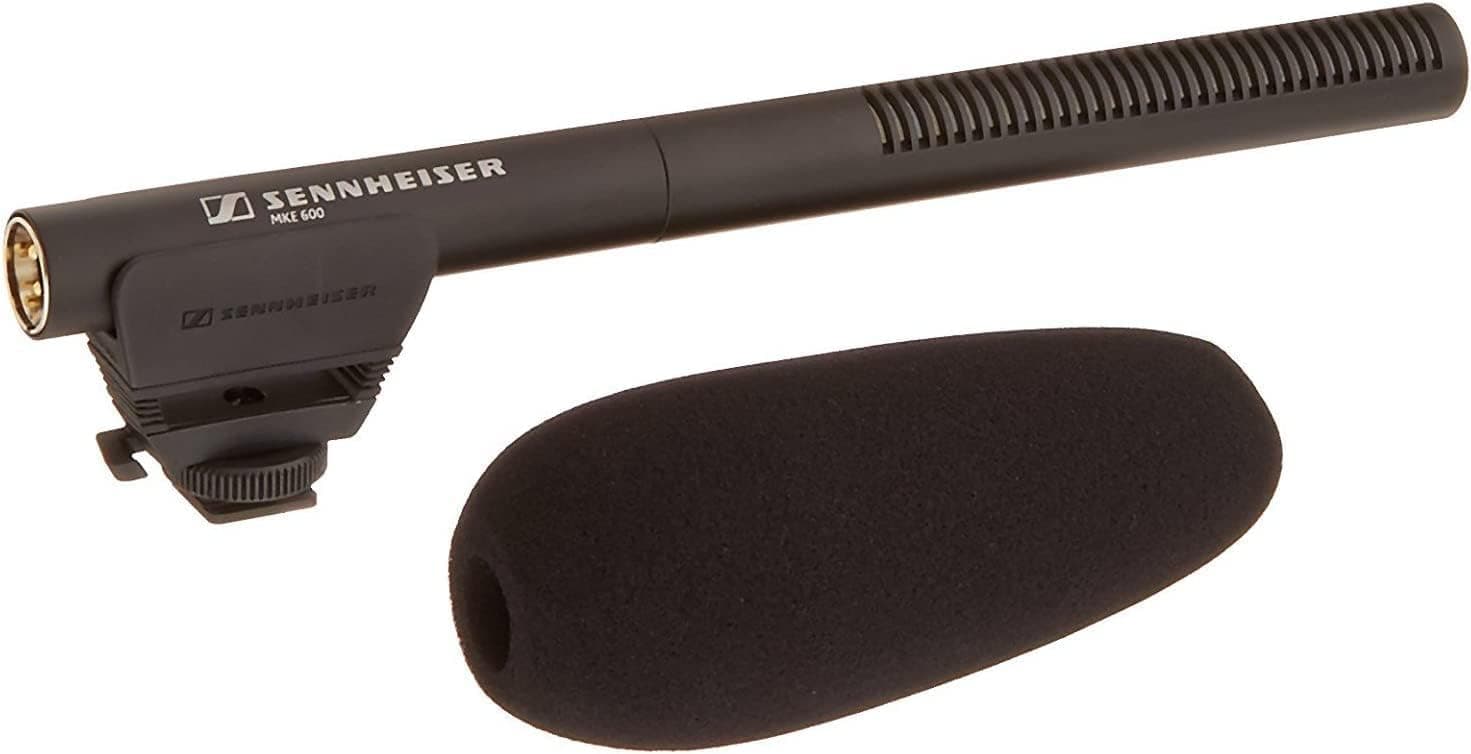
Sennheiser's MKE600 is a wired shotgun mic with a low cut filter, a pro-grade choice for video cameras and boom poles.
Price range: See on Amazon
What we liked
- + Tight shotgun pattern isolates dialogue well on boom poles and cameras
- + Low cut filter removes wind and handling rumble at the source
- + Sennheiser build quality suits professional and long-term video work
Trade-offs
- - Uses XLR, so many consumer cameras need an adapter or recorder
- - Larger size is awkward on small cameras compared with compact shotguns
Who the MKE600 fits
The MKE600 is aimed at video podcast producers and camera operators who need clean, isolated dialogue from a boom pole or camera mount rather than a lavalier or handheld mic. Its tight super-cardioid pattern rejects sound from the sides more aggressively than a standard cardioid microphone, which suits filming an interview or panel where reducing room noise and off-axis chatter matters more than capturing a wide soundscape. Because it runs on standard XLR with phantom power, it also fits a producer who already has a field recorder, mixer, or camera with XLR inputs and phantom power available. It fits less well for someone shooting on a small consumer camera with no XLR input and no separate recorder, since connecting it there needs extra adapters that add cost and complexity.
Specs and design explained
The MKE600 uses a super-cardioid, or lobar, polar pattern with a frequency response from 40Hz to 20kHz, and it measures 20mm across and 256mm long, weighing 128 grams without a battery. It can be powered either by 48V phantom power through its XLR connection or by a single AA battery, rated for about 150 hours of operating time on battery power, giving flexibility depending on what gear it is plugged into. Maximum sound pressure level is rated at 132dB with phantom power, high enough to avoid distortion even close to loud sources. A switchable low cut filter on the body reduces wind noise and handling rumble at the source rather than relying entirely on post-production cleanup, and it ships with a foam windshield and a shock mount to further cut down on handling and wind noise.
Living with the MKE600
Mounting it on a boom pole or camera shoe with the included shock mount isolates handling noise well, and the foam windshield handles light indoor air movement, though outdoor shoots in real wind will benefit from an additional furry windshield sold separately. The switchable low cut filter is worth engaging any time recording near an air conditioner, fan, or outdoors, since it removes a meaningful amount of low-frequency rumble before it ever reaches the recording. Running it on phantom power from a camera, recorder, or mixer avoids managing a battery, while the AA battery option is a useful backup when phantom power is not available. Because it uses a standard XLR connector, most consumer cameras without an XLR input will need either a mini-XLR adapter cable or a separate audio recorder feeding into the camera.
Trade-offs against rival shotgun microphones
Against the Rode VideoMic NTG, ranked just ahead of it in the same shotgun microphone guide, both mics share XLR-based professional design, though the VideoMic NTG also offers a rechargeable and USB power option the MKE600 does not include. Against the Rode VideoMic Pro+ and VideoMic Pro R, both scoring behind it, those camera-mount focused mics are generally smaller and lighter for mounting directly on a consumer camera's hot shoe, while the MKE600's larger size and pure XLR design lean more toward boom pole and professional rig use. The clear trade-off across the guide is between compact, camera-mounted convenience and the MKE600's more professional, XLR-first design, which rewards a shooter already working with proper audio gear rather than a single small camera.
Verdict and who should pick something else
The MKE600 earns our score of 8.8 out of 10, with a perfect build and materials score reflecting Sennheiser's reputation for durable, professional microphones, alongside strong marks for fit and features thanks to its low cut filter and dual power options. It is a strong pick for anyone recording video podcast interviews or panels with a boom pole, field recorder, or camera that already has XLR inputs and phantom power. Anyone shooting on a small consumer camera with no XLR input and no plans to add a separate recorder should look at a compact camera-mount shotgun mic like the Rode VideoMic Pro+ instead, since it avoids the adapter chain the MKE600 would otherwise need.
Frequently asked questions
Does the Sennheiser MKE600 work with consumer cameras without XLR inputs?
It can, but it needs a mini-XLR adapter cable or a separate audio recorder in between, since the MKE600 only outputs over a standard XLR connector.
Can the MKE600 run on a battery instead of phantom power?
Yes. It can be powered by a single AA battery for about 150 hours of use, as an alternative to 48V phantom power from a camera or recorder.
What does the low cut filter on the MKE600 do?
It reduces wind noise and low-frequency handling rumble at the microphone itself, cutting down on cleanup needed later in editing.
What comes included with the Sennheiser MKE600?
It ships with a foam windshield and a shock mount, both intended to reduce handling and wind noise during a shoot.
Prices change often, so check the current price and availability on Amazon.
Check price on AmazonPodcast Gear Hub may earn a commission from the link above.