TroyStudio Large Microphone Isolation Shield, Foldable Vocal Booth Reflection Filter, 2 Inch Foam Review (2026)
Updated September 20, 2026 · Research-based review
Our verdict
TroyStudio's large foldable isolation shield wraps 2-inch dense foam around the mic, folding down to about 23 by 20 by 5 inches, giving broad reflection control for home voice recording. It fits anyone needing a bigger shield than a slim reflection filter, though its size calls for a sturdy stand and it can crowd a webcam's view.
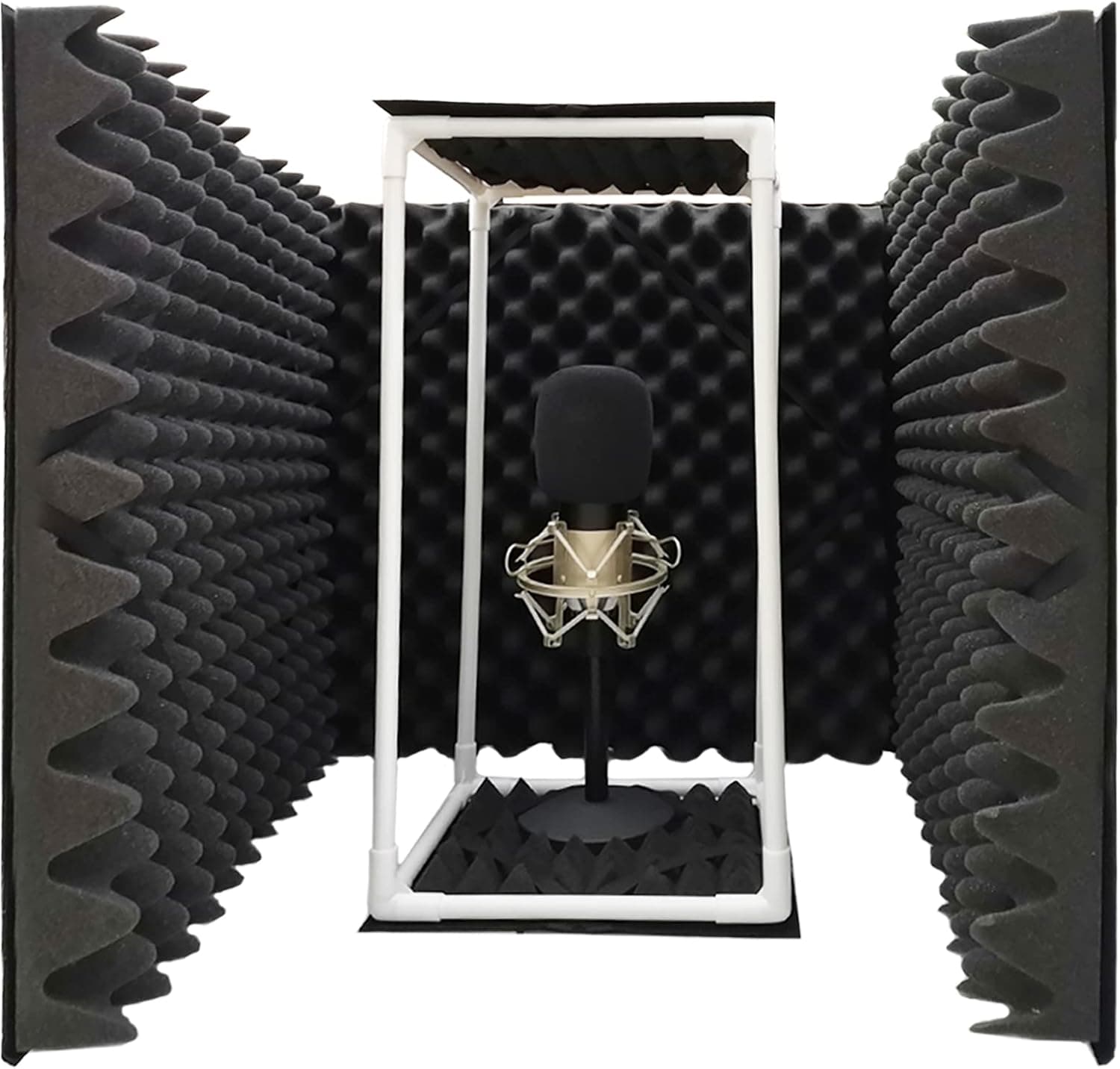
TroyStudio's large foldable isolation shield uses 2 inch foam, a vocal booth style reflection filter for home voice work.
Price range: See on Amazon
What we liked
- + 2 Inch foam absorbs more reflections than thin single-layer shields
- + Large foldable wings wrap around the mic for better coverage
- + Folds flat for storage when the desk is needed for other work
Trade-offs
- - Large shield is heavy and needs a sturdy stand or desk mount
- - Wings can block the camera's view of your mouth on video
Who this isolation shield fits
This shield is built for home podcasters, voiceover artists, and streamers recording in an untreated room who need more reflection control than a small, single-panel shield provides. Because its folding wings are larger than compact reflection filters, it suits people willing to trade some desk space for broader coverage around the microphone, capturing reflections coming from more angles than a narrow shield would catch. It works well for anyone recording in a bedroom, home office, or shared living space where full acoustic treatment is not practical, since it creates a semi-enclosed pocket of absorption around the mic itself rather than requiring foam on every wall. It is a less natural fit for anyone who films themselves on camera while recording, since the larger wings sit close to the face and can intrude into frame.
Build and foam construction
The shield folds to roughly 23 by 20 by 5 inches for storage or transport, and its interior surfaces are lined with 2-inch thick dense acoustic foam across five separate panels rather than a single thin layer. That foam thickness is meaningfully deeper than the thin single-layer foam used in many budget reflection filters, which is why it absorbs more of the reflected sound bouncing back into the microphone from nearby walls and surfaces. A reinforced backing panel adds structural support so the wings do not sag or flex under their own weight once opened, which matters given how much foam the large design carries compared with smaller shields.
How well it controls reflections
By wrapping foam-lined wings around three sides of the microphone, this design captures reflected sound before it bounces back into the capsule, which is the main way a reflection filter differs from simple foam panels mounted on a wall. The manufacturer describes recordings made with the shield as well protected from room reverb, and the thicker 2-inch foam gives it a real edge over thinner single-layer shields at absorbing higher and mid frequencies specifically. It will not replace full room treatment for a genuinely echo-heavy space, since sound still reflects off the floor, ceiling, and any open side of the shield, but for close-mic voice recording in an otherwise untreated room it meaningfully tightens up the sound compared with no shield at all.
Mounting, weight and desk footprint
Because the shield carries considerably more foam and structure than compact reflection filters, it is heavier and needs a sturdy microphone stand or a solidly mounted desk arm rather than a lightweight clip stand. Once positioned, the large folding wings take up meaningfully more desk space than a slim shield, so it is worth measuring available room around the microphone before buying, especially on a smaller desk shared with a monitor or camera. The trade-off for that footprint is coverage: the wings wrap further around the mic than a narrow shield, which is the main reason people choose the large version over a more compact one in the first place.
Value and where it falls short
For anyone who has outgrown a basic pop filter and wants real reflection control without a full room treatment build-out, this large shield offers good value thanks to its thicker foam and broader coverage compared with slimmer competitors. It folds flat for storage, which helps when desk space needs to be reclaimed between sessions. The clearest downside is that its large wings can block a camera's view of the face on video calls or on-camera recordings, so anyone doing video podcasts or webcam streaming alongside audio should test camera placement carefully or consider a smaller shield if the on-camera view matters as much as the audio.
Frequently asked questions
How big is this shield when folded for storage?
It folds to roughly 23 by 20 by 5 inches, which is compact enough to store in a closet or under a desk between recording sessions.
Does it work with any microphone?
It is designed to work with common microphone types including condenser, dynamic, and USB mics, mounting around the mic rather than being specific to one brand.
Will it block my webcam view while recording video?
The large folding wings sit close to the microphone and can intrude into a camera's frame, so anyone recording on camera should test placement before relying on it for video.
Do I need a special stand for it?
Because the shield is larger and heavier than compact reflection filters, a sturdy microphone stand or a solidly mounted desk arm works better than a lightweight clip stand.
Prices change often, so check the current price and availability on Amazon.
Check price on AmazonPodcast Gear Hub may earn a commission from the link above.