beyerdynamic DT 900 PRO X Studio Mixing Open Back Headphones Review (2026)
Updated September 14, 2026 · Research-based review
Our verdict
The DT 900 PRO X fits podcasters who edit and master shows alone, not while tracking near open microphones, since the open back leaks sound and gives little isolation. The STELLAR.45 driver and wide frequency range reveal edits and room noise clearly, with velour pads for long sessions. Expect to keep a closed back pair on hand too.
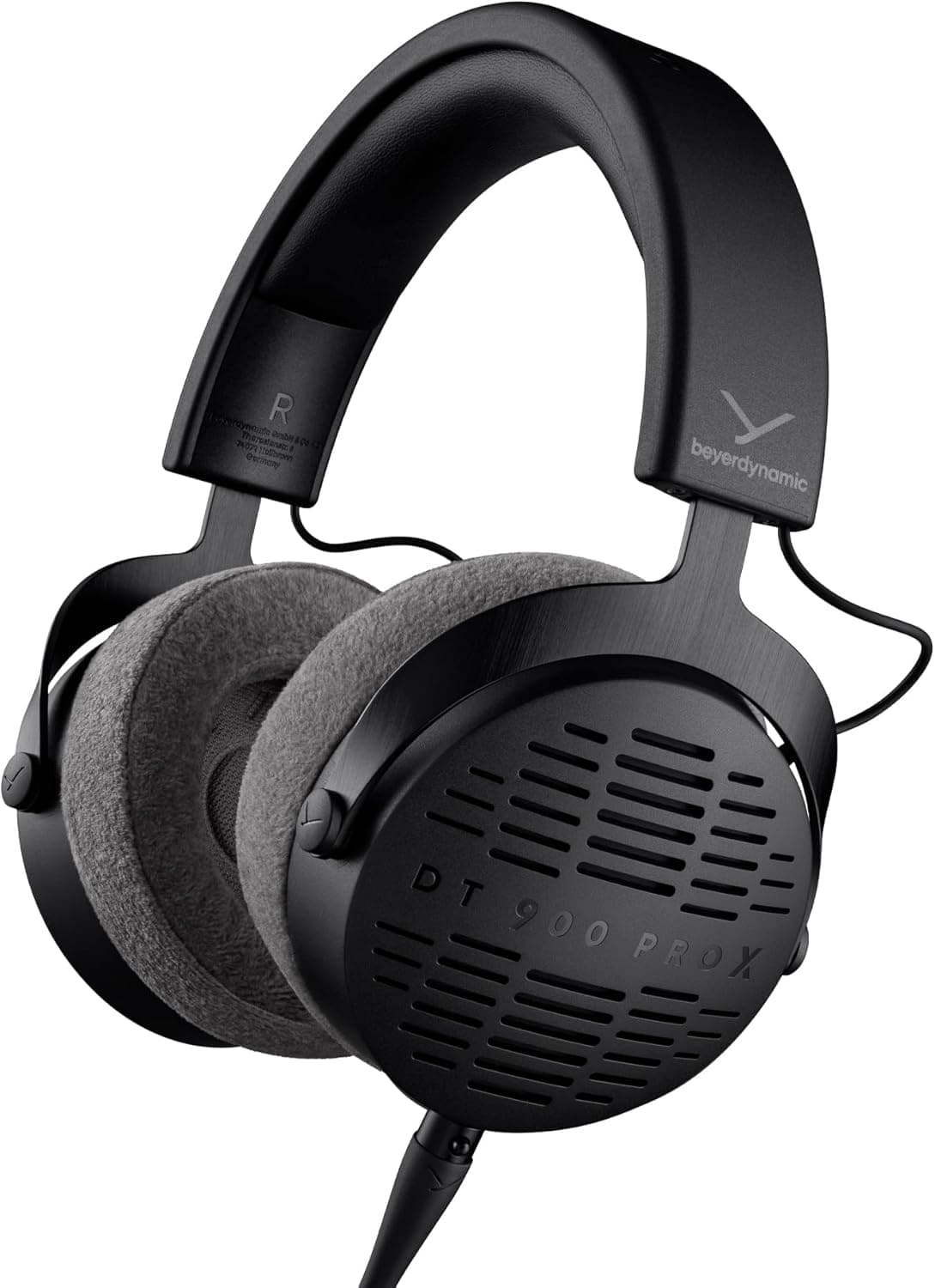
beyerdynamic's DT 900 PRO X are open-back studio mixing headphones, suited to precise podcast editing and mastering.
Price range: See on Amazon
What we liked
- + Open-back design gives a natural, spacious sound for mixing decisions
- + Detailed beyerdynamic tuning reveals edits, breaths and noise clearly
- + Comfortable velour pads suit long editing sessions
Trade-offs
- - Open back leaks sound, so they are unsuitable while recording near mics
- - Offer little isolation from noise in busy homes or offices
Who this headphone is built for
The DT 900 PRO X is aimed at the editing and mastering stage of a podcast workflow rather than the recording stage. Its open back design lets air move freely through the earcups, which reduces the boxy resonance closed headphones can add and gives a more natural sense of space when judging voice edits, room tone and ambience. That same open design means sound leaks out and outside noise leaks in, so it is not the headphone to wear while a microphone is live in the same room. A solo podcaster who records with a dynamic mic and then edits later, or a producer checking a finished mix before export, is the intended user. Beginners who only own one pair of headphones and need it for both tracking and editing are usually better served by a closed back model instead, keeping this one as a second, specialist pair for the final listen.
Driver, frequency range and build explained in plain terms
Beyerdynamic fits the DT 900 PRO X with its STELLAR.45 transducer, a dynamic driver built around a neodymium ring magnet and a three layer diaphragm with an internal damping layer, manufactured in Germany. The published frequency response runs from 5 Hz to 40,000 Hz with a nominal impedance of 48 ohms, a level that most audio interfaces and even phones can drive to a comfortable volume without a separate headphone amplifier, though a dedicated amp will still add headroom. The headphones weigh 345 grams without the cable and use a spring steel headband under memory foam padding for a secure, evenly distributed fit. Two detachable mini XLR cables are included, a 1.8 meter and a 3 meter length, along with 3.5 mm and 6.35 mm jack adapters, so the same headphone can move between a desk interface and a mixing console.
Setting up and living with an open back pair day to day
Out of the box the DT 900 PRO X needs nothing more than plugging the shorter mini XLR cable into an interface headphone output; the longer cable suits a fixed mixing position further from the source. The velour ear pads breathe well, which keeps ears cooler than closed foam or leather pads during multi hour editing or mastering sessions, and beyerdynamic sells replacement pads since nearly every part of the headphone is user serviceable. Because the open back leaks sound, editors in shared apartments, home offices near family members, or thin walled studios should expect people nearby to hear a faint version of whatever is playing at normal listening volumes. The tradeoff is a wider, more accurate stereo image for catching plosives, breath noise, and inconsistent levels between takes, the kind of detail that is easy to miss on a closed, bass heavy headphone.
Honest trade-offs against the Audio-Technica ATH-M50x and Sennheiser HD 280 Pro
Compared with a closed back reference like the Audio-Technica ATH-M50x, the DT 900 PRO X gives up isolation entirely in exchange for a more open, less fatiguing tonal balance over long sessions, so the two headphones really serve different halves of a podcast workflow rather than competing directly. Against a closed monitoring headphone such as the Sennheiser HD 280 Pro, which is built for tracking near live mics, the DT 900 PRO X cannot be used interchangeably since any bleed from an open headphone can reach a nearby microphone during recording. Within beyerdynamic's own open back range the DT 900 PRO X sits above the semi open DT 880 PRO and open DT 990 PRO in build materials and driver refinement, which is reflected in the price step up from those models. Buyers who need one headphone for everything, recording and editing alike, should look at a closed design instead.
Verdict and who should choose differently
The DT 900 PRO X earns its our score of 8.6 out of 10 as a dedicated editing and mastering headphone for podcasters who already have a separate solution for tracking, thanks to a spacious, detailed presentation from the STELLAR.45 driver and a comfortable, largely repairable build. It is not the right pick for anyone recording solo with a microphone in the same room as the headphones, for shared living spaces where sound leakage would disturb others, or for a single all purpose headphone on a tight budget. Podcasters in that position should look at a closed back model such as the ATH-M50x or Sennheiser HD 280 Pro first, and consider adding an open back pair like this one later once tracking and editing happen in different sessions or rooms.
Frequently asked questions
Do I need a headphone amplifier for the DT 900 PRO X?
Its 48 ohm impedance means most interfaces and even phones can drive it to a normal listening volume without a separate amplifier, though a dedicated amp can add extra headroom for critical mastering sessions.
Can I use the DT 900 PRO X while recording a podcast?
It is not recommended. The open back design leaks audible sound, which can bleed into a nearby open microphone, so it works best for editing and mastering after recording is finished.
Are the ear pads and cables replaceable?
Yes. Beyerdynamic sells replacement velour pads and the mini XLR cables are detachable, so worn parts can be swapped rather than replacing the whole headphone.
What connector does the DT 900 PRO X use?
It uses a 3 pin mini XLR connector at the earcup, and ships with 3.5 mm and 6.35 mm jack adapters for connecting to interfaces, mixers or consumer devices.
Prices change often, so check the current price and availability on Amazon.
Check price on AmazonPodcast Gear Hub may earn a commission from the link above.