RODE RODECaster Pro II All-in-One Production Solution for Podcasting (Black) Review (2026)
Updated September 14, 2026 · Research-based review
Our verdict
The black RODECaster Pro II fits a host running a multi-mic, multi-source show who wants to mix, record and stream without a computer in the loop. Its strength is genuinely all-in-one production with clean preamps and programmable pads. The trade-off is a steep price and a real learning curve before your first smooth episode.
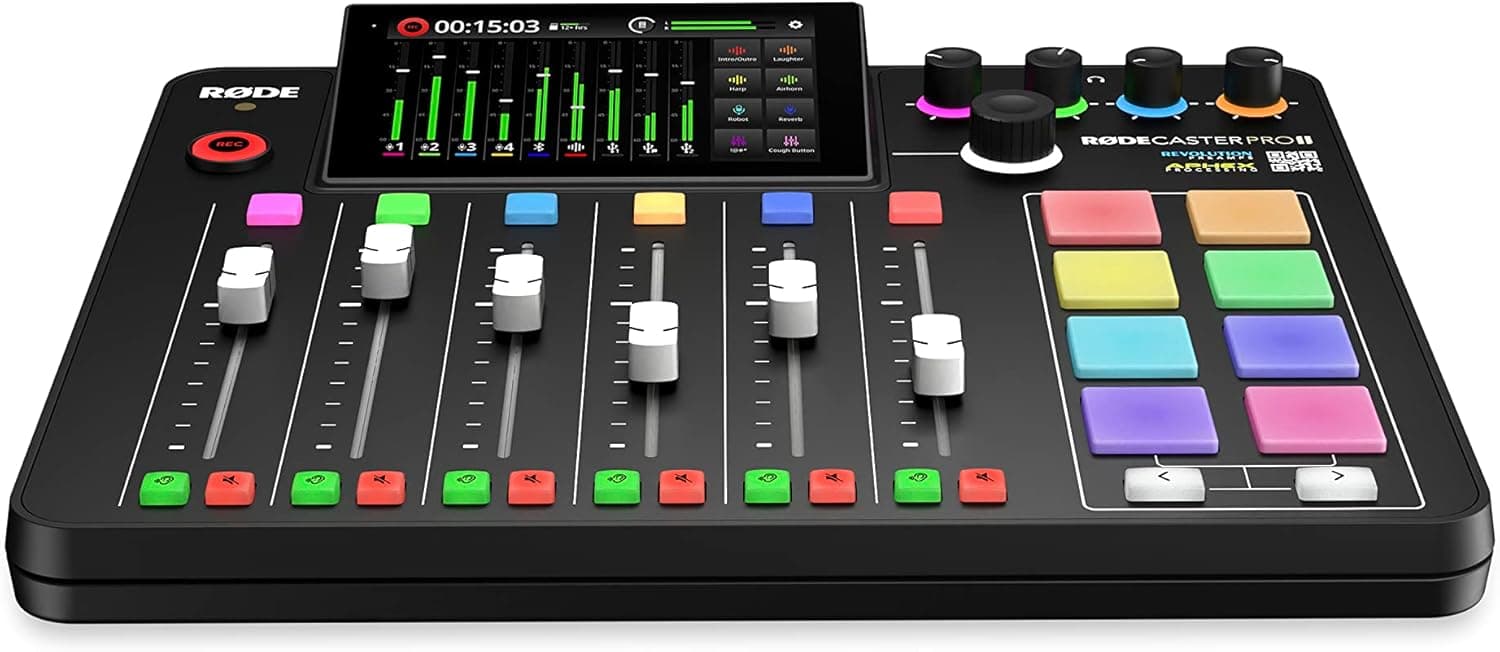
The black RODECaster Pro II is an all-in-one podcast production console that records, mixes and streams a full show from one desk.
Price range: See on Amazon
What we liked
- + Mixes mics, phone guests, music and sound pads without needing a computer
- + Records straight to storage, so a laptop is optional during sessions
- + Programmable pads and processing give a polished radio-style workflow
Trade-offs
- - Premium price is a big leap for solo hosts who only use one microphone
- - Lots of features mean a real learning curve before the first smooth show
Who this console fits
The RODECaster Pro II is built for podcast hosts running a full production, multiple in-room microphones, a phone-in guest, background music, and sound effect pads, who want all of that mixed live rather than assembled afterward in editing software. Rode's own datasheet lists four combo jack inputs that accept microphone, line or instrument signals through Neutrik connectors, which is enough for a small panel show without an external mixer. Streamers who also want to route the same mix to a live audience, and solo hosts who record voiceover style episodes with music beds and stingers, both benefit from having faders, mute buttons and effects pads on physical hardware in front of them instead of buried in a menu. A single-mic solo show with no music or guests will use only a fraction of what this console offers.
Specs and design in plain English
According to Rode's own specification sheet, the four combo inputs use preamps rated at -131.5dBV equivalent input noise with 76dB of gain, numbers strong enough that Rode states a cloudlifter is not required even for low-output dynamic microphones like the PodMic. Two USB interfaces are built in, one offering a 2-in, 16-out multichannel connection plus a separate 2-in, 2-out mix-minus feed, and a second providing its own 2-in, 2-out mix-minus channel, which is what lets two remote callers each hear a clean mix without hearing themselves echoed back. Output options include two balanced line outputs and four 6.35mm headphone jacks rated at 250mW into 32 ohms, so up to four in-room hosts can each monitor independently. Recording runs at 24-bit, 48kHz onto a microSD card, external USB storage, or straight into a connected computer.
Living with it day to day
Because the RODECaster Pro II can record directly to a microSD card or external drive, a full multi-mic session can be captured without a laptop even being present, which independent reviews highlight as one of its most practical strengths for hosts who want to record anywhere. The companion Rode Central desktop application handles firmware updates, custom pad assignments and RGB lighting customization, letting you tune the workflow to your show format once and then operate mostly from the hardware afterward. Reviewers confirm the preamps deliver a genuinely clean signal even from lower-output dynamic mics, matching Rode's own claims about skipping a separate gain booster. The touchscreen and physical faders mean live adjustments during recording, muting a distracted co-host or ducking music under dialogue, happen instantly rather than in post.
Trade-offs and how it compares
The most obvious trade-off is price, since independent coverage lists the RODECaster Pro II around 699 dollars, a real jump for a solo host who only ever plugs in one microphone and has no need for its mixing depth. Reviewers also flag a genuine learning curve, since the breadth of pads, routing options and effects takes real time to master before a show runs smoothly on it. Against the smaller RODECaster Duo, the Pro II trades some portability for two more inputs and a larger touchscreen, making the Duo the better fit for a two-host show that travels, while the Pro II suits a fixed studio desk. Against Elgato's Stream Deck Plus, the two devices serve different roles, since the RODECaster is a full audio mixer while the Stream Deck is a control surface layered on top of separate audio gear.
Verdict and who should look elsewhere
Scoring 9.4 out of 10 here, the black RODECaster Pro II earns top marks for genuinely replacing a rack of separate gear, a mixer, recorder, and USB interface, with one desk unit that a multi-person show can grow into. It rewards hosts who record regularly with guests, music and multiple mics, and who will actually use its computer-free recording and live mixing. A solo host recording one voice into one microphone with no music or sound effects is paying for far more mixer than they need, and should look at a simple single-channel USB interface or a basic two-input mixer instead.
Frequently asked questions
Do I need a computer to use the RODECaster Pro II?
No. It can record directly to a microSD card or external USB storage, so a full session can be captured without a laptop connected.
How many microphones can plug into the RODECaster Pro II?
It has four combo jack inputs that each accept a microphone, line or instrument signal through Neutrik connectors.
Does the RODECaster Pro II need a cloudlifter for dynamic mics?
Rode states its preamps offer enough clean gain that a separate cloudlifter is not required, even for lower-output dynamic microphones.
How is the black RODECaster Pro II different from the white version?
The core hardware and specifications are the same, so the choice between colors comes down to which finish matches your studio setup.
Prices change often, so check the current price and availability on Amazon.
Check price on AmazonPodcast Gear Hub may earn a commission from the link above.