50 Pack Acoustic Foam Panels, 2" x 12" x 12" High Density Sound Absorbing Wedge Panels Review (2026)
Updated September 14, 2026 · Research-based review
Our verdict
This 50 pack of 2 inch wedge foam panels covers enough wall around a podcast desk to noticeably calm echo in a small, untreated room. The high density polyurethane wedges are fire resistant and easy to trim, but adhesive is sold separately and the foam only tames mid and high frequencies, not low bass rumble.
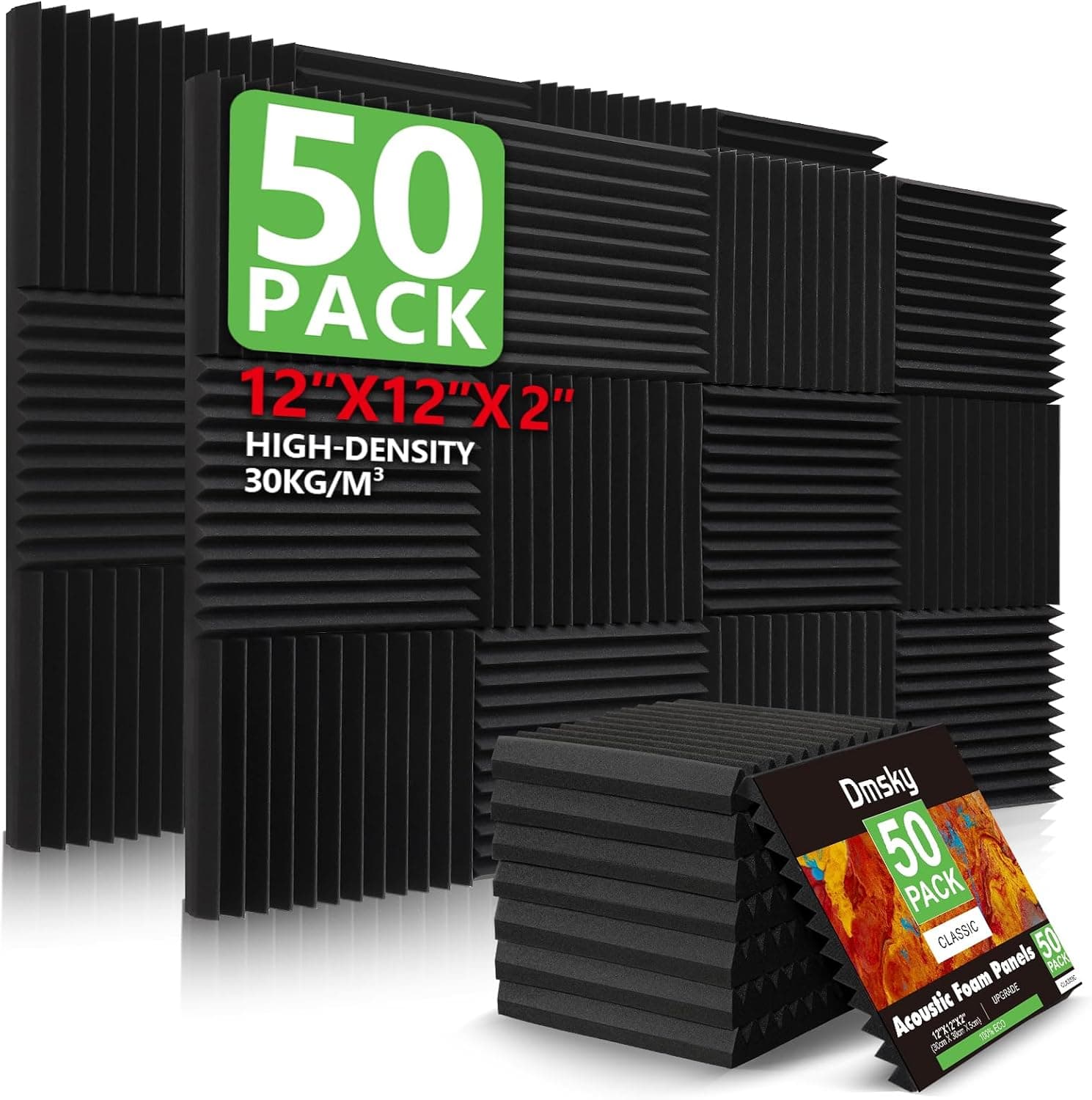
A 50 pack of 2" x 12" x 12" high density wedge acoustic foam panels for taming echo on the walls around a podcast desk.
Price range: See on Amazon
What we liked
- + 50 Pack covers a good area of wall behind and beside the host
- + 2" thickness absorbs more speech reflections than thin 1" tiles
- + Wedge profile breaks up flutter echo in small, boxy rooms
Trade-offs
- - Foam treats mid and high echo but does little for low bass rumble
- - Mounting that many tiles takes time and adhesive is sold separately
Who a 50 pack of foam suits
This set is aimed at a host recording in a bedroom, spare room or home office with bare drywall, where sound bounces off the walls and adds a boxy echo to voice recordings. Fifty 12 by 12 inch tiles cover a meaningful stretch of wall behind and beside a desk, enough for someone treating a full corner or two adjacent walls rather than a single accent spot. It is a better fit for someone starting acoustic treatment from scratch than for a room that already has curtains, rugs and furniture softening reflections, since diminishing returns set in once a room already absorbs a fair amount of sound on its own.
What the wedge shape and density do
Each panel measures 2 inches thick, thicker than the common 1 inch tile, which lets it absorb more of the mid and lower-mid frequencies where a speaking voice sits. The wedge profile, cut into a ridged pattern rather than a flat pyramid or flat square, increases the surface area facing the room, which helps break up flutter echo, the fast, buzzy reflection that bounces between two parallel walls in a small space. The foam is a high density polyurethane, listed as fire resistant and non-toxic, which matters for a wall covered edge to edge with foam in a home office. New tiles typically arrive compressed for shipping and need a day or two in a ventilated room to fully expand to their listed size.
Mounting and living with the panels
Adhesive is not included with this set, so budget for spray adhesive or foam mounting tabs separately before covering a wall, and expect the job to take longer than expected with fifty individual tiles to place and align. Foam like this treats reflections rather than blocking sound from leaving or entering the room, so it will quiet echo inside the room without meaningfully soundproofing it from neighbors or street noise. Once mounted, the tiles need little care beyond an occasional dusting, since they are not meant to be washed or handled roughly. Because the foam only addresses mid and high frequency reflections, a room with a persistent low hum or bass buildup in a corner will still need a bass trap in addition to these wedge panels.
How it compares with other panel packs
In the site's acoustic panel guide this 50 pack ranks first, ahead of thinner 1 inch options like the Focusound and 80 Pack sets and the thicker but fewer 8 Pack bass trap corners. The extra thickness over the common 1 inch tiles gives it an edge in absorption per panel, even though a buyer gets fewer total tiles than the 80 or 100 packs at that thinner gauge. Anyone dealing specifically with bass buildup in room corners, rather than general mid and high echo, is better served pairing a smaller run of these wedges with dedicated corner bass traps like the 8 Pack option, since foam of any thickness struggles with low frequencies that wedge shapes are not designed to trap.
Verdict and when to look elsewhere
Choose this pack if you are treating a home office or spare room for podcast recording from scratch and want enough coverage to notice a real difference in echo, and you are prepared to buy adhesive and spend an afternoon mounting fifty tiles. It earns the site's score of 8.4 out of 10 largely on value and fit for the job, since 2 inch coverage at this quantity is hard to match. Buyers chasing serious soundproofing between rooms should look at mass-loaded barriers instead of foam, and anyone fighting a bass-heavy room should add corner bass traps alongside these wedges rather than relying on foam alone.
Frequently asked questions
Is adhesive included with the foam panels?
No, adhesive is sold separately. Spray adhesive or foam mounting tabs are the typical options for attaching the tiles to a wall.
Will these panels soundproof a room from outside noise?
No, acoustic foam absorbs reflections inside the room to reduce echo, it does not block sound from passing through walls to or from neighboring rooms.
Is the foam fire resistant?
The panels are listed as high density, fire resistant polyurethane foam, a common material spec for acoustic tiles sold for home and studio use.
Do the panels need time to expand after arrival?
Yes, foam tiles typically ship compressed and should sit in a ventilated room for a day or two to return to their full listed thickness before mounting.
Prices change often, so check the current price and availability on Amazon.
Check price on AmazonPodcast Gear Hub may earn a commission from the link above.