NEEWER 72" Fluid Head Video Tripod Monopod, Aluminum Alloy QR Plate, 360 Pan & +90/-70 Tilt, Max Load 13.2lb, TP72A Review (2026)
Updated September 14, 2026 · Research-based review
Our verdict
The NEEWER TP72A pairs a real fluid head with a 72 inch tripod that also breaks down into a monopod, giving smooth pans and tilts for video interviews and B-roll. A 13.2lb rated load handles most mirrorless and DSLR rigs with a lens, but the extra weight and the monopod conversion take some getting used to on location.
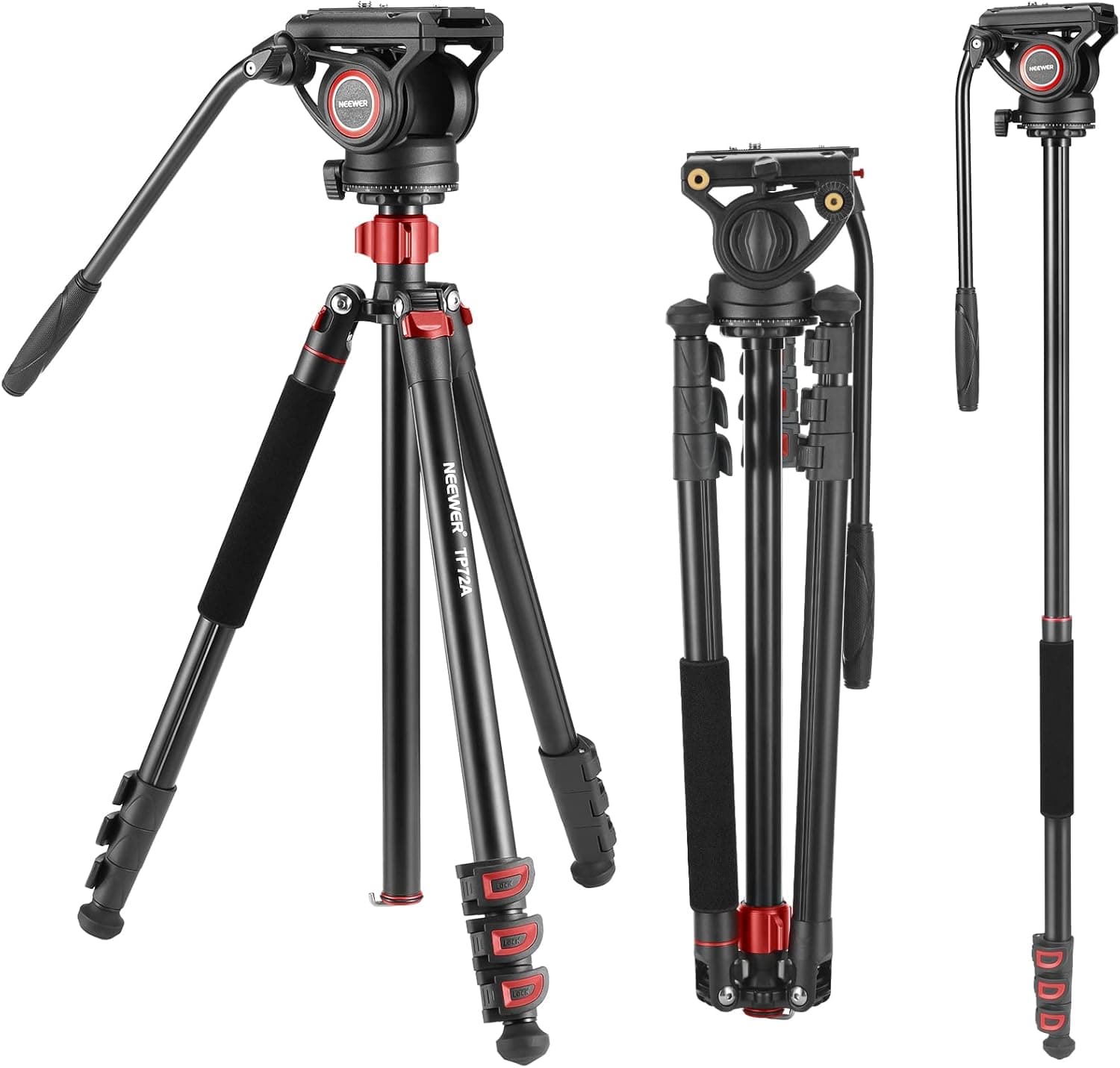
NEEWER's TP72A is a 72" fluid head video tripod and monopod with 360 pan, +90/-70 tilt and a 13.2lb max load.
Price range: See on Amazon
What we liked
- + Fluid head delivers smooth pans and tilts for video
- + 13.2lb max load supports heavier cameras with lenses
- + Converts to a monopod for flexible location shooting
Trade-offs
- - Heavier than lightweight travel tripods when packed for location work
- - Monopod conversion takes practice to set up quickly
Who the TP72A fits
The TP72A is built for anyone shooting video podcast segments, interviews, or B-roll who needs smoother camera movement than a photo tripod's simple ball head can deliver. Its fluid head is the key difference from a basic tripod, using internal drag to let pans and tilts glide instead of jerking into position, which matters for anyone recording a talking-head segment or panning across a panel of guests. Because it converts from a full tripod into a monopod by removing one leg, it also suits a shooter who moves between a fixed studio setup and a lighter, more mobile rig for location interviews or events. It fits less well for someone who only ever needs a lightweight travel tripod for stills, since the fluid head and extra hardware add real weight over a simple photo tripod.
Specs and design explained
The TP72A extends from 24 to 72 inches as a tripod, and its center column can push the monopod configuration up to 74 inches, while folding down to 22 inches for transport. The fluid head offers a full 360 degree pan with a bubble level built in, plus tilt from negative 70 to positive 90 degrees, and NEEWER rates the rig to support up to 13.2lb, enough for most mirrorless cameras or DSLRs with a standard lens attached. The unit itself weighs about 5lb, built from aluminum alloy, with four-section telescopic legs that can splay to three different angles for low, macro, or overhead shooting positions, and rubber feet for stability on hard floors. A quick release plate with a dual-mode design allows the camera to be mounted or removed from the top or the side, and a 1 quarter inch side screw hole allows a mic or light to be added.
Living with the TP72A
Setting up for a stationary interview means spreading the telescopic legs, leveling using the built-in bubble level, and locking the quick release plate onto the camera before mounting it to the fluid head. Panning and tilting during a shot benefit from the fluid drag, small, steady movements come out smooth rather than jumpy, which is the main reason to choose this over a simpler ball head tripod. Converting to a monopod means unscrewing one leg entirely and reattaching it as the monopod's foam-gripped shaft, a process that takes a bit of practice to do quickly on location rather than at a leisurely pace at home. Because the whole rig is heavier than a lightweight travel tripod, carrying it to an outdoor interview or event means planning for the extra bulk in a bag or over the shoulder.
Trade-offs against rival video tripods
Against the Arsoer 74 inch and Victiv 78 inch tripods, both ranked behind it in the same camera tripod guide, the TP72A's fluid head and clean monopod conversion stand out as genuine advantages for anyone prioritizing smooth video movement over sheer height or a bundled remote. Against NEEWER's own Basic 74 inch TP37 tripod, also in the same guide, the TP72A adds the monopod conversion that the more basic model does not offer, at the cost of being a step up in complexity. The clearest trade-off across the whole guide is between raw height, some rivals extend further, and movement quality, which is where the TP72A's dedicated fluid head does the most work for anyone actually filming rather than just mounting a static camera.
Verdict and who should pick something else
The TP72A earns our score of 8.8 out of 10 and ranks first in its guide, with fit for the job and features both rated highly thanks to the fluid head and monopod conversion working together in one rig. It is a strong pick for anyone recording video podcast segments, interviews, or panel B-roll who wants smoother pans than a basic ball head tripod without stepping up to a dedicated cinema rig. Anyone who only needs a lightweight tripod for still photos or who will always shoot from one fixed position without panning should consider a simpler, lighter photo tripod instead, since the fluid head adds weight and cost that a static setup does not need.
Frequently asked questions
What is the maximum camera weight the NEEWER TP72A supports?
NEEWER rates the tripod to support up to 13.2lb, which covers most mirrorless cameras and DSLRs paired with a standard lens.
Can the TP72A be used as a monopod?
Yes. One leg unscrews and reattaches as a foam-gripped monopod shaft, giving a lighter, more mobile option for location shooting.
What is a fluid head and why does it matter for video?
A fluid head uses internal drag to smooth out pans and tilts, so camera movement looks steady rather than jerky, which matters for interview and B-roll footage.
How tall does the TP72A extend?
As a tripod it extends from 24 to 72 inches, and using the center column in monopod mode it can reach up to about 74 inches.
Prices change often, so check the current price and availability on Amazon.
Check price on AmazonPodcast Gear Hub may earn a commission from the link above.