TroyStudio Enclosed Vocal Booth, Portable Microphone Isolation Shield with Acoustic Foam and Panels Review (2026)
Updated September 14, 2026 · Research-based review
Our verdict
TroyStudio's enclosed vocal booth suits home recordists who need to tame echo in an untreated room but cannot install permanent acoustic panels. The fully enclosed foam and panel design absorbs reflections well for its size, though the boxed-in shape limits eye contact with a camera and takes up storage space when folded.
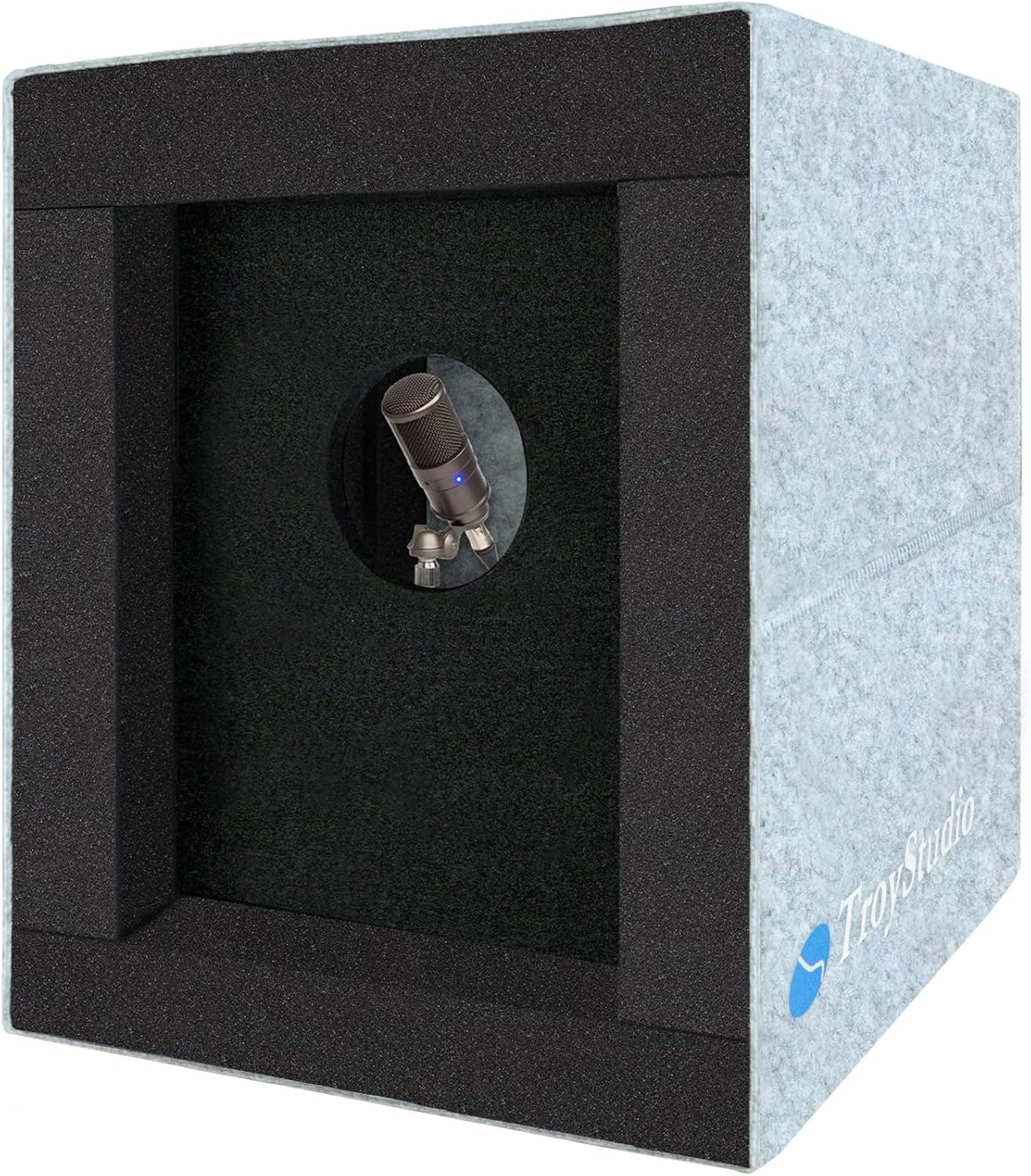
TroyStudio's enclosed vocal booth is a portable mic isolation shield with acoustic foam and panels surrounding the mic.
Price range: See on Amazon
What we liked
- + Enclosed design surrounds the mic more fully than open shields
- + Acoustic foam and panels absorb reflections effectively
- + Portable build can move between rooms or locations
Trade-offs
- - Enclosed booth limits eye contact and camera visibility
- - Bulky size may be difficult to store in small studios
A Portable Booth For Untreated Rooms
This TroyStudio model is a portable microphone isolation shield built as an enclosed box rather than the more common open horseshoe shape, so the microphone sits inside a small chamber lined with acoustic foam and panels on most sides. It targets podcasters, voiceover artists, and home musicians who record in a bedroom, office, or shared apartment where hard walls, windows, and furniture cause noticeable echo but a full acoustic treatment build-out is not practical. Because it is designed to fold and travel, it also fits people recording in more than one location, such as a home setup and a small studio rental, or anyone who wants to store the booth away between sessions rather than leave a bulky panel mounted permanently on the wall.
Foam, Panels and What The Enclosed Design Changes
Where open vocal shields curve around the back of a microphone and leave the front and sides exposed, this enclosed style surrounds the capsule on more sides with foam panels, which listings for TroyStudio's enclosed booths describe as thick acoustic foam paired with denser absorption panels. Surrounding more of the mic with absorptive material generally reduces slap-back echo and room reflections more thoroughly than a half-open shield, which is the main reason the site's own scoring gives it a strong fit-for-the-job rating. The trade-off of that fuller enclosure is reduced visibility for the performer, since a box around the microphone can block sightlines to a script, a webcam, or a co-host on a video call, unlike open shields that leave more of the front clear.
Setting It Up and Living With The Booth
Like other folding isolation shields, this booth is meant to be clamped or mounted near a mic stand or boom arm, opened out for a session, and folded flat again afterward for storage, since its own listing markets it as portable rather than a permanent studio fixture. Expect some assembly or unfolding the first time, and plan for a spot to store it, since even folded these enclosed designs are bulkier than a simple pop filter or open shield. Wipe foam panels gently rather than pressing hard, since acoustic foam compresses and loses some absorption over years of handling, and keep the unit away from direct sunlight or humidity, which can degrade foam faster than normal indoor use.
How It Stacks Up Against Other Portable Booths
Within the site's own portable vocal booth ranking, this enclosed TroyStudio model sits close in score to the open-style TroyStudio Portable Vocal Booth and just behind The Voicecube Ultra Pro, which uses thicker five inch walls for stronger isolation. Compared with the open shield version, the enclosed design trades some visibility and portability for potentially tighter coverage around the mic, so someone who values seeing their notes or camera clearly may prefer an open horseshoe shield instead. Against simpler options like the SIMPLURFI isolation ball, this booth offers a larger absorbing surface but is also a bigger object to store, which matters in small apartments or shared rooms.
Verdict and Who Should Choose Differently
With a site score of 8.2 out of 10 and a strong fit-for-the-job rating, this booth is a solid pick for anyone recording voice in a reflective room who wants more enclosure than a basic pop filter or open shield provides. It works best for solo recording sessions where the performer does not need constant eye contact with a camera or a scrolling script mounted behind the mic. Buyers who film video alongside audio, or who have very limited storage space, should consider an open-style shield or invest in simple wall panels instead, since the enclosed shape is the feature that both makes it effective and makes it awkward for camera-facing work.
Frequently asked questions
Does an enclosed vocal booth like this replace room treatment?
It reduces reflections right around the microphone rather than treating the whole room, so it helps most in an untreated space but will not match a fully treated room.
Can I use this booth while recording video?
It is possible but the enclosed foam and panels around the mic can block sightlines to a camera, so an open-style shield suits camera-facing recording better.
Is this vocal booth easy to store?
It folds down for storage, but the enclosed design is bulkier than a simple pop filter or open horseshoe shield, so plan for closet or shelf space.
How does this compare with TroyStudio's open portable vocal booth?
Both score closely on the site, with this enclosed version offering fuller coverage around the mic while the open version leaves more room for visibility and a camera.
Prices change often, so check the current price and availability on Amazon.
Check price on AmazonPodcast Gear Hub may earn a commission from the link above.