Sony MDR-M1 Studio Closed Back Headphones Review (2026)
Updated September 14, 2026 · Research-based review
Our verdict
Sony's MDR-M1 is a closed back studio headphone with a wide frequency response and a lightweight build, aimed at editing and mixing podcast audio with strong isolation from nearby mics. As a newer model it has less of a long-term track record than older studio staples, and it costs more than basic broadcast headphones.
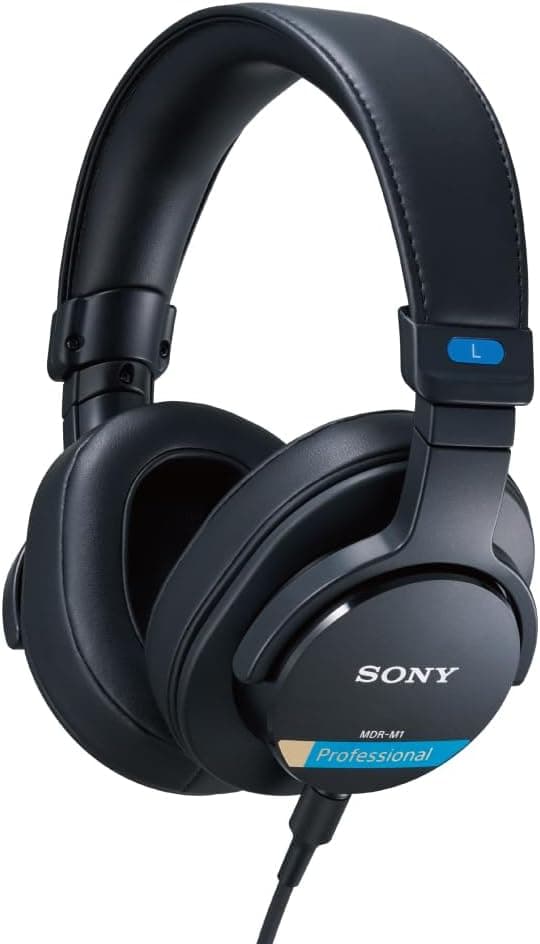
Sony's MDR-M1 are closed back studio headphones, a modern studio monitor for recording and editing with strong isolation.
Price range: See on Amazon
What we liked
- + Closed back isolation prevents bleed into nearby microphones
- + Modern Sony studio tuning suits editing and mixing work
- + Comfortable lightweight design for long recording days
Trade-offs
- - Newer model with fewer long-term reviews than older staples
- - Costs more than basic broadcast headphones
Who the MDR-M1 fits
The MDR-M1 is built for anyone editing or mixing podcast audio who needs to hear detail accurately, whether that is catching background noise, plosives, or uneven levels between hosts before a show goes out. Its closed back design also makes it useful during recording itself, since sealed headphones prevent the sound playing in someone's ears from leaking out and getting picked up by a nearby microphone, unlike open-back designs. That combination suits a host who wears headphones while tracking an episode and then uses the same pair for editing afterward. It fits less well for someone who only needs basic headphones for the occasional call, since its studio tuning and higher price are aimed at people doing real mixing and editing work rather than casual listening.
Specs and design explained
Sony rates the MDR-M1 with a frequency response of 5Hz to 80kHz, unusually wide for a studio headphone, using a custom 40mm driver designed to balance low distortion with accurate reproduction at low frequencies. The closed acoustic structure seals around the ear for sound isolation, which both blocks outside noise from a listener and stops the headphone's own sound from bleeding into a nearby microphone during recording. At about 7.6 ounces, it is a lightweight build for a studio headphone, with soft, thick earpads intended for comfort across long editing sessions, and the earpads are replaceable rather than fixed, which extends the usable life of the headphones. It includes two detachable cables of different lengths along with a screw-on adapter that steps up from a 3.5mm plug to a 6.3mm quarter inch jack for studio gear.
Living with the MDR-M1
Day to day, the detachable cable system means a damaged cable does not require replacing the whole headphone, and having two cable lengths included covers both a close desktop setup and a longer run to a rack-mounted interface. The lightweight design and soft earpads matter most during long editing sessions, where a heavier or stiffer headphone can become uncomfortable well before a multi-hour edit is finished. Because the earpads are replaceable, ongoing care mainly means keeping them clean and swapping them once they wear out, rather than retiring the whole headphone. The included adapter means it can move between a phone or laptop's 3.5mm jack and a studio interface's quarter inch output without needing a separate cable.
Trade-offs against rival monitor headphones
Against the Audio-Technica ATH-M50x and ATH-M70x, both scoring similarly in the same monitor headphone guide, the MDR-M1 competes on Sony's own studio tuning and unusually wide rated frequency response, while the Audio-Technica pair have a much longer track record as industry standard choices that many podcasters already know well. Against the older Sony MDR7506, a long-running broadcast staple also in the same guide, the MDR-M1 represents Sony's newer take on the same closed-back monitoring formula, with a lighter build and replaceable earpads the older model does not offer. Being a newer release is itself part of the trade-off, it has fewer years of real-world reviews and long-term durability reports behind it compared with headphones that have been industry staples for over a decade.
Verdict and who should pick something else
The MDR-M1 earns our score of 8.6 out of 10, with fit for the job and build both rated highly thanks to strong isolation, a lightweight design, and replaceable earpads built for real editing work. It is a strong pick for a podcaster who records and edits their own show and wants accurate, comfortable headphones for both jobs. Anyone who wants the reassurance of a headphone with a decade or more of proven use among audio professionals, or who is working with a tighter budget, may prefer a longer-established model like the Audio-Technica ATH-M50x or the Sony MDR7506 instead.
Frequently asked questions
Are the Sony MDR-M1 good for recording as well as editing?
Yes. Their closed back design isolates sound well, which helps prevent headphone bleed from being picked up by a nearby microphone during recording, in addition to their use for editing and mixing.
Can you replace the earpads on the MDR-M1?
Yes. The earpads are designed to be replaceable, which extends the usable life of the headphones compared with a sealed, non-replaceable pad design.
What cable does the MDR-M1 come with?
It ships with two detachable cables of different lengths plus a screw-on adapter that converts a 3.5mm plug to a 6.3mm quarter inch jack.
How much do the MDR-M1 weigh?
Sony lists them at about 7.6 ounces, a lightweight build intended for comfort during long editing or mixing sessions.
Prices change often, so check the current price and availability on Amazon.
Check price on AmazonPodcast Gear Hub may earn a commission from the link above.