Zoom H5 Studio Handheld Recorder with 32-Bit Float and USB Audio Interface Review (2026)
Updated September 14, 2026 · Research-based review
Our verdict
Best for a creator who records interviews on location and also wants a real USB audio interface back at the desk. The H5studio's 32-bit float recording removes the fear of blown levels, though its two XLR inputs will feel limited next to a dedicated podcast mixer.
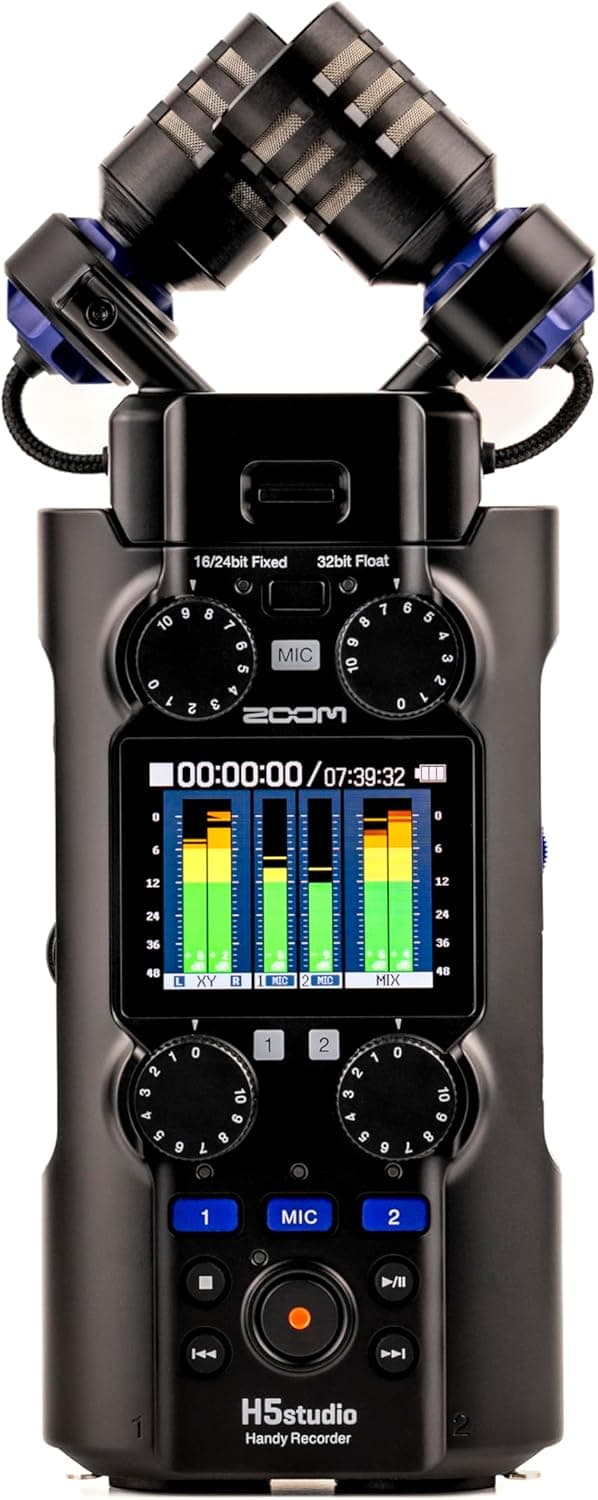
The Zoom H5 Studio is a handheld recorder with 32-Bit Float and a USB audio interface mode, bridging field and desk recording.
Price range: See on Amazon
What we liked
- + 32-Bit Float recording forgives mistakes with gain in unpredictable rooms
- + USB audio interface mode makes it useful back in the home studio
- + Handheld form still records interviews without a laptop
Trade-offs
- - Newer model costs more than older H5 units for similar input counts
- - External mic count remains modest compared with dedicated podcast mixers
Who the H5studio fits
The H5studio is Zoom's handheld recorder aimed at filmmakers, musicians, and podcasters who need to capture audio away from a desk, then bring that same unit back to double as a USB audio interface for editing or a second recording session. Its built-in 19.4mm XY stereo capsule handles ambience, room tone, and quick two-person interviews on its own, while the two XLR and TRS combo inputs with 48V phantom power let it take a shotgun mic, a pair of lavalier mics, or a standard podcast microphone in the field. That combination makes it a strong fit for a podcaster who records remote interviews outside a fixed studio, a video creator gathering location sound for a shoot, or anyone who wants one device that covers both field recording and a home desk. A host who only ever records at a single desk position has less need for the field-recorder half of this design.
The 32-bit float and USB interface features explained
The headline spec is 32-bit float recording, which captures audio with enough headroom that a sudden loud sound will not clip or distort even if input levels were not set perfectly beforehand, a real safety net for anyone recording spontaneous or unpredictable audio such as live interviews. The H5studio can record up to six tracks at once, meaning four individual inputs plus a stereo mix, at sample rates up to 96kHz, and its F-series preamps are built for a wide dynamic range, so quiet passages and loud reactions both stay usable. Beyond the recorder mode, it works as a 4-in, 2-out USB audio interface for Mac, Windows, iOS, and Android, turning it into a legitimate desktop interface for the two XLR inputs whenever it is plugged into a computer instead of running on batteries.
Living with it day to day
Power comes from four AA batteries, rated for around 15 hours of two-track recording, which keeps it usable through a full day of field work without hunting for an outlet, and recordings save to microSDHC or microSDXC cards with support up to 2TB, so storage rarely becomes a limiting factor. At 86mm wide, 206mm deep, and 54.6mm tall, weighing about 410 grams with batteries, it is small enough to hold in one hand or clip to a shoulder rig, yet solid enough to feel like a piece of proper recording gear rather than a toy. Everyday use involves setting record levels on the front-facing dials, monitoring through the headphone jack, and swapping to USB mode with a cable when it is time to use it as an interface instead.
How it compares with other field recorders
Against Zoom's own H4essential, a newer and typically pricier model with similarly modern 32-bit float recording, the H5studio differentiates itself mainly through its larger XY capsule and the dedicated USB interface framing of this particular version. Compared with the older H5, which records at a fixed 16 or 24-bit depth rather than 32-bit float, this Studio edition trades a bit of familiarity and lower price for real insurance against blown levels, which matters most to anyone recording unpredictable live audio rather than controlled studio sessions. A dedicated multi-host podcast mixer will still out-muscle this recorder on total input count and onboard sound effects, so a growing panel show may eventually need to add a proper console alongside it.
Verdict and who should pick something else
For a podcaster or creator who splits time between field interviews and desk recording, the H5studio earns our score of 8.6 out of 10 by combining forgiving 32-bit float capture with a genuinely useful USB interface mode in one compact body. Buyers focused purely on studio recording with three or more hosts around a table should look at a dedicated podcast console instead, since two XLR inputs will not stretch to cover a full panel. Anyone on a tight budget who does not need 32-bit float's extra headroom may also find better value in an older, similarly capable Zoom handheld recorder.
Frequently asked questions
Can the Zoom H5studio work as a USB microphone interface?
Yes. Beyond recording to its own microSD card, it functions as a 4-in, 2-out USB audio interface for Mac, Windows, iOS, and Android, so its two XLR inputs can feed directly into a computer for recording or streaming.
What does 32-bit float recording actually protect against?
It captures audio with far more headroom than standard 16 or 24-bit recording, so a sudden loud sound that would normally clip and distort instead stays usable, which is useful for unpredictable interviews or live moments.
How long does the H5studio run on batteries?
Zoom rates it at approximately 15 hours of two-track recording on 4 AA batteries, and it can also be powered continuously over USB when used at a desk.
Prices change often, so check the current price and availability on Amazon.
Check price on AmazonPodcast Gear Hub may earn a commission from the link above.