Yamaha HS5 Powered Studio Monitor Review (2026)
Updated September 21, 2026 · Research-based review
Our verdict
A trusted starting point for a podcaster who wants an accurate reference speaker for catching harsh edits and background noise that headphones can mask. The compact bi-amped design suits small desks well, but it is sold as a single unit, so a true stereo setup means buying a second speaker separately.
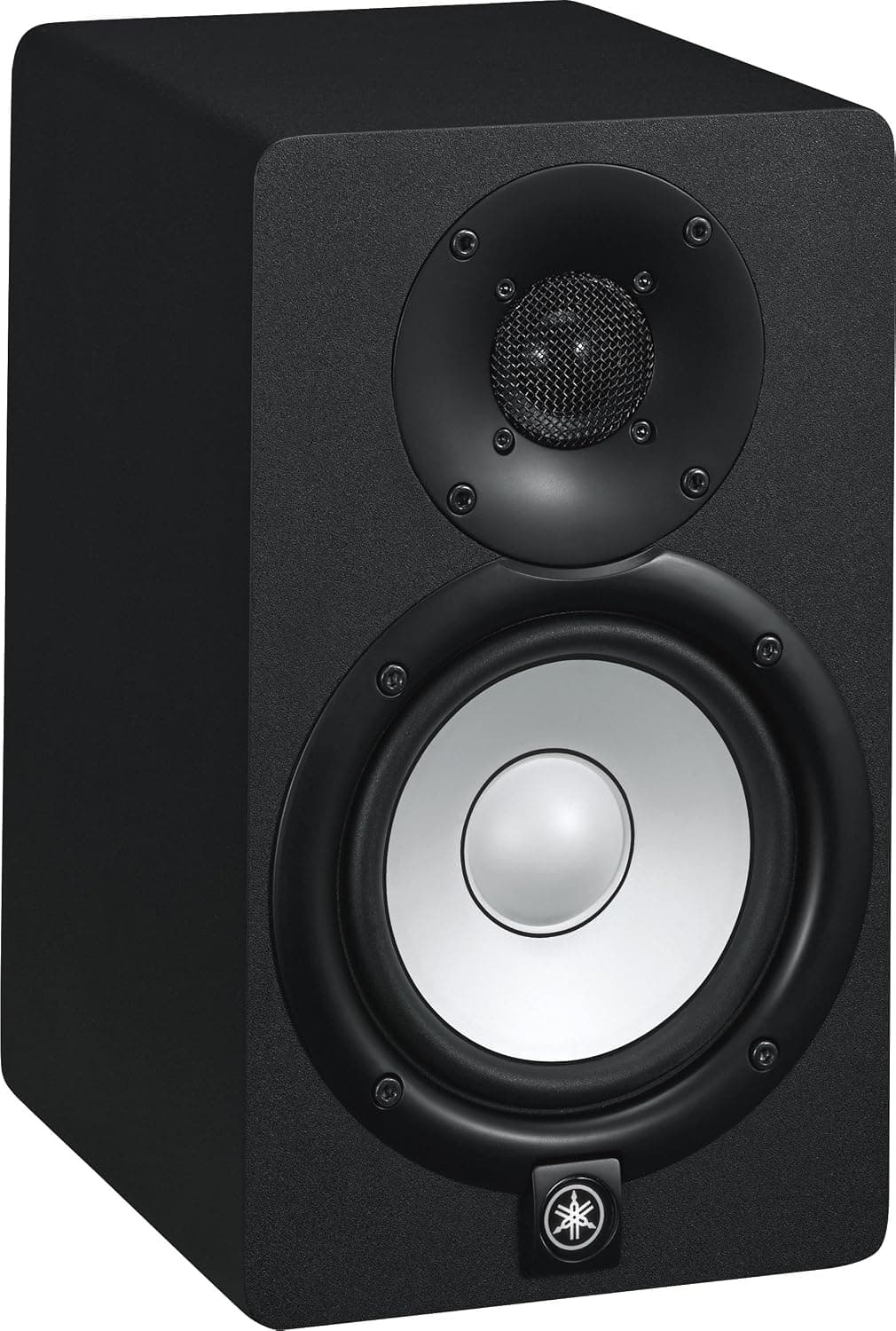
The Yamaha HS5 is a single powered studio monitor, a compact nearfield speaker for accurate podcast mix checks.
Price range: See on Amazon
What we liked
- + Accurate Yamaha voicing exposes harsh edits and noise in recordings
- + Compact size suits small desks and home studios
- + Balanced inputs connect cleanly to most audio interfaces
Trade-offs
- - Sold as a single speaker, so a second unit is needed for stereo
- - Short bass extension may need a sub for music-heavy content
Who this is for
The HS5 fits a podcaster or editor working at a home desk who wants a reference-quality nearfield monitor for checking how a mix will translate to other speakers, rather than relying only on headphones during editing. Yamaha voices the HS series to be deliberately uncolored rather than flattering, which suits someone who wants to hear editing mistakes, background hum or uneven levels clearly rather than a speaker that makes every recording sound pleasant. A podcaster who mainly wants a fun-sounding desktop speaker for casual listening, rather than a working reference tool for judging recordings, will likely find the flat, accurate tuning less immediately enjoyable than a consumer speaker.
Drivers and amplification
The HS5 is a 2-way bi-amplified design with a 5 inch cone woofer and a 1 inch dome tweeter, each driven by its own dedicated amplifier inside the cabinet, 45 watts for the low frequency driver and 25 watts for the high frequency driver, for a combined 70 watts of power. Running each driver off its own amp section, rather than splitting one shared amplifier across both, is intended to give cleaner, more controlled sound at the frequency range each driver actually reproduces. Yamaha rates the frequency response from 54Hz to 30kHz at minus 10dB, or a tighter 74Hz to 24kHz at minus 3dB, covering the range most relevant to spoken word and general mixing work.
Controls and connections
Two rear-panel controls, labeled Room Control and High Trim, let a user tailor the low and high frequency response slightly to compensate for a small or acoustically difficult room, such as one placed close to a wall or corner where bass can build up unnaturally. Inputs accept both XLR and quarter inch TRS connections, and both accept balanced or unbalanced signals, giving flexibility to connect from a variety of audio interfaces or mixers without needing an adapter. This combination of dual inputs and basic room-correction controls is a practical feature set for a home studio where speaker placement is rarely ideal.
Size and build
At roughly 6.7 inches wide, 11.2 inches tall and 8.7 inches deep, the HS5 is compact enough to sit on a desk on either side of a monitor without dominating the workspace, a genuine advantage over larger studio monitors that need more distance from the listener to sound their best. The cabinet is built from low-resonance MDF, which Yamaha states helps reduce unwanted vibration and cabinet coloration compared with thinner or lighter materials, keeping the sound closer to what the drivers themselves are producing. This smaller footprint does mean less low-frequency extension than an 8 inch model like the HS8, a trade-off worth knowing for anyone mixing bass-heavy music alongside podcast content.
Value as a single unit
Yamaha sells the HS5 both individually and as a matched pair, and this specific listing is for one single speaker, so anyone wanting a proper stereo monitoring setup, the standard way these are used, needs to budget for a second unit either now or later. Bought as a pair over time, the HS5 remains one of the most consistently recommended affordable studio monitors for accurate reference listening, a reputation built over many years in home and professional studios alike. For a podcaster who already owns one HS5 or specifically wants a single center-channel style reference speaker, this is a reasonable way to buy into the line without committing to a full pair immediately.
Frequently asked questions
Does this listing include one speaker or a pair?
This is a single HS5 speaker. Yamaha also sells the HS5 as a matched pair for a full stereo setup.
What size room is the HS5 best suited for?
Its compact 5 inch driver and small cabinet make it well suited to nearfield listening at a desk in a small to medium home studio.
Does the HS5 have any room correction controls?
Yes, it has Room Control and High Trim switches on the rear panel to adjust low and high frequency response for difficult placements.
What inputs does the HS5 accept?
It accepts both XLR and quarter inch TRS connections, either balanced or unbalanced.
Prices change often, so check the current price and availability on Amazon.
Check price on AmazonPodcast Gear Hub may earn a commission from the link above.