RODE VideoMic Pro+ Premium On-Camera Shotgun Microphone with High-Pass Filter Review (2026)
Updated September 20, 2026 · Research-based review
Our verdict
The RODE VideoMic Pro+ is a supercardioid on-camera shotgun with a switchable high-pass filter and a safety channel, built for video creators who need control without an external recorder. It suits run-and-gun interviews or documentary work, though its price and larger body sit above simpler shotguns made for casual vloggers.
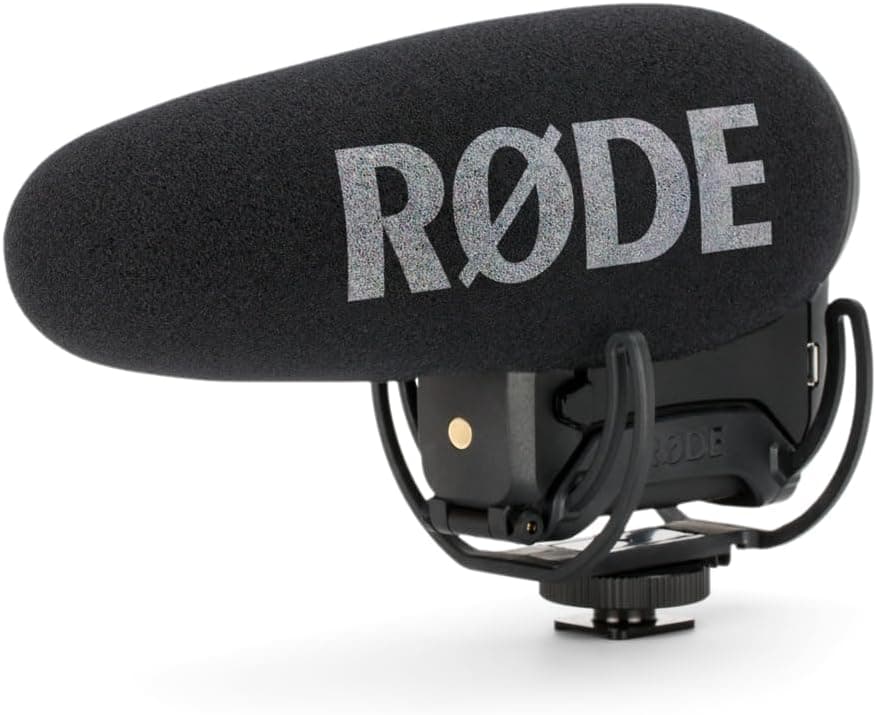
The RODE VideoMic Pro+ is a premium on-camera shotgun mic with a high-pass filter, aimed at serious video creators.
Price range: See on Amazon
What we liked
- + High-pass filter cuts rumble from traffic, air conditioning and handling
- + Premium Rode build and shock mounting cope well with daily shoots
- + Onboard controls let you adjust sound at the camera instead of in edit
Trade-offs
- - Higher price than simpler on-camera shotguns aimed at casual vloggers
- - Larger body adds weight to small gimbals and compact camera rigs
Who the VideoMic Pro+ fits
This microphone is built for video creators, documentary shooters, and content teams who need reliable on-camera audio without carrying a separate audio recorder or mixer. Because it includes onboard controls for filtering and gain rather than relying entirely on post-production fixes, it suits people who need usable audio straight out of the camera, such as run-and-gun interviews, event coverage, and field journalism. The safety channel feature, which records a second track at lower level to protect against sudden loud sound, makes it a strong fit for unpredictable shooting environments where subjects might suddenly raise their voice or where a loud event happens without warning. It is a weaker fit for casual vloggers who mainly want a simple plug-and-forget shotgun mic, since its added controls and premium price target more demanding shooting situations.
Specs and sound design in plain English
The VideoMic Pro+ uses a supercardioid condenser capsule integrated into a Rycote Lyre shockmount, which isolates the capsule from handling noise and camera vibration without a separate rubber suspension mount. Its switchable high-pass filter can be set to roll off rumble at either 75 Hz or 150 Hz, cutting out low-frequency noise from sources like traffic, air conditioning units, or wind before it ever reaches the recording. A high-frequency boost option adds clarity and detail in the treble range for voices that sound dull through a camera's automatic gain, and a 3-stage digital gain control lets the operator match output level to the camera being used. The mic can run on a rechargeable lithium-ion battery, two AA batteries, or continuous USB power, giving flexibility for long shoot days.
Onboard controls versus fixing it in post
The core advantage of this mic over simpler on-camera shotguns is that its high-pass filter, high-frequency boost, and gain staging happen at the microphone itself rather than needing correction later in an editing timeline. For a documentary or interview shooter working on a tight turnaround, capturing clean, ready-to-use audio at the point of recording saves real editing time compared with fixing rumble or low gain after the fact. The safety channel adds another layer of protection specifically for unscripted situations, recording a quieter backup track so that a sudden loud moment does not ruin the main take. These features matter most to shooters working without a dedicated sound person, where the camera-mounted mic has to do more of the work on its own.
Fit on the camera and in the field
Because it packs more onboard electronics and controls than a minimalist shotgun mic, the VideoMic Pro+ has a larger body and more weight than simpler on-camera options, which is worth considering for anyone shooting on a small gimbal or a compact mirrorless rig where every added ounce affects balance. The integrated Rycote Lyre shockmount still attaches to a standard camera cold shoe, so mounting itself is straightforward, but the added bulk compared to entry-level shotgun mics is a real trade-off for size-sensitive setups. For shoulder-mounted cameras, larger mirrorless bodies, or tripod-based interview setups, the extra size is much less of a concern than it is on small gimbals.
Value and who should look elsewhere
The VideoMic Pro+ costs more than simpler on-camera shotgun microphones aimed at casual vloggers, and that price reflects its onboard filtering, gain control, and safety channel rather than raw sensitivity alone. It is a strong value for working videographers, documentary crews, and content creators who rely on it as their primary field audio solution and need the control it offers without adding an external recorder. Casual creators who mainly want a simple, lightweight shotgun mic for occasional vlogging, or anyone shooting primarily on a small gimbal where weight is critical, will likely get more practical value from a lighter, simpler on-camera shotgun instead.
Frequently asked questions
What does the high-pass filter do on the VideoMic Pro+?
It rolls off low-frequency rumble at either 75 Hz or 150 Hz, cutting noise from sources like traffic or air conditioning before it reaches the recording.
How is it powered?
The mic runs on a rechargeable lithium-ion battery, two AA batteries, or continuous USB power, giving shooters flexibility for long days in the field.
What is the safety channel feature?
It records a second, quieter backup track alongside the main audio so a sudden loud sound does not clip or ruin the primary take.
Is this mic too big for a small gimbal?
It is larger and heavier than simpler on-camera shotgun mics, so it can affect balance on small gimbals and compact mirrorless rigs more than lighter options would.
Prices change often, so check the current price and availability on Amazon.
Check price on AmazonPodcast Gear Hub may earn a commission from the link above.