AUPHONIX PRO Isolation Shield, Microphone Reflection Filter for Recording Review (2026)
Updated September 21, 2026 · Research-based review
Our verdict
The AUPHONIX PRO Isolation Shield is a foldable reflection filter that mounts on a mic stand to cut down on room echo reaching the microphone. It suits home studio hosts dealing with an untreated, reflective room, though it adds noticeable weight to a stand and does nothing to block noise coming from behind the performer.
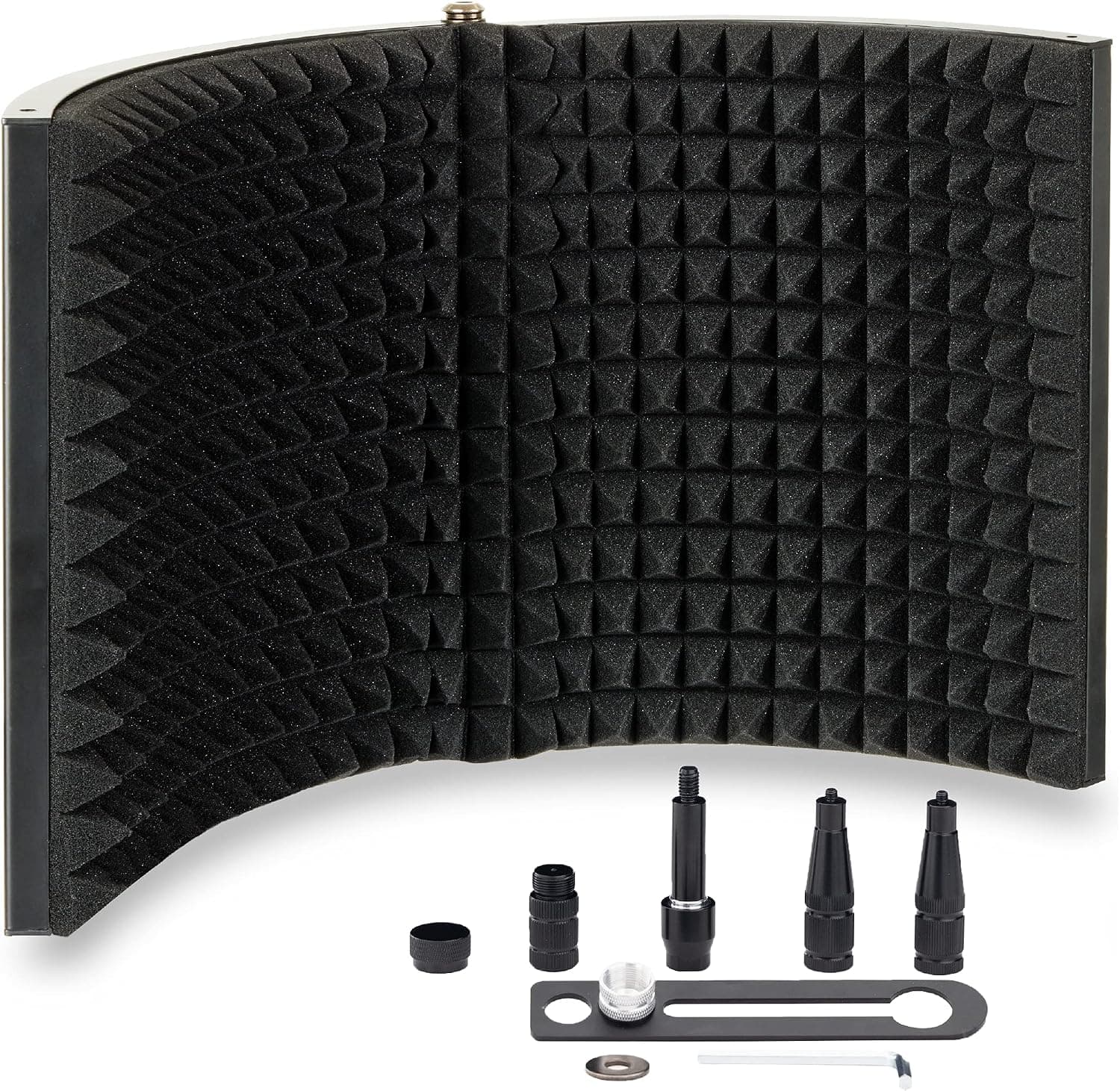
AUPHONIX's PRO isolation shield is a microphone reflection filter for recording, reducing room sound in home studios.
Price range: See on Amazon
What we liked
- + Reflection filter design reduces echo reaching the mic
- + PRO model aims for better absorption than basic shields
- + Mounts on standard mic stands for vocal and voiceover setups
Trade-offs
- - Shield adds weight that can tip lightweight stands
- - Doesn't block noise from behind the performer
What a reflection filter actually does
This isolation shield is a curved, multi-panel acoustic barrier that mounts behind and around a microphone, built from layered acoustic foam over a vented metal back plate, according to the product listing. Rather than treating an entire room with acoustic panels, a reflection filter like this works by intercepting sound that would otherwise bounce off a nearby wall or hard surface and reflect back into the microphone as unwanted echo. That makes it a targeted, portable alternative to full room treatment for anyone recording vocals, voiceover or podcast audio in a bedroom, office or other untreated space where hanging foam panels on every wall is not practical or allowed.
Foldable, portable design
The shield's two panels fold in on each other for storage and transport, and the listing describes it as doubling as a portable vocal booth that can travel between rooms or locations, based on the manufacturer's description. For anyone recording in more than one space, such as a spare room during the day and a different setup in the evening, or someone who records on location occasionally, that portability is a meaningful advantage over a fixed set of wall panels. The angle of the two folding panels can be adjusted to fine-tune how much sound they intercept and reflect away from the microphone, giving some flexibility to match different room shapes and microphone positions.
Weight and stand stability
Because the shield is built around a metal back plate for stability, it adds real weight to whatever microphone stand it is mounted on, and that added weight sitting up near the microphone can be enough to tip over a lightweight desktop or boom stand not rated for the extra load. Anyone adding one of these shields to an existing setup should check their stand's counterweight and base before mounting it, especially with a boom arm stand where the shield sits at the end of a long lever arm. A sturdy tripod-style stand with a solid base handles the added weight far better than a basic clip-style desk stand.
What it will not fix
A reflection filter mounted behind and around the microphone is built to catch sound reflecting off the wall or surface directly behind it, but it does nothing to block noise coming from in front of the performer or from elsewhere in the room, such as a fan, computer, or another person talking nearby. It also will not remove reverb that is already baked into a large, hard-surfaced room the way real acoustic treatment on multiple walls would. Anyone recording in a genuinely noisy environment, rather than simply an untreated but otherwise quiet one, should not expect this shield alone to solve those problems and may still need additional sound treatment or noise reduction in editing.
Who should buy this shield
This is a solid pick for someone recording vocals or podcast audio in a quiet but untreated room, such as a bedroom or home office with bare walls, who wants a portable way to cut down on echo without a full acoustic treatment project. It is a weaker fit for anyone dealing with background noise rather than reflections, or for a lightweight stand that cannot support the shield's added weight without tipping. Paired with a sturdy stand and a genuinely quiet room, it is a straightforward way to noticeably clean up vocal recordings before they reach editing.
Frequently asked questions
Does this isolation shield block outside noise?
No, it is designed to reduce sound reflecting off nearby walls back into the microphone, not to block noise coming from fans, traffic or other sources in the room.
Will it fit on any microphone stand?
It is compatible with most mic stands, but because it adds noticeable weight near the top of the stand, a sturdy stand with a solid base handles it more safely than a lightweight desktop clip stand.
Can it be used in more than one room?
Yes, the shield folds in on itself for storage and transport, which the listing describes as making it usable as a portable vocal booth across different spaces.
What is it made of?
According to the listing, it uses layered acoustic foam over a vented metal back plate, with folding panels that can be angled to adjust sound absorption.
Prices change often, so check the current price and availability on Amazon.
Check price on AmazonPodcast Gear Hub may earn a commission from the link above.