Acoustic Foam Bass Traps 8 Pack, 12" x 7" x 7" Corner Bass Trap, High Density Studio Foam Review (2026)
Updated September 20, 2026 · Research-based review
Our verdict
This 8-pack of 12 by 7 by 7 inch corner foam blocks is a low-cost way to calm boomy corners in a small home studio or podcast room. It suits anyone stacking foam up a corner rather than buying tall triangular traps, though its mid-size profile softens low mids more than it stops the deepest bass.
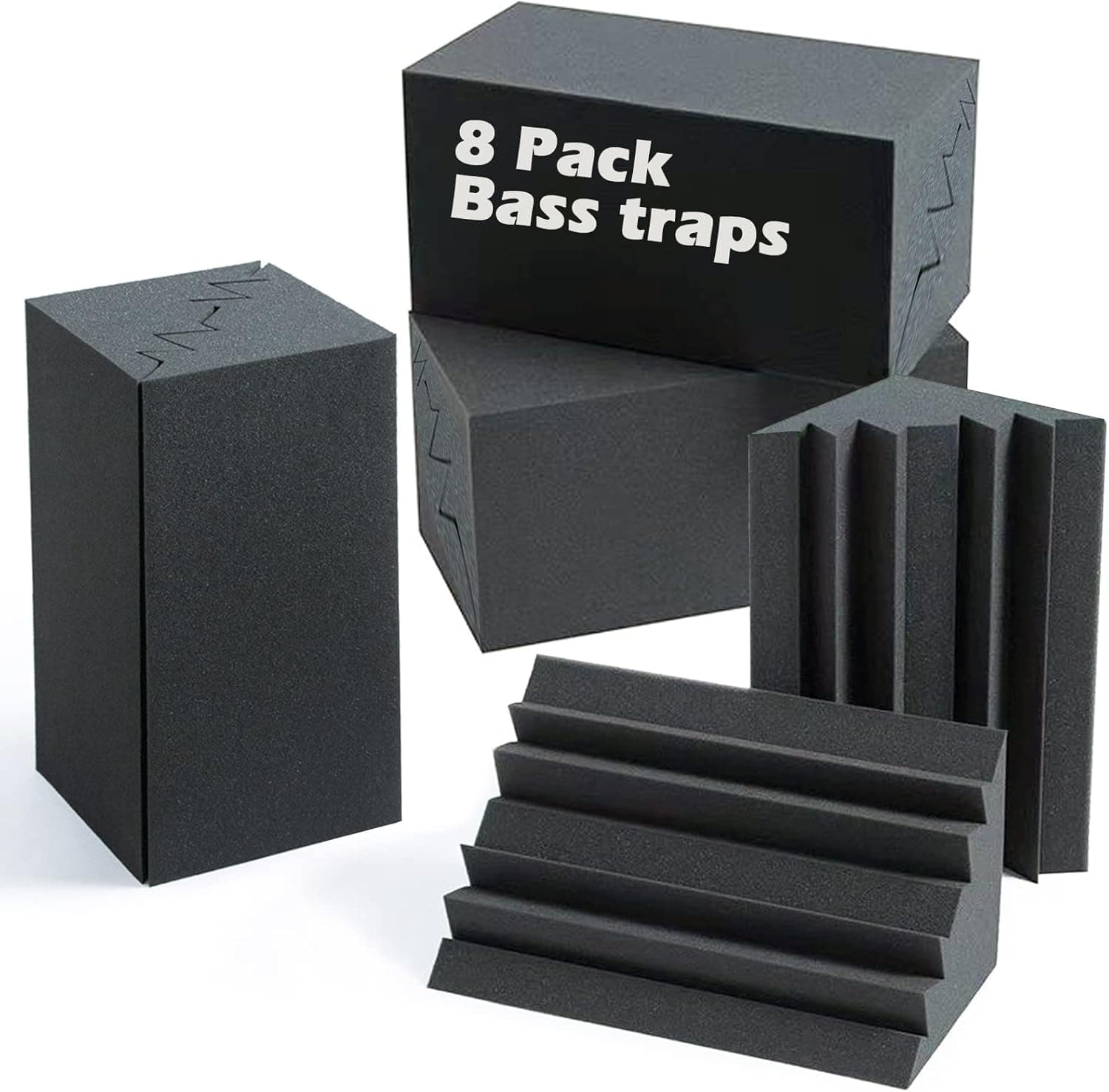
An 8 pack of 12" x 7" x 7" high density corner bass traps, mid-size foam blocks for taming boomy corners in small studios.
Price range: $ (Budget)
What we liked
- + 8 Pack can stack along corners to cover more of their height
- + 12" x 7" x 7" size absorbs more low end than slim corner strips
- + High density foam holds its triangular shape tightly in corners
Trade-offs
- - Foam traps this size help low mids more than truly deep bass
- - Stacking eight blocks neatly takes patience and good adhesive
Who these bass traps fit
This set is aimed at podcasters and home recordists dealing with boxy, boomy sound in a small or medium room, especially where corners are the obvious problem. Because the pack ships as eight separate 12 by 7 by 7 inch blocks rather than two or four tall panels, it suits people who want to build coverage gradually, starting with the worst corner and adding more blocks later if the room still sounds harsh. It is a reasonable first acoustic treatment purchase for someone who has never added foam to a room before, since the individual pieces are light and easy to test in different spots before committing to permanent placement. It fits budget-conscious buyers more than anyone chasing studio-grade low-frequency control, since foam this size works a narrower slice of the spectrum than thicker or taller trap designs.
What is in the pack
The set includes eight identical corner bass trap wedges, each measuring 12 inches by 7 inches by 7 inches, made from high density acoustic foam designed to sit in the vertical corner where two walls meet. Stacking blocks on top of each other lets you cover a taller section of a corner than a single short trap would reach, which matters because low frequency buildup happens along the full height of a corner, not just at ear level. The foam is dense enough to hold its triangular cross-section without sagging once placed, which keeps the corner coverage looking neat rather than crumpling over time the way thinner, softer foam sometimes does in humid rooms.
How well the foam performs
Corner bass traps in this size class are realistically better at controlling low-mid buildup, the muddiness and boxiness that makes untreated rooms sound harsh on a microphone, than they are at absorbing true low bass below roughly 100 Hz. A 12 by 7 by 7 inch wedge is a fraction of the size of the 4-foot floor-to-ceiling traps used in professional studios, so listeners should expect a noticeable reduction in room boom and slap echo rather than a transformation of a boomy basement into a treated studio. For voice recording specifically, where most problem frequencies sit in the low-mid range rather than sub-bass, this size trap does useful, practical work even though it will not fix a room with serious low-frequency resonance issues.
Installing and stacking the traps
Because the traps are not sold as a single tall unit, getting a clean stacked look across all eight blocks takes some care. Most buyers mount them with strong construction adhesive or hook-and-loop pads rather than nails, since foam this dense can be heavy enough that weak adhesive lets it slide down the wall over weeks. Lining up eight separate blocks evenly along a corner is more fiddly than hanging one continuous panel, so plan on measuring and marking placement before opening any adhesive, and consider starting from the floor or a fixed reference point and working upward so the stack stays level. Doing two or three corners with four blocks each, rather than one corner with all eight, often looks tidier and treats more of the room.
Value and who should look elsewhere
For the price of a basic acoustic treatment starter kit, this pack gives a useful amount of foam coverage and is a reasonable value pick for anyone easing into room treatment rather than committing to a full studio build-out. It suits podcasters, streamers, and voiceover hobbyists more than musicians tracking drums or bass-heavy instruments, since serious low-end control at that scale needs larger, thicker traps than a 12 by 7 by 7 inch wedge can provide. Anyone dealing with a genuinely boomy, echo-heavy room, or recording instruments with real low-frequency energy, should budget for taller floor-to-ceiling traps or a mix of foam and denser rigid absorbers instead of relying on this pack alone.
Frequently asked questions
Will this pack stop bass from leaving or entering a room?
No. Foam traps like this absorb sound energy inside the room to reduce echo and boominess, but foam alone does not block or soundproof against sound passing through walls.
How do I attach the foam to a corner?
Most buyers use strong construction adhesive or hook-and-loop mounting pads rated for the foam's weight, since dense foam can slide down a wall if the adhesive is too light.
Will 8 blocks treat an entire room?
Eight blocks are enough to cover one to two corners well, which helps with boominess, but a full small room usually benefits from additional flat panels on walls as well.
Is the foam safe to use indoors?
The foam is sold as flame-retardant, non-toxic acoustic foam intended for indoor studio and home use, though buyers should still follow standard fire-safety placement away from heat sources.
Prices change often, so check the current price and availability on Amazon.
Check price on AmazonPodcast Gear Hub may earn a commission from the link above.