Shure MV7+ Dynamic Microphone USB-C and XLR Podcast Mic Review (2026)
Updated September 14, 2026 · Research-based review
Our verdict
The Shure MV7+ suits a podcaster who wants one microphone that works over USB-C today and moves to a full XLR interface later without buying a second mic. Its strength is dual connectivity paired with beginner-friendly auto level tools. The trade-off is a real price jump over basic USB dynamic mics with similar core noise rejection.
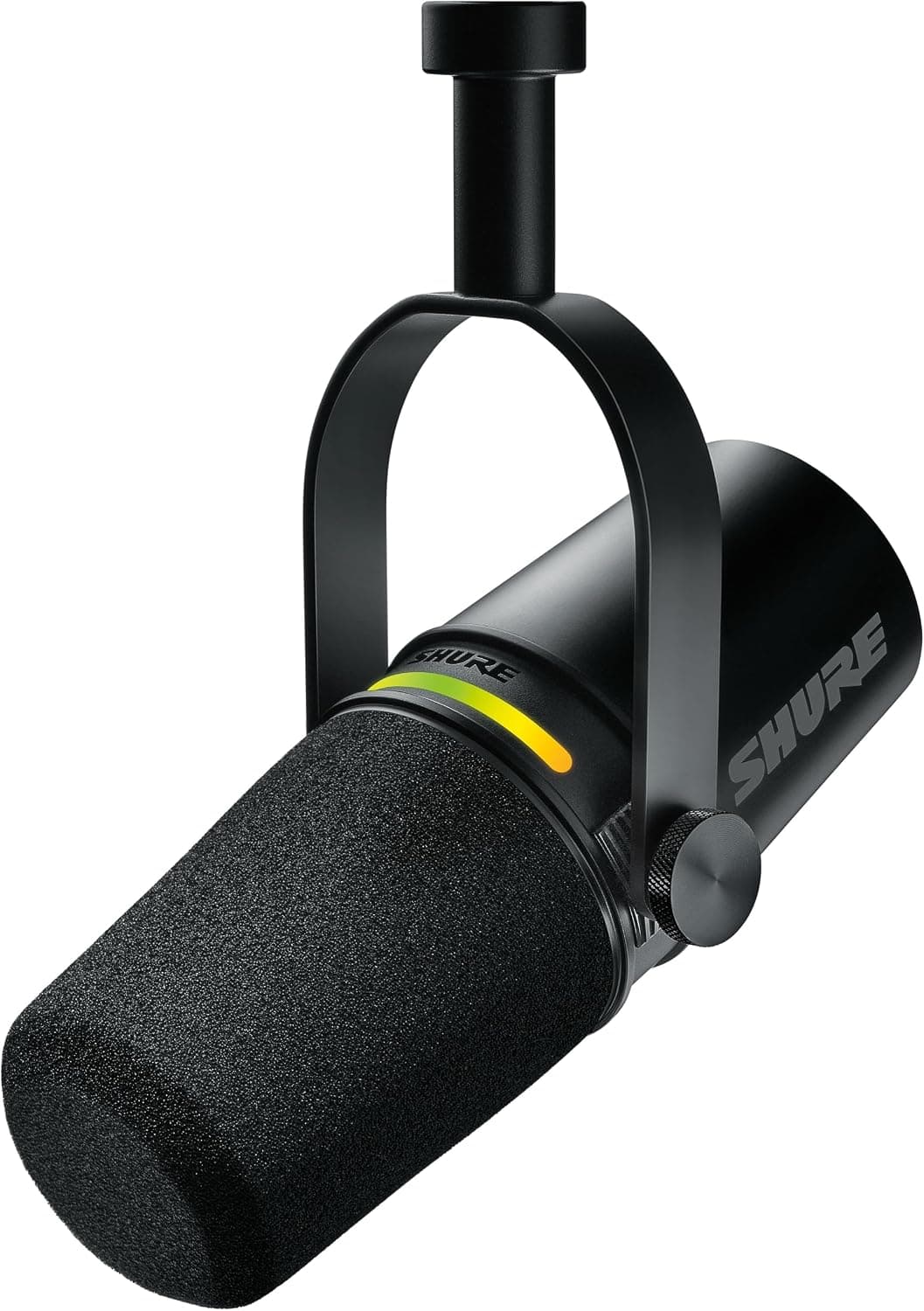
Shure's MV7+ is a dynamic podcast mic with USB-C and XLR outputs, updating the MV7 for creators who want one mic for any setup.
Price range: See on Amazon
What we liked
- + USB-C and XLR outputs work with modern laptops, phones and pro interfaces
- + Dynamic capsule tuned for spoken word keeps voices close and rooms quiet
- + Shure software tools help beginners dial in levels without deep audio knowledge
Trade-offs
- - Pricier than basic USB dynamic mics that offer similar core noise rejection
- - Touch panel and lighting add features some hosts will never actually use
Who this microphone fits
The MV7+ is built for podcasters and streamers who want a single microphone to grow with them, starting on USB-C straight into a laptop and later moving to XLR once they add an interface or mixer, without needing to replace the mic itself. Its dynamic capsule, tuned for spoken word, targets the same audience as the original MV7 and the XLR-only MV7X, close-talking hosts recording in untreated rooms who need strong rejection of background noise and room reflections. Beginners benefit from onboard auto level and digital pop filter tools that reduce the need to manually ride gain, while more experienced hosts can rely on the XLR side once they build out a proper interface-based setup. Musicians and streamers who want RGB lighting and instant visual mute feedback are also a good match for the touch panel.
Specs and design in plain English
Shure lists the MV7+ with a highly directional cardioid pattern and roughly a 50Hz to 16kHz frequency range, built into a rugged, diecast aluminum housing that borrows its silhouette from the SM7B, with an integrated, adjustable yoke mount for standard stands and boom arms. The headline update over the original MV7 is a multi-color LED touch panel that can cycle through millions of color combinations, show live input levels at a glance, and mute the mic with a tap. Feature-wise, Shure includes OBS certification for streamers, a virtual denoiser to reduce ambient noise, voice isolation technology, an auto level mode aimed at beginners, and onboard reverb effects, all controllable through Shure's companion software. Both USB-C and XLR outputs are built in, so the same physical mic covers both connection types.
Living with it day to day
Setting up over USB-C is close to plug and play, with auto level mode adjusting gain automatically for anyone who does not want to learn manual gain staging, while switching to XLR later simply means running a cable into an interface instead, with no change to the mic itself. The touch panel's live level display and one-tap mute are genuinely convenient during a live recording or stream, letting a host glance down and confirm they are being picked up without needing separate software open. Independent reviews note that sound over XLR carries a supportive low end with a pleasing, slightly mid-focused character, while the USB path sounds somewhat different, described by some reviewers as a touch more hollow and congested in the mids, a gap worth knowing about before choosing which connection to use day to day. The companion software handles firmware updates and deeper customization of the touch panel and effects.
Trade-offs and how it compares
At roughly 299 dollars for the desktop stand version and around 339 dollars with a boom arm according to independent coverage, the MV7+ costs meaningfully more than basic USB dynamic mics that deliver similar core noise rejection without the touch panel or dual connectivity. Reviewers are mixed on whether every added feature earns its keep, some note the LED lighting and onboard reverb effects are things many podcasters will simply never touch, paying for flexibility rather than using it. Against the XLR-only MV7X, the MV7+ trades some of that mic's simplicity and lower price for the convenience of USB-C connectivity and the touch panel, a fair trade for anyone without an interface yet, less so for someone who already owns one and only needs XLR.
Verdict and who should look elsewhere
Scoring 9.2 out of 10 here, the MV7+ earns strong marks for genuinely covering both a beginner's plug-and-play USB workflow and a more advanced XLR setup from the same microphone, backed by Shure's well-regarded voice-focused tuning. It suits a podcaster who is not yet sure whether they will stay on USB or move to an interface, and who values the auto level and touch panel conveniences enough to pay for them. Anyone who already owns an audio interface and only needs XLR should save money with the MV7X instead, and anyone who wants the simplest possible USB mic with no extra lighting or software layer may prefer a more basic USB dynamic microphone.
Frequently asked questions
Does the Shure MV7+ work with both USB and XLR?
Yes. It has both a USB-C connection for direct computer use and a traditional XLR output for interfaces and mixers, built into the same microphone.
Is the MV7+ good for beginners?
Yes. Its auto level mode and digital pop filter are designed to reduce the manual gain staging beginners often struggle with over USB.
Does the MV7+ sound the same over USB and XLR?
Independent reviews describe a supportive low end over XLR, while the USB path sounds somewhat different, with some reviewers noting a touch more congestion in the mids.
What is the main difference between the MV7+ and the MV7X?
The MV7+ adds USB-C connectivity and an LED touch panel with effects, while the MV7X is XLR only and focuses purely on core mic performance at a lower price.
Prices change often, so check the current price and availability on Amazon.
Check price on AmazonPodcast Gear Hub may earn a commission from the link above.