100 Pack Acoustic Foam Panels, 12 x 12 x 1 Inch Soundproof Wall Panels, Fire Resistant Review (2026)
Updated September 14, 2026 · Research-based review
Our verdict
This 100 pack of 12 by 12 by 1 inch acoustic foam panels suits podcasters covering large wall areas or an entire small room in one order. The fire resistant, high density tiles sit flat and neat, but their thin 1 inch profile absorbs less than thicker panels, and the panels reduce echo rather than block outside noise.
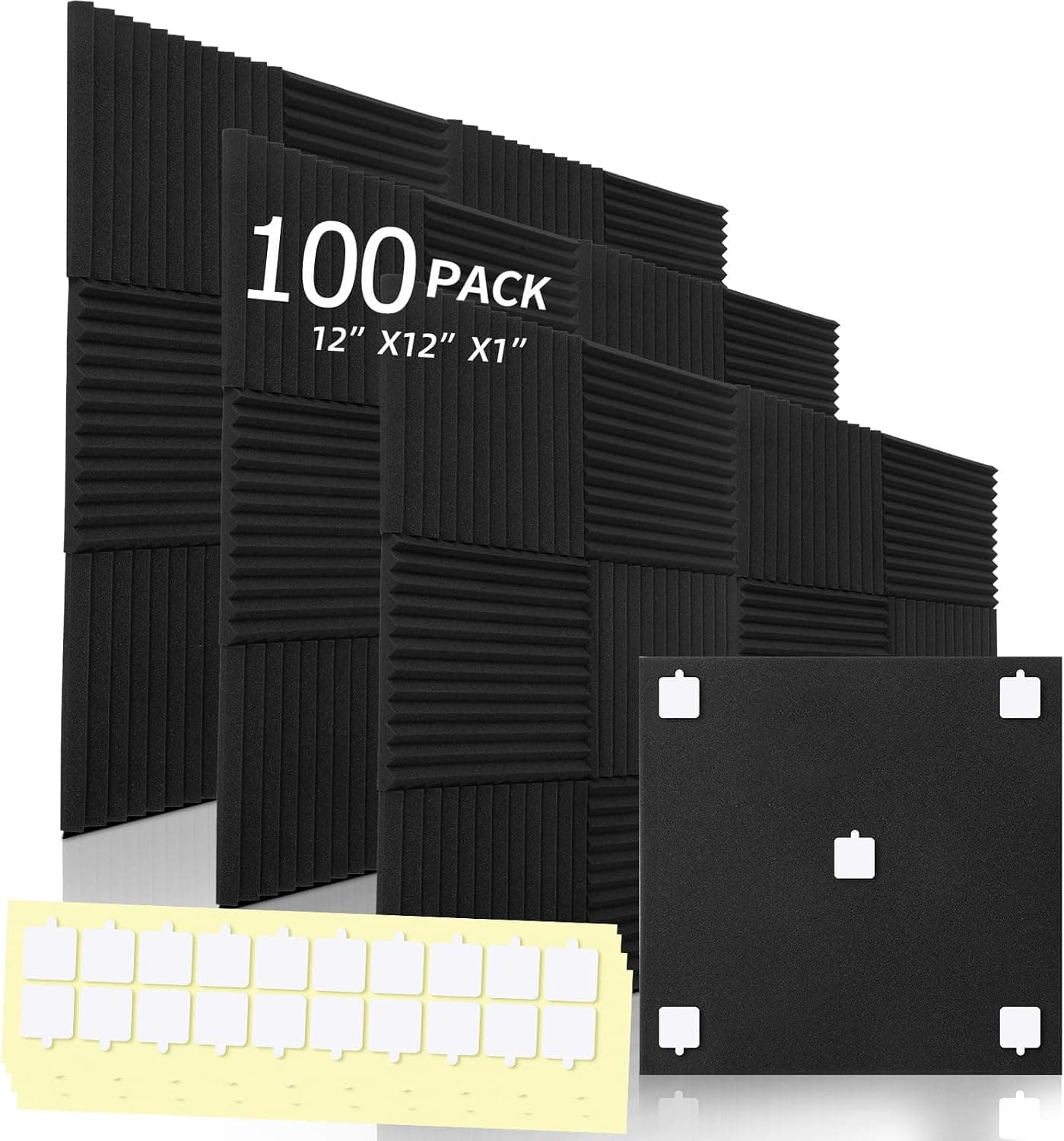
A 100 pack of 12 x 12 x 1 inch fire resistant acoustic foam wall panels, a bulk option for covering large wall areas.
Price range: See on Amazon
What we liked
- + 100 Pack covers large walls or a whole small room in one order
- + Fire resistant rating adds peace of mind for home studio use
- + Thin 1 inch tiles sit neatly on walls without looking bulky
Trade-offs
- - 1 inch foam absorbs less than thicker panels, so coverage must be wide
- - Soundproof wording is misleading, foam treats echo, not noise leaks
Who this foam panel pack is built for
This 100 pack of acoustic foam panels suits podcasters and home studio owners who need to cover a large wall area, or an entire small recording room, in a single order rather than buying several smaller packs and hoping the coverage adds up. It fits anyone dealing with harsh echo and flutter reflections off bare walls, ceiling or a closet-turned-booth, where the goal is a calmer, less reflective room sound rather than blocking noise from entering or leaving the space. The bulk quantity makes it well suited to a shared studio, a larger home office conversion, or a podcaster who wants to treat walls, a ceiling section and a closet booth from one purchase. It is a poor fit for anyone expecting these panels to stop outside noise from a street or neighboring room, since foam of this type manages reflections inside a room rather than soundproofing it from outside sound.
Key specs and design explained in plain English
Each of the 100 tiles measures 12 by 12 by 1 inch, a thin profile compared with thicker 2 inch or wedge-style acoustic foam, which keeps the panels sitting close and neat against a wall without adding much visual bulk to a room. The listing describes the foam as high density and fire resistant, a meaningful safety consideration for a home studio where foam is mounted near lighting or electrical equipment. At 1 inch thick, these panels are designed primarily to reduce mid and high frequency echo and flutter within a room rather than to meaningfully absorb low bass frequencies, which need thicker foam or dedicated corner bass traps to control properly. The large 100 piece quantity is aimed at covering broad wall and ceiling areas rather than a single spot treatment.
Living with it day to day
Covering a full wall or room with 100 individual tiles is a genuinely bigger project than a small treatment pack, so plan for real installation time, a plan for panel placement, and mounting adhesive or hardware suited to the wall surface being covered. Because the panels are thin, they sit flush and low profile once mounted, which many owners prefer over bulkier wedge foam for a cleaner look on camera during video podcasts. The fire resistant rating gives some added peace of mind in a home studio setup, though owners should still follow standard precautions around any lighting or heat sources near foam. Given the thin profile, most owners get the best results treating a wide, evenly distributed area rather than concentrating all 100 tiles in one small spot expecting stronger absorption than 1 inch foam can deliver.
Honest trade-offs against thicker and smaller foam packs
Compared with a smaller 50 or 80 pack of similarly thin foam, this 100 pack simply offers more coverage for larger rooms or walls, at a correspondingly higher total cost, without changing the fundamental absorption performance of the thin 1 inch profile. Against thicker 2 inch wedge-style panels, this pack absorbs less per tile, particularly in the lower midrange, but sits flatter and less obtrusively against a wall, a trade-off some podcasters prefer for appearance over raw absorption strength. Neither this pack nor any flat wall foam addresses bass buildup in corners the way dedicated bass traps do, so a room with real low frequency problems benefits from pairing panels like these with corner bass traps rather than relying on flat foam alone.
Verdict and who should choose differently
With our score of 8.0 out of 10, this 100 pack earns solid marks for value and fit as a bulk solution for covering large wall areas with thin, fire resistant foam in one order. It suits podcasters tackling a full room or wall treatment project who want flat, low profile panels rather than bulky wedge foam. Anyone dealing primarily with boomy low frequency buildup in corners should pair this pack with dedicated bass traps rather than expect thin 1 inch foam to solve that problem alone, and anyone needing to block outside noise rather than reduce in-room echo should look into soundproofing materials instead of acoustic foam.
Frequently asked questions
Will these foam panels block outside noise from entering my room?
No, acoustic foam like this reduces echo and reflections inside a room; blocking outside noise requires soundproofing materials such as mass loaded vinyl or added wall mass, not foam panels.
Is adhesive included with this 100 pack?
The listing focuses on the foam panels themselves; check the current listing for whether adhesive is included, and budget for spray adhesive or mounting squares if it is not.
Are these panels safe to use near studio lighting?
The foam is described as fire resistant, which adds a margin of safety, though standard precautions around keeping foam clear of hot lights still apply.
Do I need bass traps in addition to these panels?
Yes, if boomy low frequency buildup in corners is a problem, since thin 1 inch foam panels are designed for mid and high frequency echo control, not bass absorption.
Prices change often, so check the current price and availability on Amazon.
Check price on AmazonPodcast Gear Hub may earn a commission from the link above.