MXL 990 Condenser Microphone XLR Large Diaphragm (Champagne) Review (2026)
Updated September 20, 2026 · Research-based review
Our verdict
The MXL 990 is a long-running, inexpensive large-diaphragm condenser that gives solo podcasters a step up in tone from tiny USB mics, provided they already own or are willing to buy an XLR interface with phantom power. It is a fair value pick, not a top-tier studio mic.
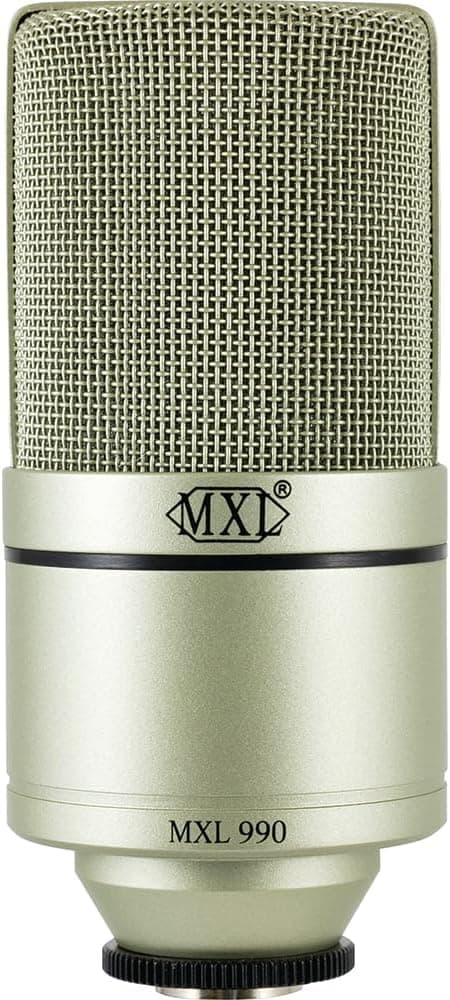
The MXL 990 is a large-diaphragm XLR condenser in champagne, a long-running budget studio mic for podcasters with an interface.
Price range: See on Amazon
What we liked
- + Large diaphragm offers a fuller voice tone than tiny USB capsules
- + Low price makes it an easy first XLR condenser to pair with an interface
- + Champagne finish gives a classic studio look on video recordings
Trade-offs
- - Needs phantom power and an XLR interface, adding cost to a budget setup
- - Bright character can sound harsh on some voices without EQ or placement care
Who the MXL 990 suits
This microphone is aimed at podcasters and home recordists who already have, or are ready to buy, a basic audio interface or mixer with phantom power, since the 990 is an XLR condenser rather than a plug-and-play USB mic. It suits someone stepping up from a laptop mic or a cheap USB capsule and wanting a fuller, more detailed voice recording without spending studio-mic money. It is less suited to someone who wants the simplest possible setup, because a condenser like this also benefits from at least basic room treatment and a pop filter to sound its best, adding a few more pieces to the recording chain than a simple dynamic USB mic would need.
Large-diaphragm condenser design
The 990 uses a large-diaphragm capsule paired with a FET preamp and a fixed cardioid polar pattern, which focuses pickup on sound directly in front of the mic while rejecting more noise from the sides and rear. Its published frequency response runs from 30 Hz to 20 kHz with a presence lift around 8 kHz, a bump manufacturers commonly add to large-diaphragm condensers to help voices cut through a mix. Compared with the tiny capsules found in many budget USB microphones, a large diaphragm generally captures a fuller, warmer tone with more low-end body, which is the main reason this style of mic is a popular upgrade path for podcasters moving beyond entry-level gear.
What it needs to run
Because the 990 is a true condenser, it requires 48V phantom power from an audio interface or mixer, plus an XLR cable to connect it, none of which are included with the microphone itself. This adds real cost and a small learning curve for anyone coming from a USB microphone, since you now have gain staging, an interface driver setup, and cable management to think about instead of a single plug-and-play connection. For a solo podcaster building a first real studio chain, that interface is a reasonable one-time investment, but it does mean the 990's low sticker price is not the full cost of getting it running, and buyers should budget for an interface alongside the mic.
Tone and sensitivity in real rooms
The presence peak that gives the 990 its detailed, forward sound can also make sibilant consonants and bright voices sound harsher than they would through a flatter-sounding mic, especially in an untreated room with hard walls and no foam or panels. Condensers in general are more sensitive than dynamic mics, which means the 990 also picks up more room echo, computer fan noise, and keyboard clatter unless you record close to the capsule and add basic acoustic treatment nearby. None of this is unusual for a budget large-diaphragm condenser, but it is worth planning around with mic placement, a pop filter, and a little room damping rather than expecting broadcast-ready sound straight out of the box.
Value against rivals
Within budget microphones generally, the 990 sits in the middle of the pack, priced well below higher-end large-diaphragm condensers while offering more low-end warmth than the plug-and-play USB dynamic and condenser mics that dominate the entry-level tier. Its main disadvantage next to those USB rivals is convenience, since competing budget mics let you skip the interface purchase entirely and start recording within minutes of unboxing. For someone who already owns an interface or plans to build a small home studio over time, the 990 remains a reasonable, well-established way to get large-diaphragm condenser tone without spending far more on a premium studio microphone.
Frequently asked questions
Does the MXL 990 need phantom power?
Yes, it is a true condenser microphone and requires 48V phantom power from an audio interface or mixer, along with an XLR cable, neither of which is included.
What is the polar pattern of the MXL 990?
It uses a fixed cardioid pattern, which picks up sound mainly from the front and rejects more noise from the sides and rear.
Is the MXL 990 good for podcasting straight out of the box?
It can sound good for podcasting, but its sensitivity and presence peak mean it benefits from close mic placement, a pop filter, and some basic room treatment to avoid picking up echo and harsh sibilance.
What is the frequency response of the MXL 990?
The published frequency response is 30 Hz to 20 kHz, with a presence lift around 8 kHz that adds detail and forwardness to the sound.
Prices change often, so check the current price and availability on Amazon.
Check price on AmazonPodcast Gear Hub may earn a commission from the link above.