Shure SM58-LC Dynamic Vocal Microphone, Handheld Cardioid XLR Mic Review (2026)
Updated September 14, 2026 · Research-based review
Our verdict
The Shure SM58-LC suits podcasters who want a nearly indestructible handheld cardioid mic for live shows and travel. Its grille and shock mount tame plosives and handling noise, and the cardioid pattern rejects room sound at a shared table. The LC package ships without a cable, and its handheld body sounds thinner than a broadcast mic.
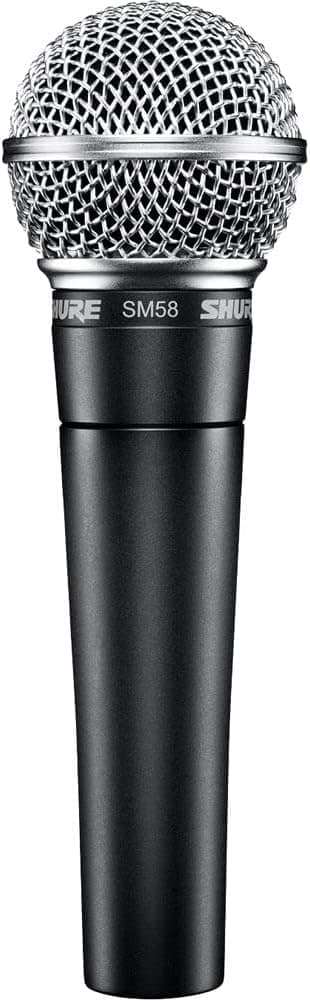
The Shure SM58-LC is a handheld cardioid dynamic vocal mic, a nearly indestructible XLR workhorse for live and podcast use.
Price range: See on Amazon
What we liked
- + Famously tough Shure build survives drops, travel and years of heavy use
- + Cardioid dynamic pickup ignores much of the room, helpful for multi-host tables
- + Built-in grille reduces plosives better than many bare studio mics
Trade-offs
- - LC version ships without a cable, so you need to buy an XLR lead separately
- - Handheld design sounds less rich for spoken word than a dedicated broadcast mic
Who the SM58-LC fits
The SM58-LC is the classic handheld version of Shure's cardioid dynamic vocal microphone, sold as the LC variant without a bundled XLR cable. It suits podcasters who record standing up, pass a mic around a panel, or travel to live events where a stage-grade mic needs to survive hard cases and rough handling. Because the cardioid pattern isolates whoever is speaking directly into the grille, it works well for co-hosts sharing one table mic or for field interviews where a boom or shock-mounted studio mic is impractical. It is less suited to a single host who sits close to a desk mic all day, since a handheld body picks up more handling noise than a stand-mounted capsule and needs its own mic clip and boom arm to stay steady during long recording sessions.
Specs and design in plain English
Shure lists the SM58's frequency response at 50 Hz to 15,000 Hz and a cardioid, or unidirectional, pickup pattern that favors sound from the front and rejects noise from the sides and rear. It connects over a standard three-pin XLR output. The body uses rugged construction with a steel mesh grille that Shure engineers to dent on impact rather than let debris reach the internal cartridge, and a built-in spherical wind and pop filter cuts breath noise without an external foam cover. A pneumatic shock-mount system inside the housing absorbs bumps and handling vibration before they reach the capsule, which is what lets the SM58 survive being dropped on stage floors for decades without failing.
Living with the SM58-LC
Setup is simple: thread it onto a mic stand or boom arm using the included A25D swivel stand adapter, plug in your own XLR cable since the LC package does not include one, and run it into an audio interface, mixer, or USB adapter that supplies the gain a passive dynamic mic needs. Shure ships the LC version with a zippered storage bag for travel, and the mic needs no batteries or phantom power to operate. Because the capsule is fully enclosed behind the steel grille, care is minimal, a wipe with a dry cloth keeps the mesh clean, and the grille can be unscrewed for a deeper clean if it picks up makeup or dust. Owners commonly use it as a spare or backup mic precisely because it tolerates being tossed in a bag between gigs.
Trade-offs against XLR rivals
Against the Shure SM7B and Rode PodMic USB, which both rank higher in the same XLR microphone guide, the SM58-LC trades a warmer, broadcast-tuned voice sound for battle-tested toughness and a lower price. The SM7B in particular is built for close-mic broadcast vocals with a flatter low end, while the SM58 was designed first as a live vocal mic, so spoken word can sound a touch thinner or more mid-forward in comparison. The lack of an included cable is a real cost difference against the SM58-CN, which bundles a 25 foot XLR lead. For anyone recording solo at a fixed desk, a broadcast-style dynamic mic will generally sound closer to a finished podcast voice out of the box.
Verdict and who should look elsewhere
The SM58-LC earns its reputation as a mic you buy once and keep in service for years, which is reflected in our score of 8.1 out of 10 with a near-perfect mark for build quality. It is the right pick for touring hosts, live panel recordings, and anyone who wants one dynamic mic that handles both a stage and a desk without babying it. Hosts who record alone at a fixed desk and want the richest possible voice sound should look at a broadcast-style dynamic mic like the SM7B instead, and anyone who wants to start recording immediately should budget for a separate XLR cable since the LC package does not include one.
Frequently asked questions
Does the Shure SM58-LC come with a cable?
No. The LC package includes only the microphone, a swivel stand adapter, and a storage bag. You need to buy an XLR cable separately to connect it to an interface or mixer.
Is the SM58 good for podcasting or just live vocals?
It works for podcasting, especially for shared-table or on-location recording, thanks to its cardioid pattern and durability, though a broadcast-style dynamic mic will sound richer for a single host at a desk.
Does the SM58 need phantom power?
No. It is a passive dynamic microphone and needs no batteries or phantom power, just a preamp with enough gain, such as an audio interface or mixer.
What is the difference between the SM58-LC and SM58-CN?
The capsule and electronics are the same. The CN version bundles a 25 foot XLR cable, while the LC version ships without one at a lower price.
Prices change often, so check the current price and availability on Amazon.
Check price on AmazonPodcast Gear Hub may earn a commission from the link above.