Shure SM7B Dynamic Studio Microphone XLR Mic for Podcasting and Broadcasting Review (2026)
Updated September 14, 2026 · Research-based review
Our verdict
The SM7B suits podcasters who want the broadcast standard dynamic mic used across radio and top shows, valued for smooth voice reproduction and strong rejection of room noise. Its very low output demands a capable preamp or inline booster, and the price makes more sense once a show is established than as a first mic.
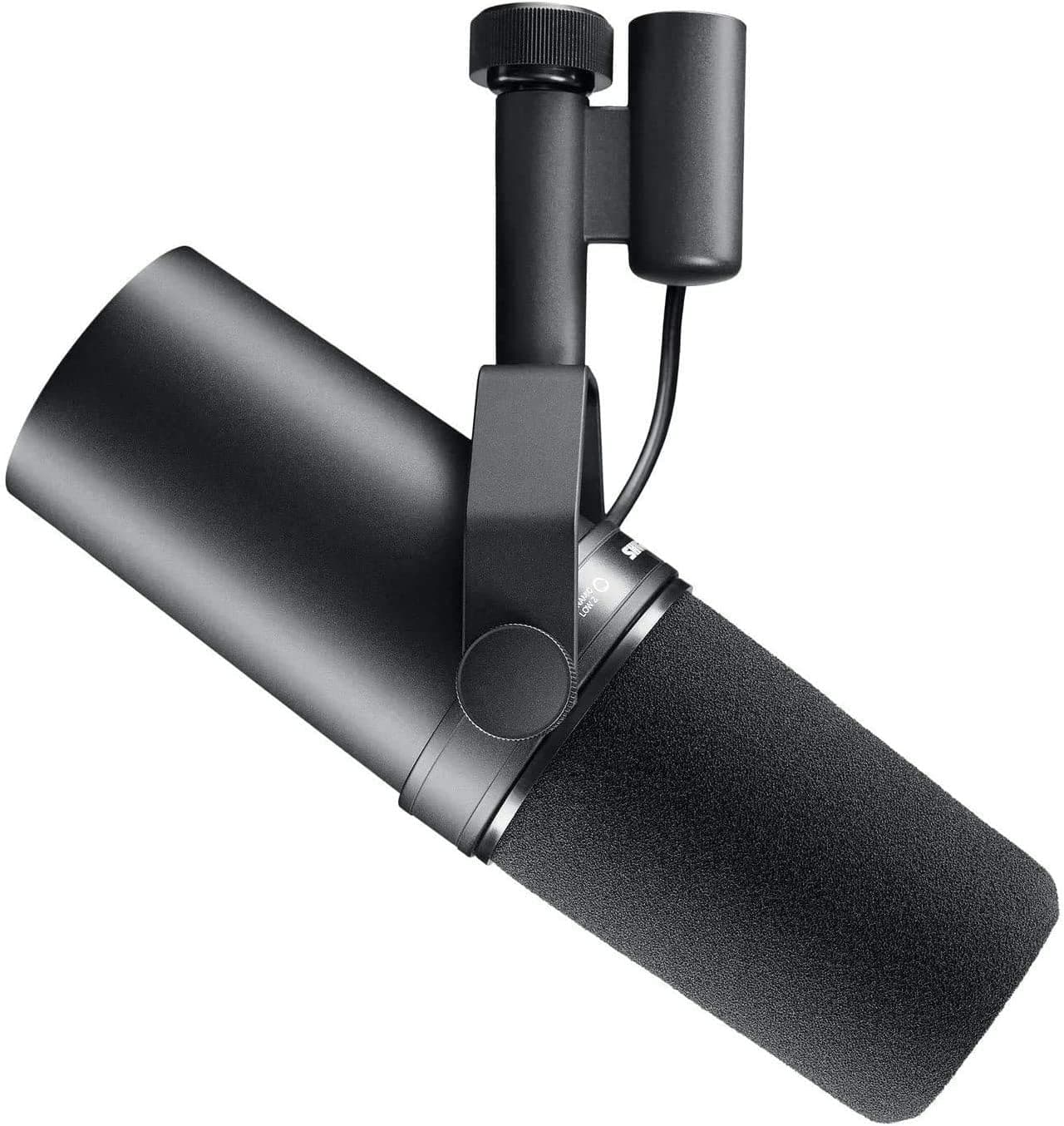
The Shure SM7B is the classic broadcast dynamic microphone, a reference choice for serious podcast and radio studios.
Price range: See on Amazon
What we liked
- + Smooth, full voice sound is the benchmark many famous podcasts and radio shows use
- + Excellent rejection of room noise makes it forgiving in spaces without treatment
- + Rugged Shure build is designed to survive years of daily studio use
Trade-offs
- - Very low output needs a strong interface preamp or an inline booster for good levels
- - Premium price is hard to justify for a beginner still testing the podcast idea
Who the SM7B is built for
The Shure SM7B targets podcasters and broadcasters who record in rooms without acoustic treatment and want a microphone that forgives that rather than exposes it. Its cardioid pickup pattern and close talking design favor a single host or guest speaking directly into the front of the mic from a short distance, the classic radio booth technique, over picking up a whole room at once. Shows that already have a following and want to standardize on the same microphone used by many well known podcasts and radio programs often choose the SM7B specifically for that reputation and its consistent, proven voice sound. It is less suited to a podcaster just starting out on a tight budget, or to anyone recording with a basic USB interface or a laptop's built in input, since the microphone needs meaningfully more gain than many entry level dynamic mics.
Design, frequency response and switches explained
The SM7B is a dynamic, moving coil microphone with a cardioid polar pattern, a frequency response spanning 50 Hz to 20,000 Hz, and a nominal impedance of 150 ohms, housed in dark gray enamel aluminum and steel with a foam windscreen built in. Two recessed switches on the body let an owner shape the tone without external processing: a bass rolloff switch that reduces frequencies below roughly 400 Hz to tame proximity effect boominess when speaking close to the capsule, and a presence boost switch that lifts the upper midrange by about 3 dB between 2 and 4 kHz to add clarity and cut through a mix. Shure specifies sensitivity at negative 59 dBV per pascal, a genuinely low output level for a microphone of this type, which is the trade-off behind its smooth, controlled sound and strong internal shielding against electrical hum.
Setting up and living with it day to day
Because of its low sensitivity, the SM7B needs a preamp with real gain on tap; many interfaces built for condenser mics or budget USB mics simply cannot push it to a usable level without noticeable hiss, so pairing it with either an interface known for clean high gain preamps or an inline gain booster is standard practice among owners. Once gain staged correctly, the built in windscreen reduces the need for an external pop filter for most speaking styles, and the microphone's weight and bulk suit a stationary boom arm setup rather than frequent travel. Its aluminum and steel housing and internal shock isolation are built for years of daily studio use, and swapping between the bass rolloff and presence switches lets a host tune the voice for their room without buying separate outboard processing. The mic ships with a stand mount adapter built into the design.
Honest trade-offs against the RODE PodMic USB and Shure MV7
Compared with the RODE PodMic USB, the SM7B offers no USB output at all and a lower sensitivity that demands a more capable interface, so a podcaster on a laptop only workflow with no plans for an interface may find the PodMic USB simpler to get running. Against Shure's own MV7 family, which adds USB connectivity and onboard gain control aimed squarely at solo podcasters, the SM7B stays XLR only and leans entirely on external gear for gain and monitoring, a purist approach that rewards a properly built signal chain with a cleaner, more consistent result. The SM7B's reputation and proven broadcast pedigree are real advantages for shows that want to match an industry standard sound, but the setup friction and premium price are hard to justify for someone still testing whether podcasting is for them.
Verdict and who should choose differently
With our score of 8.9 out of 10, the SM7B earns its place as a benchmark broadcast microphone for podcasters who have, or are ready to build, a signal chain with a strong preamp, and who value smooth, rejection heavy sound in an untreated room over convenience. It is a poor first purchase for a podcaster recording straight into a laptop with no interface, since the low output will likely need extra gear just to sound usable, and the price is a lot to spend before a show has found its audience. Those users should start with a USB friendly dynamic mic such as the RODE PodMic USB or a Shure MV7 style hybrid mic, and consider stepping up to the SM7B once their setup and budget can support it properly.
Frequently asked questions
Why does the Shure SM7B sound quiet even at high gain?
Its sensitivity is genuinely low compared with most microphones, so it needs a preamp with strong clean gain, or an inline booster, to reach a normal recording level without adding noise.
Do I need an external pop filter with the SM7B?
The SM7B has a built in foam windscreen that handles most plosives for typical speaking distances, so many owners do not add a separate external pop filter.
What do the two switches on the SM7B do?
One switch rolls off low frequencies to reduce boominess from close talking, and the other boosts upper midrange presence by about 3 dB to add clarity and cut through a mix.
Can the SM7B be used straight into a laptop?
Not directly. It has no USB output and its low sensitivity generally requires a dedicated audio interface or preamp with enough clean gain, rather than a laptop's built in microphone input.
Prices change often, so check the current price and availability on Amazon.
Check price on AmazonPodcast Gear Hub may earn a commission from the link above.