Sennheiser HD 280 Pro Headphone, Black Review (2026)
Updated September 14, 2026 · Research-based review
Our verdict
The black Sennheiser HD 280 Pro suits hosts recording in the same room as other mics who need strong isolation to stop headphone bleed from ruining a take. Its strength is a durable build and accurate midrange for judging levels. The trade-off is firm clamping pressure that some listeners find tiring over long sessions.
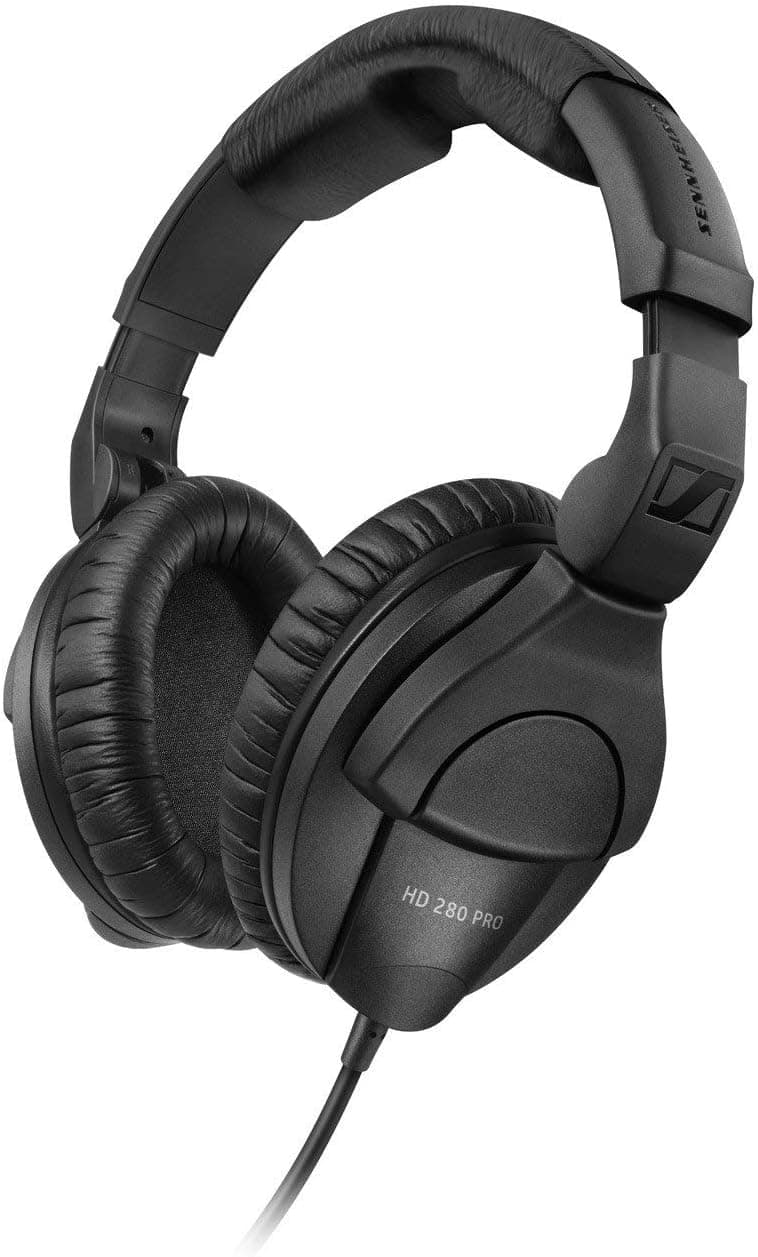
The black Sennheiser HD 280 Pro is a closed-back studio headphone with strong isolation, suited to recording hosts in the same room.
Price range: See on Amazon
What we liked
- + Strong passive isolation blocks room noise and prevents mic bleed
- + Durable Sennheiser build lasts through years of studio use
- + Flat-leaning sound helps judge voice levels honestly
Trade-offs
- - Tight clamping force can become uncomfortable during long sessions
- - Bulky shape is less convenient to travel with than folding models
Who these headphones fit
The HD 280 Pro is built for anyone tracking or monitoring in the same room as an open microphone, since its closed-back design and tight seal are specifically good at keeping headphone audio from leaking into a nearby mic and ruining a take. Podcast co-hosts sitting across a table from each other, voiceover artists monitoring their own read, and anyone mixing or reviewing an episode where accurate midrange matters more than bass impact are the core audience. Sennheiser's own listing describes it as a professional monitoring headphone rather than a casual listening pair, so buyers looking for a warm, bass-forward consumer sound elsewhere should expect something closer to neutral. Anyone doing long, multi-hour recording sessions where comfort is the top priority may want to try them on first given the clamping force.
Specs and design in plain English
Sennheiser's own product specification lists a frequency response of 8 Hz to 25 kHz, 64 ohms of impedance, and a sound pressure level rating of 113 dB, figures aimed squarely at studio monitoring rather than portable listening off a phone. The closed, circumaural design with a dynamic driver and around 6 newtons of contact pressure is what delivers the strong passive isolation the HD 280 Pro is known for, sealing around the ear rather than resting on top of it. The cable is a coiled design that stretches from about 1.3 meters up to 3 meters, which is convenient at a fixed desk but is not user-replaceable if it is ever damaged. At 285 grams the headphones are light for how robust they feel, with ear cups that rotate flat for easier packing.
Living with it day to day
Reviewers describe the build as all-plastic but genuinely robust, with thick joints at the rotating ear cups and a headband that stays firm yet flexible through repeated daily use, which matters for anyone putting these on and taking them off multiple times a session. The tight seal that makes isolation strong also means a firmer clamp than many casual headphones, and some long-session users report needing breaks or a gentle manual stretch of the headband over time to ease that pressure. Setup is as simple as plugging into a 3.5mm jack, with a quarter-inch adapter included for interfaces and mixers that use the larger jack size. The accurate midrange reproduction reviewers highlight is particularly useful for a podcast host judging whether their own voice level sits correctly against a co-host or guest.
Trade-offs and how it compares
The fixed, non-detachable coiled cable is a notable drawback flagged repeatedly in independent coverage, since any cable damage means sending the whole headphone in for repair rather than swapping a cord, a real difference next to headphones with a removable cable. Against the Sony MDR7506, the two headphones aim at a similar studio-monitoring niche, though the HD 280 Pro's clamping force is generally described as firmer, trading some comfort for isolation, while the MDR7506 leans lighter and more neutral overall. Compared with open-back options like the beyerdynamic DT 900 Pro X, the HD 280 Pro gives up the wider, airier soundstage an open design offers in exchange for the mic-bleed protection a closed back provides, which matters far more in a shared recording room than for solo mixing.
Verdict and who should look elsewhere
Scoring 8.3 out of 10 here, the HD 280 Pro earns its place as a dependable, accurately tuned closed-back option for podcasters who need real isolation while recording next to other open mics. It rewards buyers who prioritize durability and mic-bleed protection over plush comfort during marathon sessions. Anyone recording solo with no other open microphones nearby, and who wants a more open, spacious sound for final mixing and editing, should consider an open-back monitor headphone instead, since the sealed design that makes the HD 280 Pro useful in a live room is not necessary once isolation is no longer a concern.
Frequently asked questions
Are the Sennheiser HD 280 Pro good for recording next to a microphone?
Yes. Their closed-back design and tight seal give strong passive isolation, which helps stop headphone audio from bleeding into a nearby open mic.
Can the cable be replaced if it breaks?
No. Sennheiser uses a fixed, non-detachable coiled cable on the HD 280 Pro, so a damaged cable means the whole headphone needs repair.
Do the HD 280 Pro headphones feel tight on the head?
Reviewers note a firmer clamping force than many casual headphones, which supports isolation but some users find tiring over very long sessions.
Do they come with an adapter for larger jacks?
Yes. A quarter-inch adapter is included alongside the standard 3.5mm plug for use with mixers and interfaces.
Prices change often, so check the current price and availability on Amazon.
Check price on AmazonPodcast Gear Hub may earn a commission from the link above.