Earamble Studio Microphone Pop Filter Round Shape Mic Wind Mask Shield Screen Review (2026)
Updated September 21, 2026 · Research-based review
Our verdict
The Earamble round pop filter is a cheap, effective fix for plosives on a voice or vlogging mic, using a dual-layer screen on a flexible gooseneck clamp. It suits anyone recording spoken word on a budget, though the clamp can struggle on thick stands and the fabric screens are not built for rough handling.
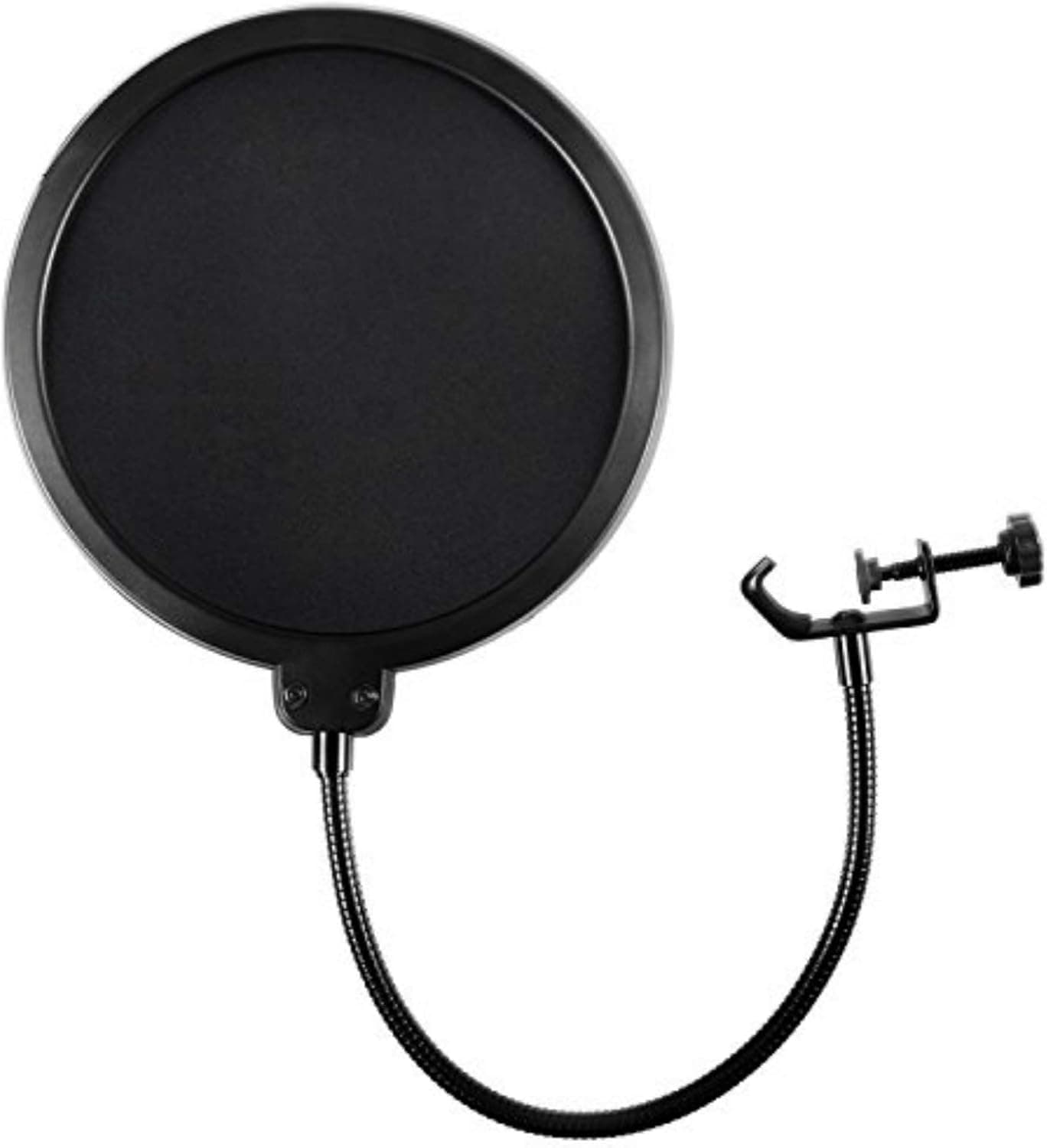
Earamble's round studio microphone pop filter is a mic wind mask and shield screen for reducing plosives on voice recordings.
Price range: See on Amazon
What we liked
- + Round screen softens harsh P and B sounds on voice tracks
- + Clamp-on mounting positions the screen a short gap in front of the mic
- + Inexpensive fix that noticeably cleans up spoken word recordings
Trade-offs
- - Clamp may not fit very thick boom arms or stands
- - Fabric screens can tear if handled roughly
What this pop filter is for
This is a round, dual-layer pop filter meant to sit a short distance in front of a microphone during voice recording, podcasting, streaming, or singing. Two screens are stacked with a gap between them: the first layer blocks the initial blast of air from plosive sounds, and the space before the second layer lets the remaining pressure disperse, so by the time it reaches the mic capsule the air movement is largely broken up. The goal is to tame the hard pops that come from letters like P and B, along with some of the hiss from S sounds, without coloring the rest of the voice. It is aimed squarely at people recording spoken word close to the mic rather than instruments or room ambience.
Mounting and adjustment
The filter attaches with a flexible 360 degree gooseneck arm and a clamp, rather than a separate mic-stand mount, so it rides on the same stand as the microphone. That gooseneck lets the screen be angled and positioned close to the mic without needing a second boom or stand, which keeps a desk setup simpler. The clamp includes an inner rubber ring meant to grip the stand or arm securely and protect the finish. Because the whole assembly relies on that one clamp, how well it holds depends on the diameter of whatever it is attached to, and very thick professional boom arms can be a tighter fit than a standard mic stand.
Build and materials
The shield uses fabric mesh screens stretched over a round frame, a lightweight design that keeps the whole unit from adding much weight to a boom arm or stand. That lighter build is part of why it is inexpensive, but it also means the screens are less rugged than metal-mesh pop filters, and pulling or twisting the fabric repeatedly can eventually stretch or tear it. Treated gently and left in a fixed position most of the time, the frame and gooseneck should hold up fine for home recording use, but it is not designed to be packed and unpacked constantly like touring gear.
Where it fits versus rivals
Among round and dual-layer pop filters aimed at podcasters and voiceover work, this one competes with similarly priced gooseneck-mounted screens from other budget accessory brands, most of which use the same basic dual-mesh idea. It tends to land in the middle of that pack: effective at the core job of reducing plosives, but without extras like metal mesh or oversized screens that push some rivals slightly ahead on durability. For anyone who already owns a decent USB or XLR mic and just needs a first pop filter without spending much, it is a reasonable, low-risk pick rather than a top-tier upgrade.
Who should buy it
This filter makes the most sense for hobbyist podcasters, streamers, and voiceover beginners who record close-mic spoken word and want cleaner audio without investing in a full acoustic setup. It is a sensible add-on to almost any condenser or dynamic mic used for talking, since plosives are one of the most common and easiest problems to fix in home recordings, and this filter tackles that at very low cost. People chasing maximum durability for frequent travel, or those with an unusually thick boom arm, may want to check clamp compatibility first or consider a metal-mesh alternative instead before buying.
Frequently asked questions
Does this pop filter work with any microphone?
It mounts using its own gooseneck clamp rather than attaching to the mic itself, so it can be positioned in front of most microphones as long as the clamp fits the stand or arm it is attached to.
Will it stop all plosive sounds?
It reduces the force of plosive air blasts through its dual-layer screen design, which noticeably softens P and B sounds, but very close mic technique can still produce some residual pop.
How far from the mic should it be placed?
The gooseneck arm is meant to hold the screen a short gap in front of the microphone capsule, close enough to catch air blasts before they hit the mic but not touching it.
Is the clamp adjustable for different stand sizes?
The clamp has an inner rubber ring to grip various diameters, but it is designed for standard mic stands and slim boom arms rather than the thickest professional broadcast arms.
Prices change often, so check the current price and availability on Amazon.
Check price on AmazonPodcast Gear Hub may earn a commission from the link above.