RODE RODECaster Pro All-in-One Production Solution for Podcasting Review (2026)
Updated September 21, 2026 · Research-based review
Our verdict
The original RODECaster Pro remains a capable standalone console for shows with multiple co-hosts, offering direct recording and onboard sound effects without a computer. It lacks the newer routing and processing of the RODECaster Pro II, so it fits budget-conscious multi-host setups better than solo creators chasing the latest features.
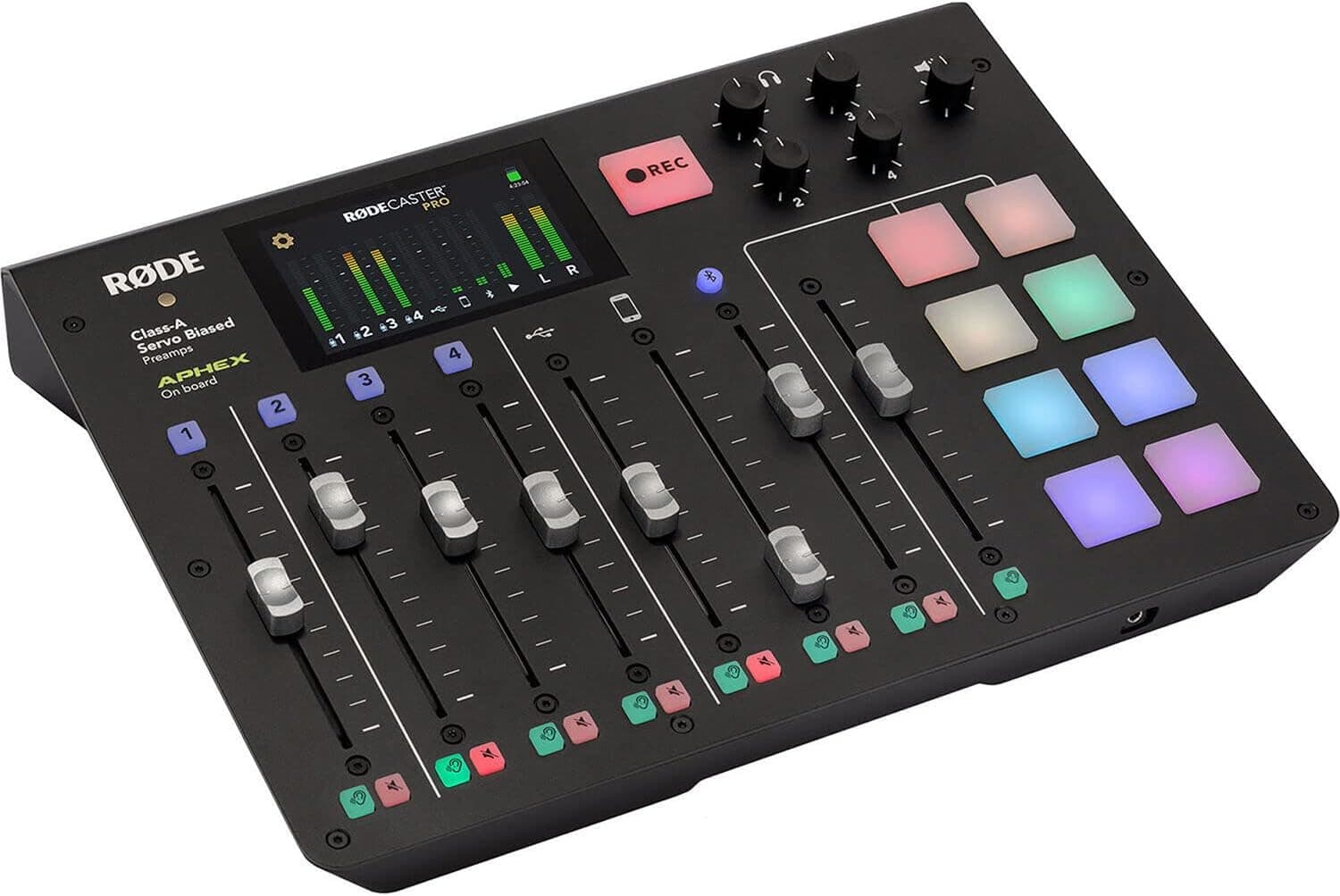
The original RODECaster Pro is an all-in-one podcasting console, still a capable studio hub for multi-host shows.
Price range: See on Amazon
What we liked
- + Multiple mic inputs and sound pads handle co-hosts and live effects
- + Direct recording means shows can be captured without a computer
- + Often cheaper than the newer model while covering core podcast needs
Trade-offs
- - Older generation lacks some processing and routing of the Pro II
- - Large desk footprint needs dedicated space in small home studios
Inputs and hardware
The RODECaster Pro supports up to four XLR microphones, dynamic or condenser, with 48V phantom power available for condenser mics that need it, and RODE built the preamps with enough clean gain that even gain-hungry dynamic mics like the Shure SM7B can be driven without an inline booster. That four-mic capacity makes it a natural fit for shows with a host plus two or three regular guests, all mixed and monitored from a single console rather than a laptop's built-in audio interface. Each channel has its own physical fader and mute control on the deck, so a host can ride levels or cut a mic mid-conversation without digging into software during a live recording.
Sound pads and live production
Eight programmable pads sit on the console for triggering sound effects, jingles, or pre-recorded clips instantly during a live show, which is one of the features that made the original RODECaster Pro stand out when it launched as an all-in-one production tool rather than just a mixer. Phone, USB, and Bluetooth sources can all be routed into the mix as well, useful for bringing in a remote guest over a call or streaming background music. Because everything is mixed on the hardware itself, a host can run a fairly produced-sounding show, complete with stingers and level rides, without needing separate software running the effects layer.
Recording without a computer
One of the console's core selling points is that it can record directly to a microSD card, so a full session can be captured even if the connected computer crashes, or with no computer attached at all. RODE added true multitrack recording after launch through a firmware update, letting each input be captured as its own file in addition to the summed stereo mix, which gives editors far more flexibility to fix an individual guest's level after the fact. For anyone who has lost a recording to a computer issue mid-session, having the console itself act as the safety recorder is a meaningful reliability feature.
Where it lags the newer model
RODE has since released the RODECaster Pro II, which added a touchscreen, more onboard processing, and additional routing options that the original console does not have. The first-generation unit relies more on physical knobs and a smaller display, and its effects processing is more basic than what shipped in the second generation. For podcasters who want the most current feature set, or who plan to grow into more advanced routing for multi-camera video podcasts, the newer model is the better long-term investment. The original remains a solid, capable device, just one generation behind on the software side.
Value and footprint
Because it is an older generation, the original RODECaster Pro is often priced below the Pro II while still covering the core needs most podcasters actually use day to day: several mic inputs, solid preamps, onboard effects, and computer-free recording. That makes it a reasonable value pick for a multi-host show on a budget that does not need the newest routing options. The console does take up meaningful desk space, more than a compact two-channel interface, so a small home studio desk needs to have room set aside for it. Anyone tight on desk real estate should measure their setup and available surface area before buying rather than assuming it will fit.
Frequently asked questions
How many microphones can the RODECaster Pro handle?
It supports up to four XLR microphones at once, each with its own fader, mute button, and phantom power for condenser mics that need it.
Can the RODECaster Pro record without a computer?
Yes, it can record directly to a microSD card, including individual multitrack files for each input after a firmware update added that capability.
What is the difference between the RODECaster Pro and Pro II?
The Pro II adds a touchscreen, more onboard processing, and expanded routing options that the original console does not have, making it the more current choice for buyers who want the newest features.
Does the RODECaster Pro support sound effects during recording?
Yes, it has eight programmable pads for triggering jingles, stingers, or clips live during a session, which was one of its standout features at launch.
Prices change often, so check the current price and availability on Amazon.
Check price on AmazonPodcast Gear Hub may earn a commission from the link above.