Bass Traps 16 Pack 12" x 3" x 3" Corner Acoustic Foam Panels, Sound Absorbing Block Review (2026)
Updated September 21, 2026 · Research-based review
Our verdict
A light-touch option for a podcaster who wants to soften harsh corner reflections without covering a room in large foam wedges. The slim profile is the strength, and the real limitation is that thin foam like this does little against the low-frequency buildup that a true bass trap is meant to solve.
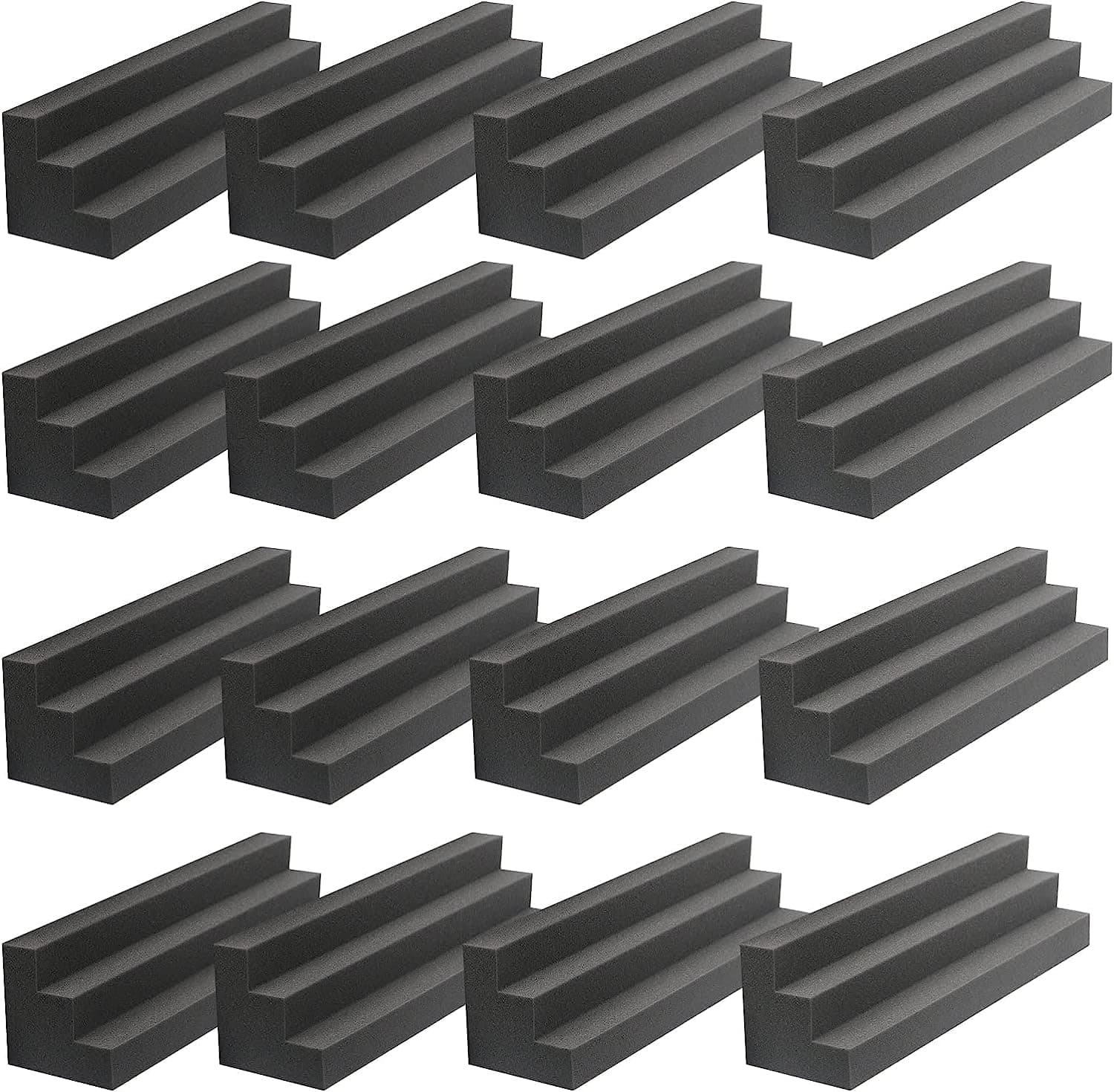
A 16 pack of slim 12" x 3" x 3" corner acoustic foam blocks, a light-touch option for edges where walls and ceilings meet.
Price range: $ (Budget)
What we liked
- + 16 Pack gives enough pieces to line several corners and ceiling edges
- + Slim 12" x 3" x 3" profile is less visible on camera than big traps
- + Light blocks are easy to mount with simple double-sided tape
Trade-offs
- - Very thin blocks do little for real low-frequency buildup
- - Many small pieces can look busy if not lined up carefully
Who this is for
This set fits a podcaster or streamer treating a home office or spare room who wants to dampen slap echo and mid-to-high frequency reflections in the corners where walls meet, without installing bulky foam wedges across every wall. The 16 pack gives enough pieces to line several vertical corners or a run of ceiling edges around a desk, which suits someone building treatment gradually rather than buying one large acoustic panel kit up front. Anyone dealing with a genuinely boomy, resonant room, where bass notes or a deep voice cause the walls to hum, needs denser, thicker corner bass traps instead, since this slim style is aimed at everyday room polish rather than serious low-frequency control.
Material and size
Each block measures 12 inches by 3 inches by 3 inches, a slim triangular corner profile compared with the thick 12 by 12 by 12 inch wedges sold as dedicated bass traps. The foam is high-density polyurethane, the same base material used across most acoustic foam products, and the manufacturer describes it as fire-retardant. Sixteen pieces at this size add up to a modest amount of total foam coverage, so the set works better spread across several corners and ceiling lines than concentrated in one spot where a listener needs heavier low-frequency absorption. The compact size also keeps the blocks less visible on camera than large foam pyramids would be.
Installation and setup
The panels are not self-adhesive, so mounting them requires spray adhesive or 3M-style double-sided tape, neither of which is included in the package, meaning a buyer needs to source mounting supplies separately before installing. Foam blocks arrive compressed for shipping and the maker recommends letting them sit in a ventilated room for 24 to 48 hours to return to full shape, with a hair dryer suggested as a way to speed up that recovery if a piece looks flattened out of the box. Once expanded and mounted, the small triangular shape makes it straightforward to line up along a corner seam or ceiling edge without the finicky pattern planning larger foam tiles require.
What it will and will not fix
Slim 3 inch deep foam like this absorbs some mid and high frequency reflection, the kind that causes a room to sound harsh, boxy or slappy on a recording, but foam this thin has little effect on the low end. Real bass buildup, the boomy resonance many small rooms develop around 60 to 150 Hz, generally needs deeper, denser corner traps or actual bass trap panels with several inches of depth to make an audible difference. A podcaster whose main complaint is a muddy, boomy low end in recordings should not expect this pack to solve that problem, and should treat it instead as a finishing touch for reflections once bigger acoustic issues are handled.
Value for a starter setup
At the price point of a 16 pack, this is an inexpensive way to start softening a room's harder reflections without committing to a full foam treatment budget, and the small pieces are easy to arrange without covering large, visible wall areas. It fits a podcaster testing whether foam treatment helps their recordings before investing in denser, more expensive bass trap panels, or someone who already has larger traps in the main problem corners and wants to finish off remaining ceiling and wall-meeting edges. Buyers expecting a dramatic change in bass response from a slim, sixteen-piece set are likely to be disappointed, since the value here is in light reflection control, not low-frequency trapping.
Frequently asked questions
Will this bass trap pack fix a boomy, muddy low end in recordings?
Not on its own. The blocks are thin at 3 inches deep, so they mainly reduce mid and high frequency reflections rather than low-frequency buildup, which needs denser, thicker traps.
Does the pack include mounting tape or adhesive?
No. The panels are not self-adhesive, so you need to buy spray adhesive or double-sided foam tape separately to mount them.
Do the foam blocks need time to expand after unboxing?
Yes, they ship compressed and the maker recommends letting them sit in a ventilated space for 24 to 48 hours to return to full shape.
Is the foam fire-retardant?
The manufacturer describes the polyurethane foam used in these panels as fire-retardant, though a specific fire-rating class is not listed for this exact size.
Prices change often, so check the current price and availability on Amazon.
Check price on AmazonPodcast Gear Hub may earn a commission from the link above.