FIFINE AmpliTank K688 Dynamic XLR/USB Podcast Recording Microphone Review (2026)
Updated September 14, 2026 · Research-based review
Our verdict
The AmpliTank K688 is a budget-friendly way to get both XLR and USB in one dynamic mic, good for a podcaster starting out on a computer who expects to add an interface later. The dual connection and touch mute are the strength. The trade-off is a narrower, more forgiving capsule than pricier Shure or Rode dynamics.
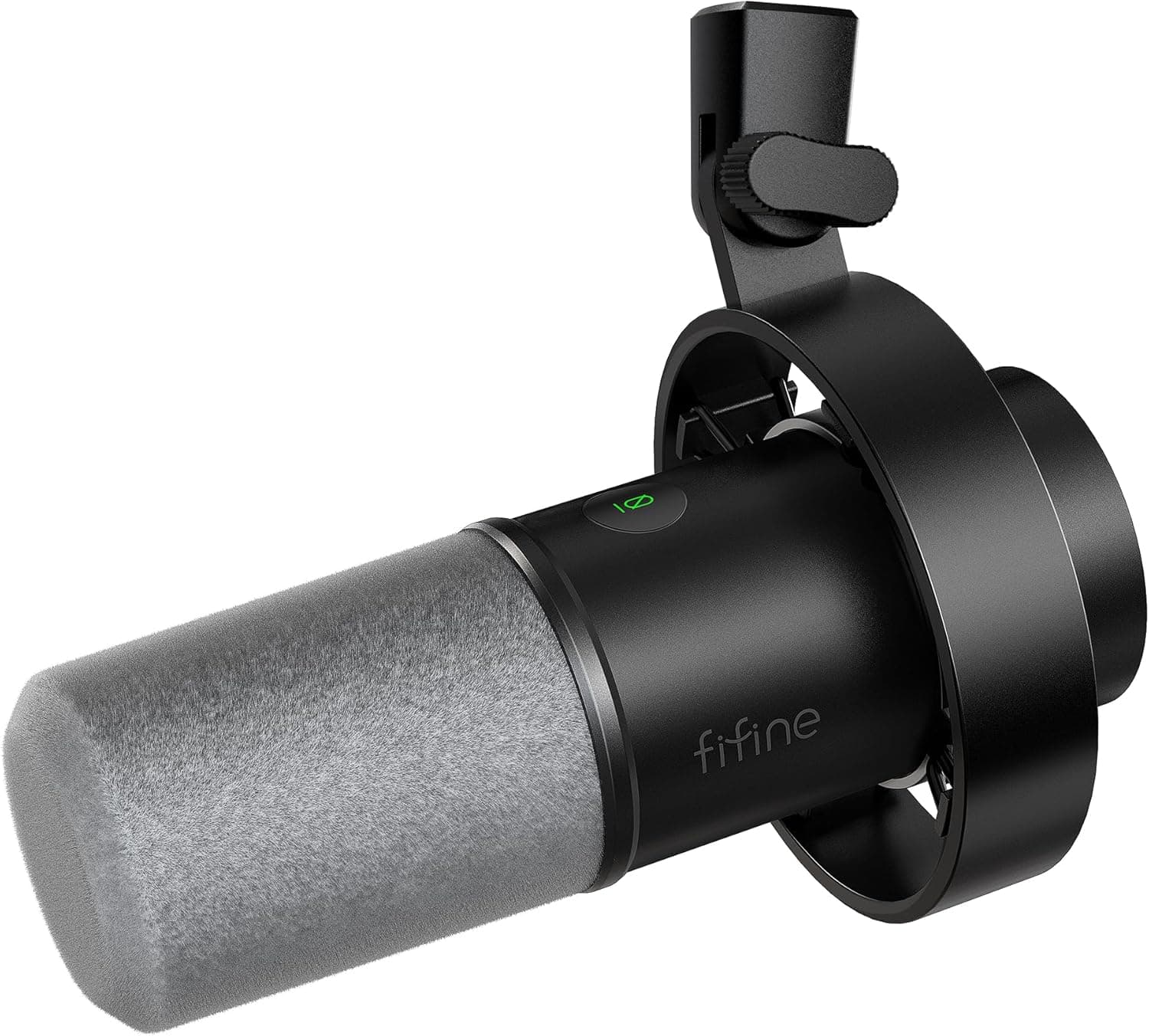
FIFINE's AmpliTank K688 is a dynamic mic with XLR and USB outputs, a value pick for podcasters who want XLR flexibility on a budget.
Price range: See on Amazon
What we liked
- + Dual XLR and USB connection works with a computer today and an interface tomorrow
- + Dynamic design keeps background noise down when recording in a normal room
- + Broadcast-style body looks the part on camera for video podcasts
Trade-offs
- - Needs close placement near your mouth, so a boom arm is almost essential
- - Capsule detail trails premium Shure and Rode dynamics when heard side by side
Who this microphone fits
The K688 targets podcasters, streamers and gamers who want to start recording today over USB without buying an interface, but who also want the option to move to XLR later without replacing the mic. FIFINE markets it as part of the AmpliTank line built for home studio recording, and its dual USB-C and XLR connectors mean it can sit on a beginner's desk now and follow that person into a proper mixer setup down the line. Anyone who wants one budget mic that covers both a webcam-style USB workflow and a future XLR interface fits well here, while someone who only ever plans to use XLR would get more focused value from an XLR-only design instead. It is also a reasonable video-podcast pick since its broadcast-style metal body looks the part on camera.
Specs and design in plain English
FIFINE lists the K688 with a cardioid polar pattern, roughly 50Hz to 16kHz frequency response, greater than 75dB signal-to-noise ratio and 130dB maximum sound pressure level, recording at 16-bit depth with a 44.1k to 48k Hz sample rate over USB. The body is metal for durability, and it includes a touch-sensitive mute button plus a headphone jack with its own monitoring volume control, both of which only function in USB mode according to independent testing. In the box FIFINE includes the microphone, a USB-C cable and a male to female adapter, but not an XLR cable or a stand, so a boom arm or desk stand and an XLR cable are separate purchases if you plan to use the balanced output. The windscreen included helps tame plosives during close-mic use.
Living with it day to day
Independent reviewers describe the USB experience as plug-and-play with no extra software needed, which suits a first-time podcaster who wants to start recording within minutes of unboxing. The cardioid capsule isolates the main sound source and cuts background noise reasonably well for the price, though reviewers note the mic needs to sit close to your mouth to sound its best, so a boom arm is close to essential rather than optional. The touch-mute button on top is a convenient way to go silent mid-recording without fumbling for a switch, and the onboard headphone jack lets you monitor your own voice in real time when running over USB. Because no stand ships in the box, budget for one separately if your desk setup does not already have a boom arm.
Trade-offs and how it compares
Independent measurements put the K688 capsule closer to a 70Hz to 15kHz working range in practice, narrower than the printed spec, which is fine for typical spoken voice but not ideal for deeper voices or any instrument recording. Against the Shure MV7X, the K688 wins on flexibility since it offers USB out of the box while the MV7X is XLR only, but reviewers consistently note the K688 trails premium Shure and Rode dynamics on capsule detail when heard side by side. Compared with the FIFINE AmpliGame AM8, the K688 leans more toward a plain broadcast look while the AM8 adds RGB lighting for streamers who want that aesthetic, so the choice between them mostly comes down to whether you want lighting effects.
Verdict and who should look elsewhere
The K688 earns its 8.4 out of 10 score here by being a genuinely flexible, low-cost way into dual USB and XLR recording, and it is a sound pick for someone building their first podcast desk on a tight budget. Buyers who already own a dedicated audio interface and only need XLR should consider the MV7X instead, since that mic focuses entirely on voice tone rather than splitting its design between two connection types. Anyone who wants a stand included in the box, or expects flagship-level vocal detail, should budget for a step-up mic and treat the K688 as the affordable starting point it is designed to be.
Frequently asked questions
Does the FIFINE K688 come with a stand or boom arm?
No. The box includes the microphone, a USB-C cable and an adapter, but not an XLR cable, stand or boom arm, so plan to add one.
Does the mute button work over XLR?
According to independent testing the touch-mute and headphone monitoring only function when the mic is connected over USB, not XLR.
Can I use the K688 with an audio interface later?
Yes. It has a built-in XLR output alongside USB-C, so you can move to an interface or mixer without replacing the microphone.
How does the K688 compare with the Shure MV7X?
The K688 adds USB connectivity the MV7X lacks, but reviewers say the MV7X's capsule delivers more refined vocal detail for XLR-only setups.
Prices change often, so check the current price and availability on Amazon.
Check price on AmazonPodcast Gear Hub may earn a commission from the link above.