Portable Recording Booth for Home Studio, Foldable Sound Isolation Vocal Shield with Floor Stand Review (2026)
Updated September 14, 2026 · Research-based review
Our verdict
This foldable vocal shield with a floor stand suits anyone who wants to record standing up, such as singers or presenters, without a desk-mounted shield boxing in their mic. The floor stand takes up more room than a desktop shield, and the listing gives limited detail on its acoustic blanket's thickness or absorption rating.
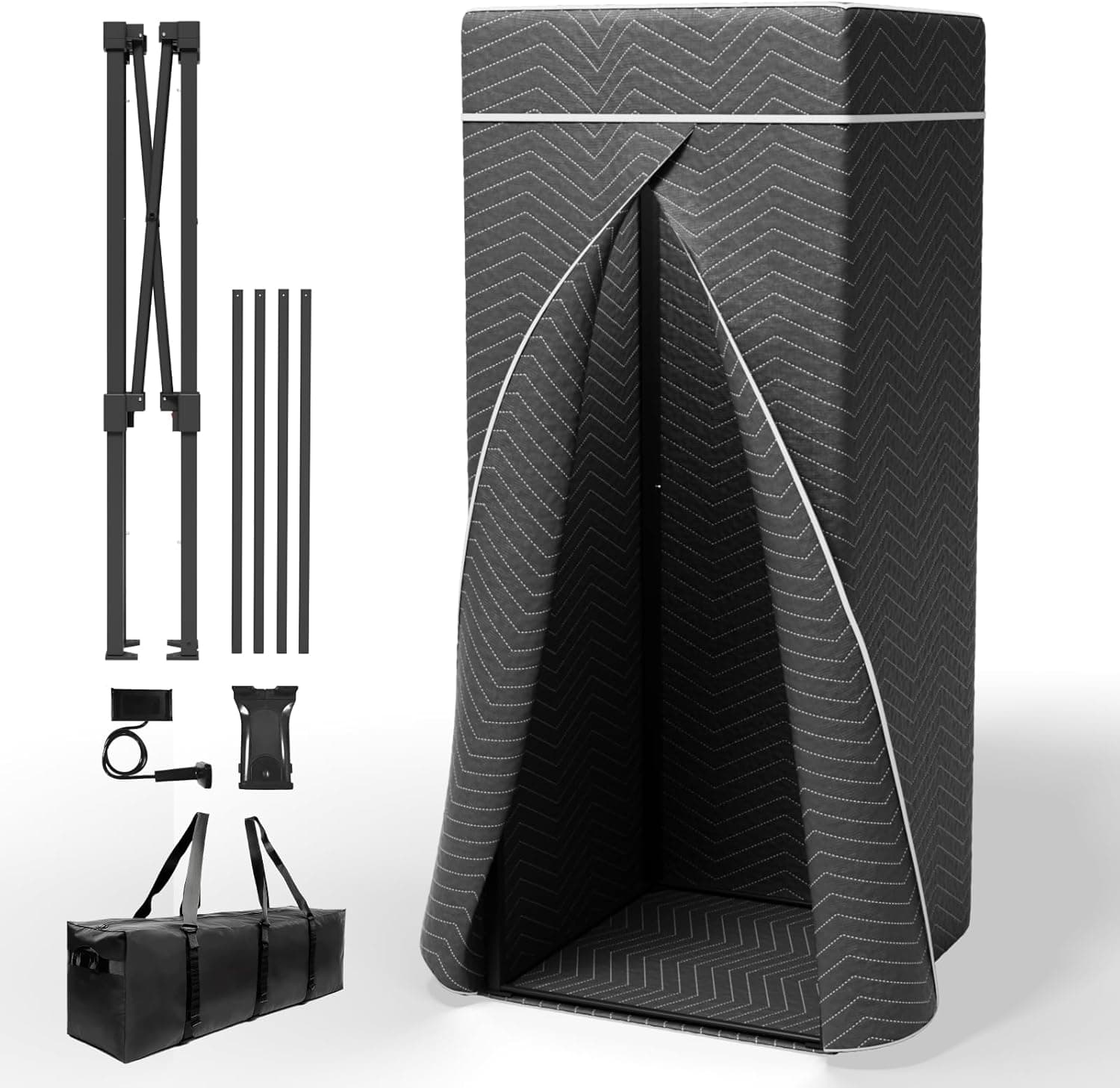
A foldable sound isolation vocal shield portable recording booth with floor stand, for standing voice recording at home.
Price range: See on Amazon
What we liked
- + Floor stand allows standing recording for voiceovers or singing
- + Foldable shield packs away when the studio is not in use
- + Portable design moves easily between rooms
Trade-offs
- - Floor stand takes up space around the recording area
- - Generic listing offers few details on foam thickness
A Standing Booth For Home Voice Work
This is a foldable, high-density acoustic blanket enclosure built around its own floor stand, letting a microphone sit inside a freestanding sound shield rather than clamping to a desk or existing mic stand. It suits singers who prefer to record standing, voiceover artists and presenters who like to move or gesture while speaking, and anyone whose desk setup does not have room for a clamp-on isolation shield. Because it includes a phone holder, it also fits people who record scripts, lyrics, or notes off a phone screen while standing, making it a workable option for home vocal booths built in a spare corner of a bedroom or office rather than a dedicated studio room.
Acoustic Blanket, Floor Stand and Phone Holder
The booth's enclosure is built from a high-density acoustic blanket material stretched over a folding frame, designed to absorb sound reflections around the microphone similar to how a heavier moving blanket dampens echo, though the listing does not publish an exact blanket thickness or noise reduction rating. The floor stand is the defining feature compared with most portable shields, since it lets the whole unit stand on its own next to a performer rather than requiring an existing mic stand or boom arm to carry the shield's weight. The included phone holder sits within reach of the enclosure, letting a vocalist or narrator glance at lyrics or a script without stepping outside the shielded area mid-take.
Setup, Daily Use and Care
Setting up involves unfolding the frame, positioning the floor stand at a stable base, and placing a microphone on its own stand inside the shielded area, after which the acoustic blanket panels fold closed around the mic similar to other portable booths in this category. Because the unit stands on the floor rather than clamping to a desk, check that the base has a stable, flat surface and enough clearance around it, since floor stands generally need more floor space than a desk-mounted shield. For care, avoid folding the acoustic blanket panels too tightly or storing heavy items on top of the folded unit, since creased fabric can lose some of its shape and absorption over time, and keep it away from damp storage areas that could affect the blanket material.
How It Compares With Other Portable Vocal Booths
In the site's portable vocal booth ranking, this floor-stand model scores behind The Voicecube Ultra Pro and both TroyStudio booths, which use thicker foam walls and enclosed foam panels rather than a blanket-style enclosure, suggesting somewhat less absorption for the price. Its main advantage over those foam-walled competitors is the freestanding floor design, which suits standing vocalists better than desk-clamped shields built around a boom arm. Compared with simpler options like the SIMPLURFI isolation ball or the PyleUsa mini booth, this model offers a larger shielded area and the convenience of a phone holder, at the cost of being bulkier to store when folded.
Verdict and Who Should Look Elsewhere
With a site score of 7.4 out of 10, this booth earns its strongest marks for fitting the job of standing vocal or voiceover recording, a use case that desk-clamped shields do not cover as naturally. It is a sensible pick for singers, presenters, or anyone who wants to move while recording and prefers not to hunch over a desk-mounted shield. Buyers who mainly record seated at a desk, who want the strongest possible foam absorption for the price, or who have very limited floor space should instead consider one of the higher-scoring foam-walled booths in the site's guide, since foam panels generally outperform a blanket-style enclosure on raw absorption.
Frequently asked questions
Does this booth need a separate mic stand?
Yes, based on the listing the enclosure and floor stand hold the shield itself, while the microphone is placed on its own stand or clamp inside the shielded area.
How much floor space does this booth need?
More than a desk-clamped shield, since the unit stands on its own floor base rather than attaching to an existing desk or boom arm, so plan for open floor clearance around it.
Can this booth be used for seated recording too?
Yes, though its floor-stand design is built primarily for standing use, and desk-clamped shields tend to be more convenient for someone who records seated most of the time.
What is the booth's enclosure made from?
The listing describes a high-density acoustic blanket enclosure rather than rigid foam panels, though it does not state an exact blanket thickness or noise reduction figure.
Prices change often, so check the current price and availability on Amazon.
Check price on AmazonPodcast Gear Hub may earn a commission from the link above.