Neumann TLM 102 Large-Diaphragm Condenser Microphone, Nickel Review (2026)
Updated September 14, 2026 · Research-based review
Our verdict
The Neumann TLM 102 in nickel is a premium, compact large-diaphragm condenser suited to established shows and studios that already have a treated room and want the Neumann name and polish. Its detailed capsule reveals room flaws readily, and its price puts it out of reach for anyone just starting a podcast on a budget.
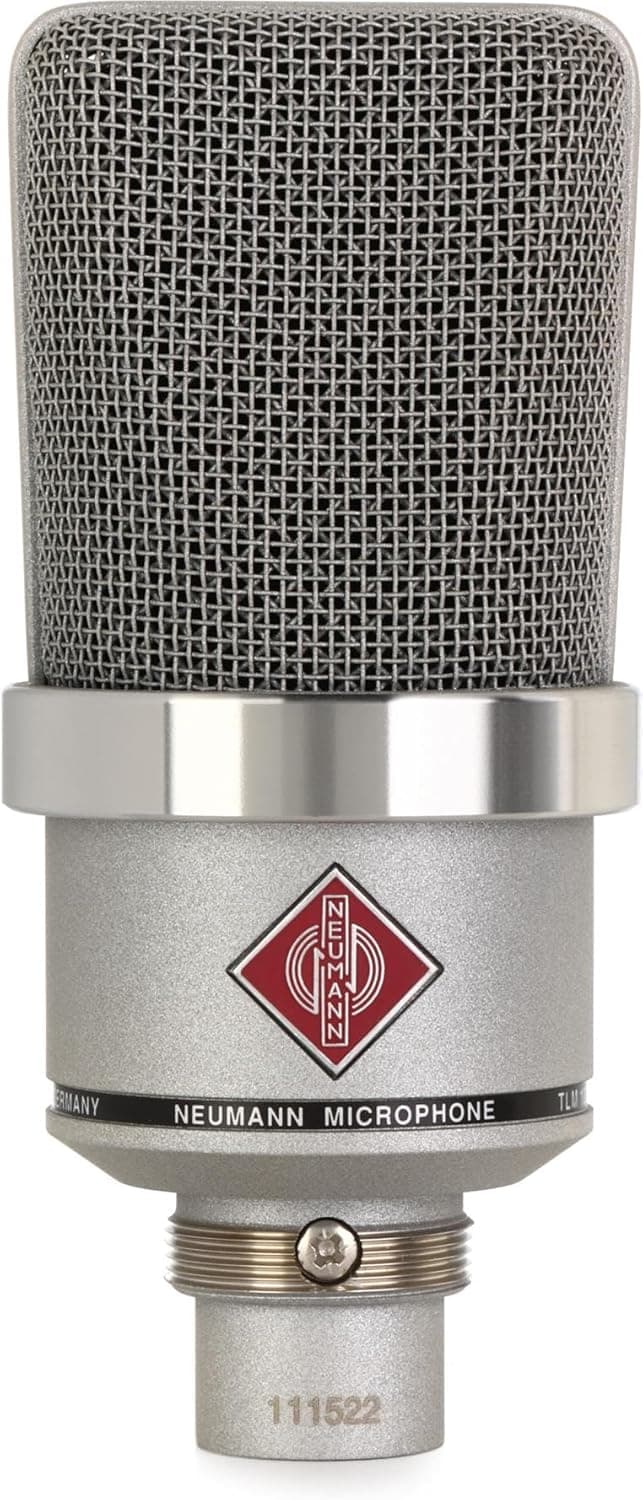
Neumann's TLM 102 is a compact large-diaphragm condenser in nickel, a premium studio mic for polished voiceover and interview recording.
Price range: See on Amazon
What we liked
- + Neumann capsule delivers a detailed, polished voice sound used in pro studios
- + Compact body is easier to place on a boom arm than larger studio condensers
- + Handles loud voices well, so energetic hosts will not distort the capsule
Trade-offs
- - High price is aimed at established shows rather than people just starting out
- - Reveals every room flaw, so it only shines in a well treated recording space
A Compact Neumann For Serious Studios
The TLM 102 is Neumann's smallest and most affordable large-diaphragm condenser, built as a more compact alternative to the brand's larger studio microphones while still carrying the Neumann capsule design the company is known for. It suits established podcasters, voiceover professionals, and musicians recording in a genuinely treated or at least well controlled room who want a step up in polish from mid-range condensers, rather than someone buying their first microphone. Because the body is shorter and lighter than many large studio condensers, it also fits people who want a premium mic that still sits comfortably on a boom arm without the bulk of Neumann's bigger models.
Capsule, Max SPL and What The Numbers Mean
Neumann's own product page lists the TLM 102 at roughly 210 grams and 52mm in diameter by 116mm long, a notably compact and light body for a large-diaphragm condenser. Its cardioid capsule handles a maximum SPL of 144dB, an unusually high figure that means the mic can sit close to a loud singer or an energetic, louder-than-average podcast host without distorting, which is not always true of condensers tuned mainly for quiet narration. The frequency response reaches from 20Hz to 20kHz with a gentle rise between roughly 8kHz and 12kHz that gives voices a bit of added clarity and presence, though that same lift is also why an untreated room's flaws come through clearly on this microphone.
Setup, Daily Use and Care
Standard TLM 102 packages ship with Neumann's SG 2 swivel mount, while Studio Set versions add the sturdier EA 4 shock mount, so buyers should check which package they are ordering if shock isolation matters for their setup. Like any large-diaphragm condenser, it needs 48V phantom power from an interface or mixer and benefits from a pop filter, since the integrated pop screen alone may not fully tame close-up plosives from an energetic speaker. Because the capsule captures detail so readily, daily use rewards consistent mic positioning and a genuinely quiet room, and care should include keeping the mic in its box or a dust cover between sessions, since condenser capsules are sensitive to humidity and dust over time.
How It Compares With The NT1-A and SM7B
Against the Rode NT1-A, which sits just behind it in the site's own condenser ranking, the TLM 102 offers a more polished build and Neumann's reputation at a meaningfully higher price, while the NT1-A counters with a lower noise floor spec and a much smaller cost. Against the XLR dynamic Shure SM7B, which ranks higher in the site's broader microphone guide, the TLM 102 captures more vocal detail and nuance but is far less forgiving of room noise and untreated acoustics, since dynamic mics like the SM7B are built specifically to reject more of that background sound. The TLM 102 is the pick for a controlled studio space, not a noisy home office.
Verdict and Who Should Choose Differently
The TLM 102 earns a perfect build and materials score in the site's breakdown alongside our score of 8.2 out of 10 overall, reflecting genuine studio-grade construction at the cost of a value score that trails cheaper condensers. It is the right choice for an established show or studio that already has room treatment sorted out and wants a compact, high-SPL-capable Neumann for vocals or instruments. Anyone just starting a podcast, working with a tighter budget, or recording in an untreated bedroom or office should look toward the NT1-A, a dynamic USB mic, or the SM7B instead, since the TLM 102's revealing detail only pays off in a space that can support it.
Frequently asked questions
Does the Neumann TLM 102 need phantom power?
Yes. As a large-diaphragm condenser it requires 48V phantom power from an audio interface or mixer, and cannot be plugged directly into a computer or camera.
What is included with the Neumann TLM 102?
Standard packages include the microphone with Neumann's SG 2 swivel mount, while Studio Set versions add the sturdier EA 4 shock mount, according to Neumann's product page.
Is the TLM 102 good for loud singers or energetic hosts?
Yes. Neumann rates its maximum SPL at 144dB, which is high enough to handle loud, close-up vocal performances without distorting.
Does the TLM 102 need a treated room?
It performs best in one. Its detailed capsule reveals room reflections and background noise clearly, so a quiet, at least lightly treated space gets the most out of it.
Prices change often, so check the current price and availability on Amazon.
Check price on AmazonPodcast Gear Hub may earn a commission from the link above.