FIFINE AmpliGame AM8 USB/XLR Dynamic Microphone with RGB Light and Mute Button Review (2026)
Updated September 14, 2026 · Research-based review
Our verdict
FIFINE's AmpliGame AM8 is a dynamic cardioid mic that runs over USB and switches to XLR once you add a mixer, a sensible first mic for a podcaster still deciding how far to take the hobby. It handles an untreated room well and mutes with one tap, though the RGB ring and plastic build lean toward streaming over a broadcast look.
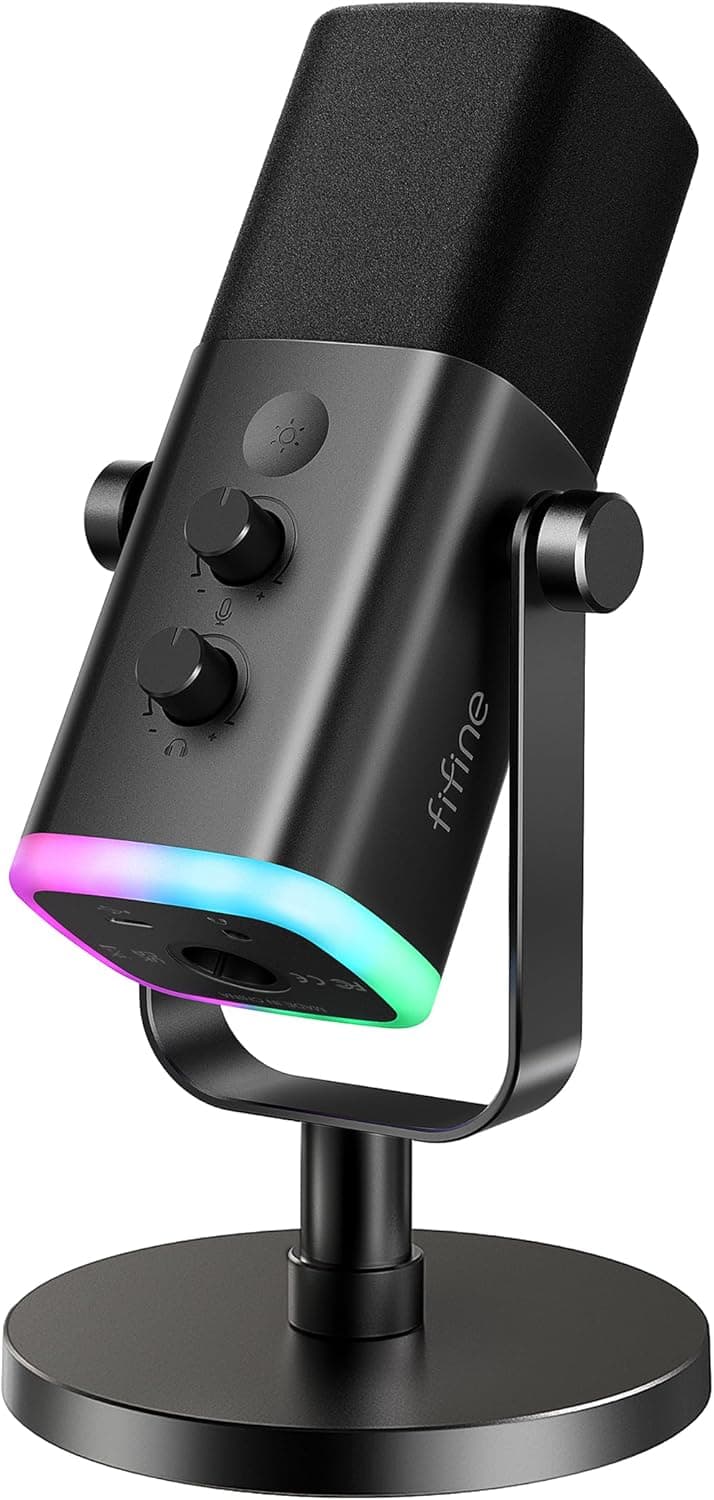
FIFINE's AmpliGame AM8 is a dynamic mic with both USB and XLR outputs, a flexible first podcast mic that can grow into an interface setup.
Price range: See on Amazon
What we liked
- + USB and XLR outputs let you start plugged into a laptop and move to a mixer later
- + Dynamic capsule rejects more room noise than a condenser in an untreated bedroom
- + Built-in mute button makes it quick to cough or pause mid-recording without editing
Trade-offs
- - RGB light is aimed at streamers and can look busy on a professional video podcast
- - Budget build and capsule will not match the depth of a premium broadcast dynamic mic
Who the AM8 fits
This is a mic built for someone starting a podcast or stream from a desk who does not yet own an audio interface or mixer. Plugging in over USB-C gets a voice recording in minutes, and the same capsule works over XLR later if the show grows into a mixer-based setup, so buyers are not locked into one workflow. The cardioid dynamic capsule favors close-talking hosts in a bedroom or home office over anyone recording a group around a table, since it rejects sound from the sides and rear rather than capturing a wide room. Gamers and streamers who want visible RGB lighting on camera get that here too, which a plain broadcast mic like a Shure MV7X does not offer.
What the specs mean day to day
The capsule is rated for a roughly 50Hz to 16,000Hz frequency range with a cardioid pickup pattern, a narrower range than a studio condenser but typical for a dynamic mic built around spoken voice rather than music. Over USB it runs through a built-in analog-to-digital converter at up to 48kHz, plenty for spoken podcast audio. A touch-sensitive mute button on the body glows red when muted and green when live, so a host can silence a cough without digging through software. A 3.5mm headphone jack gives zero-latency monitoring, and separate analog knobs handle input gain and monitor volume directly on the mic rather than through a menu.
Setup, daily use and care
The AM8 ships with the mic pre-mounted on a weighted desktop stand, a USB-A to USB-C cable, a foam windscreen and a basic user guide, so it is ready to record shortly after unboxing. The stand is a fixed-angle design rather than a boom arm, and the whole assembly weighs a little over half a kilogram, light enough for a small desk but with enough base weight to resist tipping. Owners who prefer a boom arm can thread the mic onto one using the standard 5/8 inch mount. Keep the foam windscreen on during recording to cut plosives, and wipe the plastic housing rather than exposing it to moisture, since the capsule is not weather sealed.
Trade-offs against other dynamic mics
In the site's dynamic and XLR microphone guides the AM8 sits in the middle of the pack, ranked behind the RODE PodMic USB and the Shure SM7B and MV7X. Those rivals use denser, all-metal bodies and, in the SM7B's case, a larger capsule aimed squarely at broadcast vocal tone, while the AM8 uses a lighter build with a plastic-bodied XLR jack. What the AM8 offers instead is the RGB lighting and touch mute control those rivals skip, plus a lower cost of entry. FIFINE's own AmpliTank K688 is a close sibling with a similar dual USB and XLR layout but without the RGB ring, worth a look for buyers who want the same flexibility in a plainer package.
Verdict and who should look elsewhere
Choose the AM8 if you want one mic that works the day it arrives over USB and still has room to grow into an XLR mixer setup, and you do not mind RGB lighting on camera. It earns the site's score of 8.6 out of 10 largely on value, since dual connectivity and a mute button are rare at this price. Hosts recording video who want a plain, professional look should look at the Shure MV7X or RODE PodMic USB instead, and anyone chasing the deepest, most polished broadcast tone should budget for the Shure SM7B, which trades the AM8's flexibility for a single dedicated XLR output.
Frequently asked questions
Does the FIFINE AM8 need phantom power over XLR?
No. It uses a dynamic capsule, so it does not require the 48V phantom power that condenser mics need when run through an XLR mixer or interface.
Can I monitor my voice while recording?
Yes, a 3.5mm headphone jack on the mic gives zero-latency monitoring with its own volume knob, separate from the input gain control.
What comes in the box with the AM8?
The mic arrives mounted on a weighted desktop stand with a USB-A to USB-C cable, a foam windscreen and a basic user guide.
Can I turn off the RGB lighting?
The touch-sensitive RGB button on the mic cycles through lighting modes, including an off setting, for anyone recording video who wants a plainer look.
Prices change often, so check the current price and availability on Amazon.
Check price on AmazonPodcast Gear Hub may earn a commission from the link above.