Pop Filter For Studio Microphone Pop Shield Mic Wind Screen Review (2026)
Updated September 14, 2026 · Research-based review
Our verdict
This generic studio pop filter is a low-cost way to cut plosives from spoken word or vocal recordings, using a dual-layer mesh screen on a flexible gooseneck clamp that fits most mic stands. Its listing skips clamp size and build materials, so it best suits budget setups rather than a specific spec match.
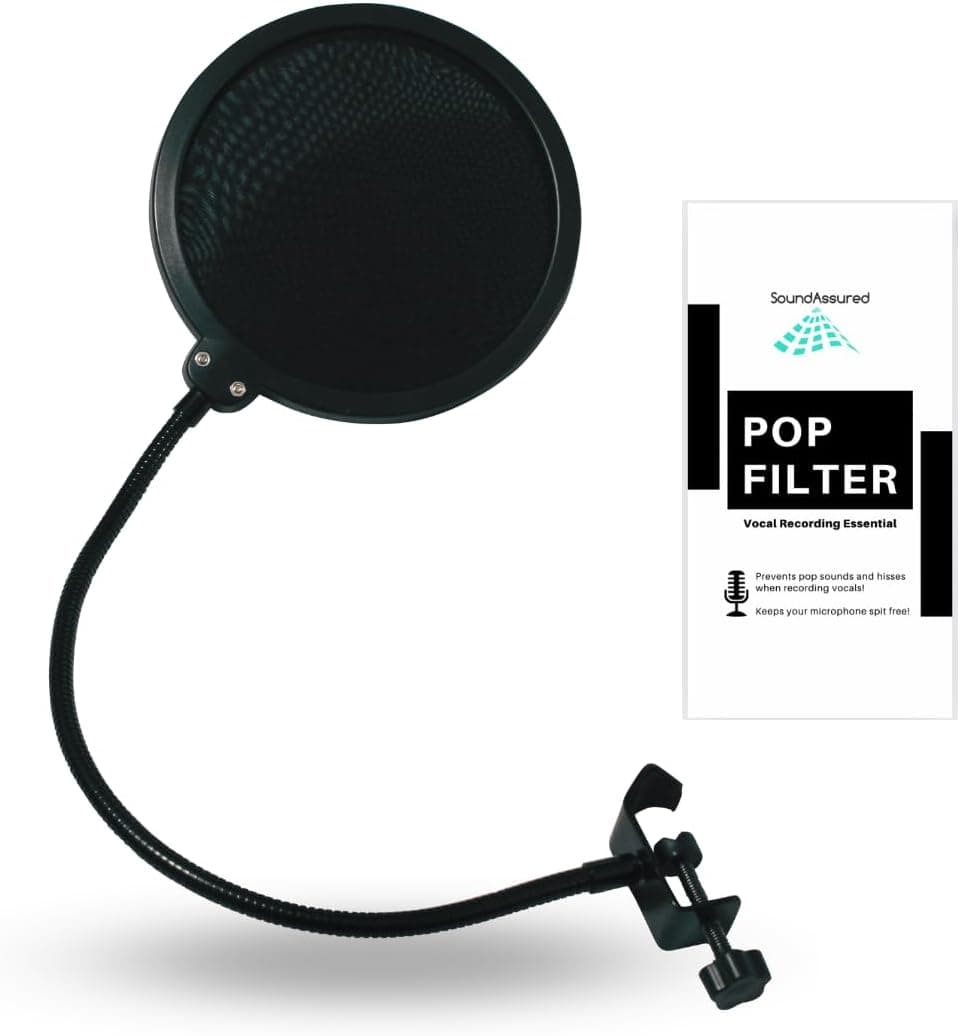
A generic studio microphone pop shield and wind screen, a no-frills pop filter for cutting plosives on home voice recordings.
Price range: See on Amazon
What we liked
- + Mesh screen breaks up bursts of air from P and B sounds before the capsule
- + Simple design clamps onto most desk stands and boom arms
- + Very low cost for a noticeable cleanup of spoken word audio
Trade-offs
- - Generic listing does not state clamp size or gooseneck length
- - Budget fabric screens can loosen or tear with frequent repositioning
A Budget Pop Shield For Home Recording
This pop filter is a straightforward accessory rather than a branded flagship product, built to sit between a speaker's mouth and a microphone's capsule to break up the bursts of air that cause popping sounds on P and B consonants. It suits anyone recording voiceover, podcasts, or vocals at home on a limited budget who does not yet own any pop protection, as well as people replacing a filter that has torn or lost its screen tension over time. Because the clamp is designed to fit onto standard mic stands and boom arms, it works for both desk-mounted USB microphones and larger XLR condensers on a proper stand, rather than being tied to one specific mic brand.
What A Dual-Layer Mesh Screen Does
The listing describes a double-layered nylon mesh screen roughly six inches across, mounted on a flexible gooseneck arm that clamps to a stand and can be bent into position in front of the microphone. Two thin layers of mesh work by physically dispersing the fast-moving air from plosive consonants before it reaches the capsule, while still letting the actual sound of the voice pass through with minimal loss of clarity, which is the same basic principle used in far pricier metal-mesh pop filters. Unlike premium filters that state an exact fabric weave or metal gauge, this listing does not publish detailed material specs, so buyers should treat it as a functional budget accessory rather than a precision-engineered studio tool.
Setup, Daily Use and Care
Clamping the filter to a mic stand or boom arm and bending the gooseneck so the mesh sits three to four inches in front of the capsule is the standard setup, and most users adjust the angle slightly off-axis from directly in front of the mouth to further reduce plosive blasts. Because it is a budget fabric screen, avoid repeatedly yanking it out of position, since frequent repositioning is the most common way these clamps loosen or the mesh develops slack over time. Wipe the screen occasionally with a dry or barely damp cloth to remove dust, and store it away from direct sun or heat, which can weaken the nylon mesh and the gooseneck's flexibility faster than normal indoor use.
How It Compares With Other Pop Filters
In the site's own pop filter ranking, this generic model sits at the bottom of the list, behind name-brand double-layered filters from Neewer and Aokeo that publish clearer specs and gooseneck details, as well as a metal-mesh option built for a stated 1.57 to 2.76 inch microphone range. The main gap between this filter and the higher-scoring options is documentation: competing listings are more specific about clamp size, mesh material, and gooseneck length, which makes it easier to confirm fit before buying. For someone who mainly wants any functional pop protection at the lowest possible price, this filter still does the core job, but buyers who want confirmed compatibility with a specific mic stand thickness may prefer a more detailed listing.
Verdict and Who Should Choose Differently
With a site score of 6.5 out of 10, this pop filter is a reasonable pick only for its price point, delivering the basic function of reducing plosives without the documentation or build confidence of higher-ranked competitors. It fits anyone setting up their first home recording rig on a tight budget who just needs functional plosive control. Buyers who want a filter with a clearly stated clamp diameter, gooseneck length, or metal mesh construction, or who plan to reposition the filter frequently between recording sessions, should look toward one of the higher-scoring branded options in the site's pop filter guide instead, since those list more specific build details.
Frequently asked questions
How far should a pop filter sit from the microphone?
Most guidance suggests positioning the mesh screen three to four inches in front of the capsule, close enough to catch plosive air bursts without touching the microphone itself.
Does this pop filter fit any microphone stand?
The listing states it clamps onto standard mic stands and boom arms, though it does not publish an exact clamp diameter, so very unusual stand shapes may not be covered.
Will a pop filter reduce background room noise?
No. A pop filter only addresses plosive bursts of air from speech, it does not reduce echo, hiss, or ambient noise, which require room treatment or a different microphone.
Do budget pop filters wear out faster than premium ones?
Fabric mesh screens like this one can loosen or develop slack with frequent repositioning, so handling the gooseneck gently helps it hold position longer.
Prices change often, so check the current price and availability on Amazon.
Check price on AmazonPodcast Gear Hub may earn a commission from the link above.