Audio-Technica AT2020USB+ Cardioid Condenser USB Microphone with Headphone Jack Review (2026)
Updated September 14, 2026 · Research-based review
Our verdict
The Audio-Technica AT2020USB+ is a straightforward USB condenser for a solo home podcaster who wants zero-latency headphone monitoring and a built-in mix control without buying a separate interface. Its USB-only connection is the main long-term limitation, since it cannot later plug into an XLR mixer if the show grows.
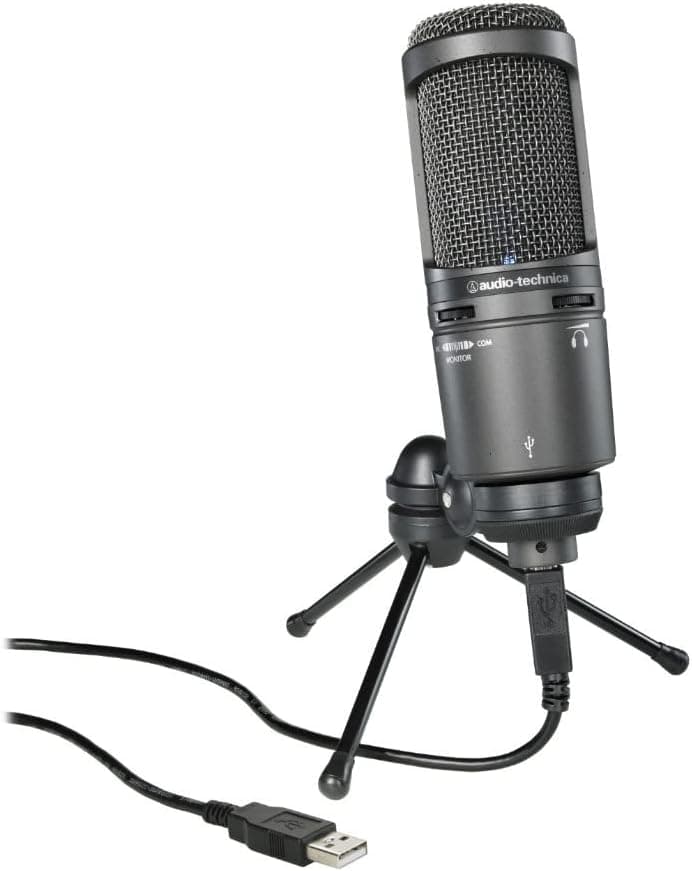
Audio-Technica's AT2020USB+ is a cardioid condenser USB mic with a headphone jack, a studio-sounding pick for solo home podcasters.
Price range: See on Amazon
What we liked
- + Headphone jack gives zero-latency monitoring without a separate interface
- + Mix control blends your mic with computer playback during recording
- + Same trusted AT2020 family voicing in a simple plug-in USB format
Trade-offs
- - USB-only connection means it cannot grow into an XLR mixer setup later
- - Side-address condenser needs careful aim and a quiet room to sound its best
A Plug-In Condenser For Solo Recording
The AT2020USB+ takes Audio-Technica's well known AT2020 condenser capsule and builds it into a USB microphone aimed at people who want studio-style sound without an audio interface, XLR cables, or phantom power to manage. It suits solo podcasters, YouTubers, voiceover hobbyists, and streamers recording at a desk in a reasonably quiet room, since a side-address condenser like this one is sensitive enough to reward a treated or at least quiet space. Because it connects with a single USB cable and includes onboard headphone monitoring, it is also a sensible pick for someone recording for the first time who wants one cable to manage rather than a full mixer setup.
Headphone Jack, Mix Control and Core Specs
According to Audio-Technica's own instruction manual, the AT2020USB+ uses a built-in analog to digital converter running at 44.1 or 48 kHz with 16-bit resolution, which covers typical spoken-word and podcast recording needs without oversized file sizes. The headline feature is a 3.5mm headphone jack built into the mic body for zero-latency monitoring, meaning you hear your own voice without the delay a computer's audio processing would otherwise add, paired with a rotary mix control that blends your live mic signal against any computer playback in your headphones. The cardioid capsule favors sound from the front, cutting down slightly on side and rear noise, though as a condenser it remains more sensitive to room echo than a dynamic USB mic would be.
Setup, Daily Use and Care
Setup is a single USB cable to a computer, after which most operating systems recognize the mic automatically as both an input and an output device for headphone monitoring. Plugging headphones directly into the mic and adjusting the mix knob toward the mic side while recording is the quickest way to check levels and avoid the slight lag that can come from monitoring through separate playback software. Because the capsule is side-address, speak across the front logo rather than into the top, and keep a consistent distance to avoid the proximity effect making your voice boom unevenly. Day to day, keep the mic on its included stand or a boom arm away from desk vibrations, and store it with a dust cover when not in use, as with any condenser capsule.
How It Compares With Other Podcast Microphones
Within the site's podcast microphone ranking, the AT2020USB+ scores behind newer hybrid mics like the RODE PodMic USB and Shure MV7+, both of which offer XLR connectivity alongside USB so a show can grow into a full mixer setup without buying a new microphone. Against the XLR-only Shure SM7B, the AT2020USB+ is far simpler to set up since it skips the interface and phantom power requirement entirely, at the cost of the SM7B's more forgiving handling of room noise. Compared with dynamic USB options like the FIFINE AmpliGame AM8, the AT2020USB+ leans toward a brighter, more detailed condenser sound that rewards a quieter recording space rather than the noise-rejecting character of a dynamic capsule.
Verdict and Who Should Choose Differently
With a site score of 8.4 out of 10, the AT2020USB+ remains a sensible pick for a solo host who wants a known, trusted capsule sound with simple one-cable setup and real zero-latency monitoring built into the mic itself. It fits best in a quiet or lightly treated room where a condenser's extra detail is an advantage rather than a liability. Anyone expecting to add co-hosts and a mixer down the line should instead consider a hybrid USB and XLR microphone or a small console bundle, since the AT2020USB+ has no XLR output and cannot be repurposed into a larger interface-based setup later without replacing the microphone entirely.
Frequently asked questions
Does the AT2020USB+ need an audio interface?
No. It connects directly to a computer over USB and includes its own built-in analog to digital converter, so no separate interface or phantom power is required.
Can I monitor my voice in real time with this microphone?
Yes. A 3.5mm headphone jack on the mic body gives zero-latency monitoring, and a rotary mix control blends that live mic signal with computer playback.
Can the AT2020USB+ later connect to an XLR mixer?
No. It is a USB-only microphone with no XLR output, so a show planning to grow into a full mixer setup should choose a hybrid USB and XLR mic instead.
What sample rate and bit depth does the AT2020USB+ record at?
According to Audio-Technica's manual, its built-in converter supports 44.1 or 48 kHz sampling at 16-bit resolution, which suits typical podcast and voiceover recording.
Prices change often, so check the current price and availability on Amazon.
Check price on AmazonPodcast Gear Hub may earn a commission from the link above.