Shure MV7X XLR Dynamic Microphone for Podcasting and Vocal Recording Review (2026)
Updated September 14, 2026 · Research-based review
Our verdict
The Shure MV7X suits podcasters who already own an interface or mixer and want the SM7B look and voice-isolating dynamic capsule for less money. The main strength is broadcast-style vocal tone with strong rear noise rejection. The trade-off is you need outboard gear with clean gain, since there is no USB output and the capsule runs quiet.
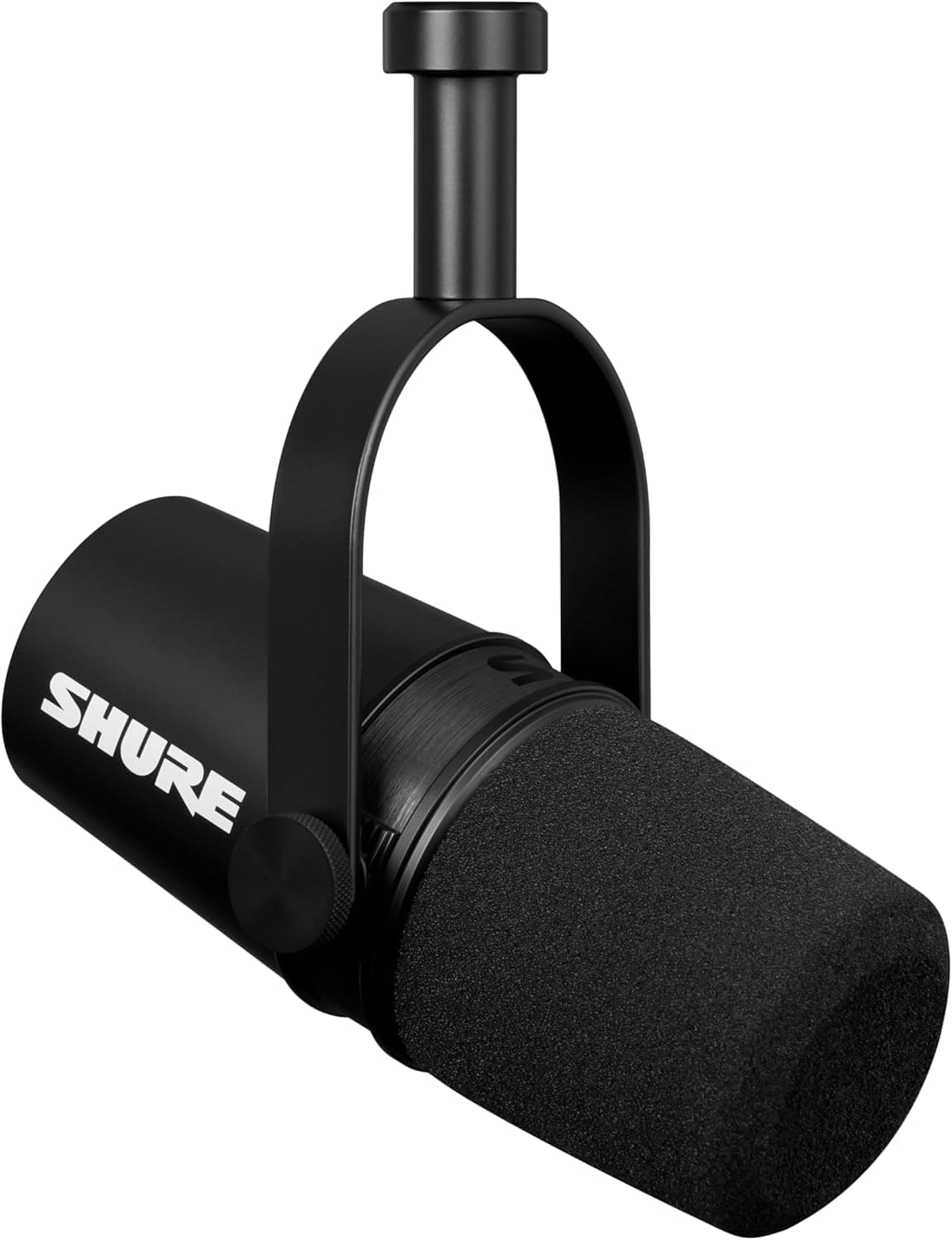
Shure's MV7X is the XLR-only version of the MV7, a broadcast-style dynamic mic for podcasters who already own an interface or mixer.
Price range: See on Amazon
What we liked
- + Shure dynamic capsule is tuned for close spoken word, giving a warm radio-style voice
- + XLR-only design keeps it simple and slots into any interface, mixer or recorder
- + Tight pickup helps reject keyboard clicks and room echo in home studios
Trade-offs
- - No USB output, so you must buy an audio interface or mixer to use it at all
- - Fairly low output means a clean preamp with plenty of gain is recommended
Who this microphone fits
The MV7X is built for people who already run an audio interface, mixer or field recorder and simply want a great voice mic to plug into it, rather than a plug-and-play USB solution. Shure designed it around the same body style as the SM7B, so it appeals to podcasters, streamers and voiceover artists who like that broadcast look on camera as much as the sound it produces. Because it is XLR only, it is not the right choice for someone recording straight into a laptop with no other gear, unless they are willing to add a USB audio interface first. Home studio hosts, co-hosts sharing a room, and anyone recording spoken word rather than music will get the most out of the cardioid dynamic capsule, which is tuned to reject the reflections and hum common in untreated rooms.
Specs and design in plain English
Shure lists the MV7X as a cardioid dynamic microphone with a roughly 50 Hz to 16 kHz frequency response and a single XLR output, so it needs no phantom power to operate. Shure's own product page describes Voice Isolation Technology built from the dynamic cartridge, rear rejection and internal shock mount working together, plus a built-in pop filter that tames plosives without an external windscreen. The body is all-metal with an adjustable yoke mount that clips onto standard mic stands and boom arms, and Shure includes a 3 8 inch to European thread adapter so it fits more stand types out of the box. Because the capsule has fairly low output by dynamic mic standards, pairing it with a preamp or interface that offers plenty of clean gain, such as one with at least 60 dB, keeps the noise floor low.
Living with it day to day
Setup is simple once you have an XLR cable and an interface or mixer: connect, dial in gain until your speaking voice sits comfortably without clipping, and the tight cardioid pattern does the rest of the work rejecting room noise. Reviewers who cover the MV7X for podcasting describe it as delivering a natural, polished spoken-word tone with sibilance kept under control by the dynamic capsule, which matters for long-form talk shows recorded in a normal room rather than a treated booth. Because there is no headphone jack or onboard mixing on the mic itself, monitoring and level control happen entirely on your interface, which keeps the mic itself simple but means the rest of your chain needs to pull its weight. The all-metal yoke and body should hold up to being moved between a desk stand and a boom arm repeatedly without loosening.
Trade-offs and how it compares
The clearest trade-off is the lack of any USB output at all, so anyone without an interface already on their desk has to budget for one before the MV7X becomes usable, unlike FIFINE's AmpliTank K688 which offers both XLR and USB from the same body. Compared with Shure's own SM7B, independent coverage frames the MV7X as capturing sound quality that is very close for meaningfully less money, making it the value pick within Shure's own broadcast-style lineup rather than a mic that competes on features. Against the FIFINE AmpliGame AM8, which also pairs USB and XLR, the MV7X leans on Shure's build quality and voice tuning rather than RGB lighting or a mute button, so it suits buyers who want fewer extras and a known broadcast pedigree instead.
Verdict and who should look elsewhere
The MV7X earns its place as a strong option for XLR podcast rigs, scoring 8.3 out of 10 in the site's own breakdown thanks to how well it fits typical spoken-word setups and how solidly it is built. Anyone recording only into a laptop with no other hardware, or who wants mute buttons and RGB lighting built into the mic, should look at a USB-native option instead, including Shure's own MV7+ or a budget XLR and USB combo mic. Buyers upgrading from a basic USB microphone and adding an interface at the same time will get the most value, since the MV7X rewards a clean gain stage rather than working around a noisy one.
Frequently asked questions
Does the Shure MV7X need phantom power?
No. It is a dynamic microphone, so it works over a standard XLR cable into any interface or mixer without 48V phantom power.
Can I use the MV7X with a laptop directly?
Not on its own. It only has an XLR output, so you need a USB audio interface or mixer between the mic and a computer.
How is the MV7X different from the Shure SM7B?
The MV7X uses a similar body style and voice-focused dynamic capsule at a lower price, though independent coverage notes the SM7B remains the step up in outright detail and finish.
Does the MV7X include a pop filter?
Shure builds an internal pop filter into the capsule design, so plosives are controlled without needing to add an external foam or mesh screen.
Prices change often, so check the current price and availability on Amazon.
Check price on AmazonPodcast Gear Hub may earn a commission from the link above.